• Himalaya Shelter trekking in India | Best Himalayan Treks

    Founded in 2013, Himalaya Shelter is a passionate trekking company based in Dehradun, Uttarakhand, India, specializing in guided Himalayan adventures across Uttarakhand, Himachal Pradesh, Ladakh and Kashmir. The company is dedicated to safe, sustainable trekking, authentic cultural experiences, and empowering local mountain communities through employment and training. With expertise and care, Himalaya Shelter delivers unforgettable journeys to the heart of the Himalayas.

    For more details click the below link:

    https://whop.com/himalaya-shelter-hs/
    https://linktr.ee/birendrabisht
    https://shorturl.at/9PIYb
    https://solo.to/rohanrawat
    https://campsite.bio/rohanrawat
    https://www.behance.net/rohanrawat1599
    https://homepage.ninja/himalayashelter01
    https://www.tumblr.com/himalayasblogs
    Himalaya Shelter trekking in India | Best Himalayan Treks Founded in 2013, Himalaya Shelter is a passionate trekking company based in Dehradun, Uttarakhand, India, specializing in guided Himalayan adventures across Uttarakhand, Himachal Pradesh, Ladakh and Kashmir. The company is dedicated to safe, sustainable trekking, authentic cultural experiences, and empowering local mountain communities through employment and training. With expertise and care, Himalaya Shelter delivers unforgettable journeys to the heart of the Himalayas. For more details click the below link: https://whop.com/himalaya-shelter-hs/ https://linktr.ee/birendrabisht https://shorturl.at/9PIYb https://solo.to/rohanrawat https://campsite.bio/rohanrawat https://www.behance.net/rohanrawat1599 https://homepage.ninja/himalayashelter01 https://www.tumblr.com/himalayasblogs
    WHOP.COM
    Himalaya Shelter HS
    Himalaya Shelter is a passionate trekking company based in Dehradun, Uttarakhand, India, specializing in guided Himalayan adventures across Uttarakhand, Himachal Pradesh, Ladakh and Kashmir. Founded in 2013, the company is dedicated to safe, sustainable trekking, authentic cultural experiences, and empowering local mountain communities through employment and training.
    0 Σχόλια 0 Μοιράστηκε 102 Views
  • CAD/FEA design and analysis combine detailed modelling with simulation to evaluate structural integrity, thermal behaviour, and performance. This approach helps engineers optimise designs, identify potential failures early, reduce development time, and deliver reliable, cost-effective engineering solutions.
    Website: https://www.servotechinc.com/cadfea-design-and-analysis
    CAD/FEA design and analysis combine detailed modelling with simulation to evaluate structural integrity, thermal behaviour, and performance. This approach helps engineers optimise designs, identify potential failures early, reduce development time, and deliver reliable, cost-effective engineering solutions. Website: https://www.servotechinc.com/cadfea-design-and-analysis
    WWW.SERVOTECHINC.COM
    CAD/FEA Design and Analysis
    Take your engineering projects to new heights with the CAD/FEA Design and Analysis Servotech Inc at your ease. Drive technology the modern way!
    0 Σχόλια 0 Μοιράστηκε 399 Views
  • Die Magenverkleinerung in der Türkei ist eine der gefragtesten Operationen im Bereich der Adipositaschirurgie. Patienten schätzen die hohe medizinische Qualität, die modernen Kliniken und das professionelle Personal, das jede Behandlung individuell begleitet. Dadurch werden nachhaltige Ergebnisse unterstützt. Mehr dazu lesen Sie auf https://volkanarayici.com/de/beste-adipositas-klinik-in-der-tuerkei/.
    Die Magenverkleinerung in der Türkei ist eine der gefragtesten Operationen im Bereich der Adipositaschirurgie. Patienten schätzen die hohe medizinische Qualität, die modernen Kliniken und das professionelle Personal, das jede Behandlung individuell begleitet. Dadurch werden nachhaltige Ergebnisse unterstützt. Mehr dazu lesen Sie auf https://volkanarayici.com/de/beste-adipositas-klinik-in-der-tuerkei/.
    VOLKANARAYICI.COM
    Beste Adipositas Klinik in der Türkei
    Entdecken Sie die beste Adipositas Klinik in der Türkei mit Dr. Volkan Arayıcı für Ihre sichere Magenverkleinerung und Gewichtsreduktion.
    0 Σχόλια 0 Μοιράστηκε 446 Views
  • What should Australian riders know before joining India motorcycle expeditions?

    Before joining a motorcycle expedition in India, foreign riders especially Australians should be aware of the country’s diverse terrain, cultural differences, and dynamic road environment. India offers everything from high Himalayan passes to tropical coastlines, so riders must be prepared for constantly changing conditions.Traffic patterns can feel unfamiliar and weather can shift quickly depending on the region and altitude.

    Important points to remember

    Expect a mix of road surfaces, including broken tarmac, gravel, and occasional water crossings.High-altitude routes may require acclimatisation to avoid fatigue or altitude sickness.
    Traffic behaves differently; horns are used frequently as a form of communication.
    Ensure your travel insurance clearly covers motorcycling in remote or high-altitude areas.
    Carry versatile riding gear to manage heat, cold, and sudden rain.
    Choose reputable operators who provide reliable support vehicles and planned fuel stops.

    Joining an Indian Motorcycle tour can be incredibly rewarding, offering rich culture and breathtaking landscapes. With the right preparation and expectations, foreign riders can enjoy a safe, exciting, and unforgettable adventure across India’s most iconic routes.

    https://www.brahmandtour.com/motorcycle-tours-in-india

    #brahmandtour #motorcycletourinindia #indianmotorbiketour #explorewithbrahmand #tipsforoutsiders #motorbikeexpedition #travelerstips
    What should Australian riders know before joining India motorcycle expeditions? Before joining a motorcycle expedition in India, foreign riders especially Australians should be aware of the country’s diverse terrain, cultural differences, and dynamic road environment. India offers everything from high Himalayan passes to tropical coastlines, so riders must be prepared for constantly changing conditions.Traffic patterns can feel unfamiliar and weather can shift quickly depending on the region and altitude. Important points to remember Expect a mix of road surfaces, including broken tarmac, gravel, and occasional water crossings.High-altitude routes may require acclimatisation to avoid fatigue or altitude sickness. Traffic behaves differently; horns are used frequently as a form of communication. Ensure your travel insurance clearly covers motorcycling in remote or high-altitude areas. Carry versatile riding gear to manage heat, cold, and sudden rain. Choose reputable operators who provide reliable support vehicles and planned fuel stops. Joining an Indian Motorcycle tour can be incredibly rewarding, offering rich culture and breathtaking landscapes. With the right preparation and expectations, foreign riders can enjoy a safe, exciting, and unforgettable adventure across India’s most iconic routes. https://www.brahmandtour.com/motorcycle-tours-in-india #brahmandtour #motorcycletourinindia #indianmotorbiketour #explorewithbrahmand #tipsforoutsiders #motorbikeexpedition #travelerstips
    0 Σχόλια 0 Μοιράστηκε 2932 Views
  • Call Girls Chandigarh | Verified & Elite Companions

    Choose from elegant and verified Call Girls Chandigarh known for exceptional behavior, professionalism, and privacy. Our secure service ensures a smooth booking process with complete confidentiality. Enjoy trusted companionship that delivers comfort, relaxation, and a premium experience across Chandigarh.

    Visit Us :- https://chandigarh.tottaa.com/
    Call Girls Chandigarh | Verified & Elite Companions Choose from elegant and verified Call Girls Chandigarh known for exceptional behavior, professionalism, and privacy. Our secure service ensures a smooth booking process with complete confidentiality. Enjoy trusted companionship that delivers comfort, relaxation, and a premium experience across Chandigarh. Visit Us :- https://chandigarh.tottaa.com/
    0 Σχόλια 0 Μοιράστηκε 1260 Views
  • 2 Nights 3 Days Jaipur Ajmer Pushkar Tour: The Perfect Weekend Getaway

    We all reach that point where the daily grind gets a bit too much. You know the feeling. You just want to pack a bag, leave the city noise behind, and go somewhere that feels completely different. You want a change of scenery, some peace, and definitely some good food.

    If you have a long weekend coming up, or even just three days to spare, the Jaipur Ajmer Pushkar Tour is the best option. It is like a perfect travel mix. You get the royal history of Jaipur, the deep spiritual vibes of Ajmer, and the chill desert atmosphere of Pushkar.

    The best part is that you can do all this in just 2 Nights and 3 Days. You will not feel like you are running a marathon. I have been on this route many times, and here is a simple, honest plan to make the most of it.

    https://www.delhitempotravellers.com/blog/jaipur-ajmer-pushkar-tour.html

    #delhitempotravellers #jaipur #pushkartour #ajmer #travel #rajasthantour #roadtrip
    2 Nights 3 Days Jaipur Ajmer Pushkar Tour: The Perfect Weekend Getaway We all reach that point where the daily grind gets a bit too much. You know the feeling. You just want to pack a bag, leave the city noise behind, and go somewhere that feels completely different. You want a change of scenery, some peace, and definitely some good food. If you have a long weekend coming up, or even just three days to spare, the Jaipur Ajmer Pushkar Tour is the best option. It is like a perfect travel mix. You get the royal history of Jaipur, the deep spiritual vibes of Ajmer, and the chill desert atmosphere of Pushkar. The best part is that you can do all this in just 2 Nights and 3 Days. You will not feel like you are running a marathon. I have been on this route many times, and here is a simple, honest plan to make the most of it. https://www.delhitempotravellers.com/blog/jaipur-ajmer-pushkar-tour.html #delhitempotravellers #jaipur #pushkartour #ajmer #travel #rajasthantour #roadtrip
    WWW.DELHITEMPOTRAVELLERS.COM
    2 Nights 3 Days Jaipur Ajmer Pushkar Tour: The Perfect Weekend Getaway
    Escape the daily grind! Your 2-night, 3-day guide to the perfect Jaipur Ajmer Pushkar Tour. Royal forts, spiritual vibes, and easy travel tips.
    0 Σχόλια 0 Μοιράστηκε 4354 Views
  • Manual audits end at the count.
    Digital audits take you behind the scenes — and show you the full truth.
    Want accuracy with proof?
    Go digital. Go Stockount.
    Try it FREE and see the difference. https://www.stockount.com/
    #InventoryAudit #DigitalAudits #AuditAutomation #InventoryControl #WarehouseManagement #StockAccuracy #AuditTools #ErrorFreeAudits #InventoryTech #Stockount #businss #products
    Manual audits end at the count. Digital audits take you behind the scenes — and show you the full truth. Want accuracy with proof? Go digital. Go Stockount. Try it FREE and see the difference. https://www.stockount.com/ #InventoryAudit #DigitalAudits #AuditAutomation #InventoryControl #WarehouseManagement #StockAccuracy #AuditTools #ErrorFreeAudits #InventoryTech #Stockount #businss #products
    WWW.STOCKOUNT.COM
    Inventory Audits Made Simple | Stockount
    Simplify your audits with Stockount. Real-time inventory tracking, faster stock counts, and automated reporting for growing businesses.
    0 Σχόλια 0 Μοιράστηκε 2164 Views
  • Flutter vs. React Native

    Flutter and React Native are two leading frameworks for cross-platform app development. Flutter offers faster performance, beautiful UI widgets, and consistent behavior across devices. React Native provides a native-like experience, a huge ecosystem, and quicker development with JavaScript. Both are powerful, but the best choice depends on your project needs, performance goals, and team expertise. Ideal for businesses aiming to build efficient, multi-platform apps.

    For More Info: https://tinyurl.com/5n8t8z7f

    #flutter #reactnative #crossplatform #mobiledev #frameworks
    Flutter vs. React Native Flutter and React Native are two leading frameworks for cross-platform app development. Flutter offers faster performance, beautiful UI widgets, and consistent behavior across devices. React Native provides a native-like experience, a huge ecosystem, and quicker development with JavaScript. Both are powerful, but the best choice depends on your project needs, performance goals, and team expertise. Ideal for businesses aiming to build efficient, multi-platform apps. For More Info: https://tinyurl.com/5n8t8z7f #flutter #reactnative #crossplatform #mobiledev #frameworks
    The Ultimate Guide to Flutter vs React Native
    Compare Flutter vs React Native for UK businesses. Learn which hybrid framework offers better performance, scalability, and cost efficiency.
    0 Σχόλια 0 Μοιράστηκε 2439 Views
  • IPL 2026 is fast approaching, and bettors are already looking for an edge in a season full of strong squads and fresh talent. One of the most reliable IPL betting tips is to follow player roles closely—teams often tweak batting orders and bowling rotations early in the tournament. Keep an eye on youngsters who deliver under pressure, as they often offer great value in odds. Stay updated on injuries, recent form, and pitch behaviour to make smarter predictions.
    visit: https://cricketbettingtips.org/ipl-betting-tips/
    IPL 2026 is fast approaching, and bettors are already looking for an edge in a season full of strong squads and fresh talent. One of the most reliable IPL betting tips is to follow player roles closely—teams often tweak batting orders and bowling rotations early in the tournament. Keep an eye on youngsters who deliver under pressure, as they often offer great value in odds. Stay updated on injuries, recent form, and pitch behaviour to make smarter predictions. visit: https://cricketbettingtips.org/ipl-betting-tips/
    CRICKETBETTINGTIPS.ORG
    IPL Tips
    Get the edge in the Indian Premier League with trending IPL tips, expert analysis, and proven betting strategies. Stay ahead of the competition at CricketBettingTips and boost your odds of success!
    0 Σχόλια 0 Μοιράστηκε 1468 Views
  • https://www.databridgemarketresearch.com/reports/global-rapid-eye-movement-sleep-behaviour-disorder-market
    https://www.databridgemarketresearch.com/reports/global-rapid-eye-movement-sleep-behaviour-disorder-market
    Rapid Eye Movement Sleep Behaviour Disorder Market – Global Market Size, Share and Trends Analysis Report – Industry Overview and Forecast to 2032 | Data Bridge Market Research
    The Rapid Eye Movement Sleep Behaviour Disorder market was valued at USD 2.26 Billion in 2024 and is expected to reach USD 3.52 Billion by 2032, growing at a CAGR of 5.7% (2025-2032). Get insights on trends, segmentation, and key players with Data Bridge Market Research Reports.
    0 Σχόλια 0 Μοιράστηκε 473 Views
  • Test Automation Frameworks provide a structured approach to streamline software testing, improve accuracy, and reduce manual effort. From data-driven to behavior-driven frameworks, they help teams maintain, scale, and execute tests efficiently. Integrating with CI/CD pipelines, they enable faster, reliable releases and better collaboration between QA and development teams.
    Learn more: https://www.webomates.com/blog/guide-to-understanding-test-automation-frameworks-everything-you-need-to-know/

    #TestAutomation #AutomationFramework #SoftwareTesting #QA #DevOps #ContinuousTesting #QualityAssurance
    Test Automation Frameworks provide a structured approach to streamline software testing, improve accuracy, and reduce manual effort. From data-driven to behavior-driven frameworks, they help teams maintain, scale, and execute tests efficiently. Integrating with CI/CD pipelines, they enable faster, reliable releases and better collaboration between QA and development teams. Learn more: https://www.webomates.com/blog/guide-to-understanding-test-automation-frameworks-everything-you-need-to-know/ #TestAutomation #AutomationFramework #SoftwareTesting #QA #DevOps #ContinuousTesting #QualityAssurance
    WWW.WEBOMATES.COM
    Guide to Understanding Test Automation Frameworks: Everything You Need to Know
    A Test Automation Framework is a set of rules, guidelines, and tools that help you automate the process of testing software. It's like having a well-organized system that makes the process of testing faster, easier, and more efficient.
    0 Σχόλια 0 Μοιράστηκε 7658 Views
  • For a great home theatre experience, it is important to ensure that you tailor your room to suit the sound requirements. Choosing quality solutions ensures that every sound is crisp and clear. Strategically placing the home theatre acoustic panels helps to eliminate unwanted noise and problems like echo, reverberations, etc. This results in a joyful home theatre experience. For more info - https://frontiermtg.com/the-science-behind-acoustic-panels-and-sound-absorption-for-home-theatres/
    For a great home theatre experience, it is important to ensure that you tailor your room to suit the sound requirements. Choosing quality solutions ensures that every sound is crisp and clear. Strategically placing the home theatre acoustic panels helps to eliminate unwanted noise and problems like echo, reverberations, etc. This results in a joyful home theatre experience. For more info - https://frontiermtg.com/the-science-behind-acoustic-panels-and-sound-absorption-for-home-theatres/
    0 Σχόλια 0 Μοιράστηκε 1281 Views
  • How Daycare Can Improve Your Dog’s Behavior

    Socialization is the process of exposing a dog to new people, animals, environments and experiences in a positive manner this helps them feel comfortable in different situations and teaches them how to behave appropriately.

    https://justpaste.it/b6bp0
    How Daycare Can Improve Your Dog’s Behavior Socialization is the process of exposing a dog to new people, animals, environments and experiences in a positive manner this helps them feel comfortable in different situations and teaches them how to behave appropriately. https://justpaste.it/b6bp0
    0 Σχόλια 0 Μοιράστηκε 1849 Views
  • nato offiziere gefangen genommen
    Die Meldung, dass NATO-Offiziere gefangen genommen wurden, ist eine gravierende Behauptung. Solche unbestätigten Informationen können auf Desinformationskampagnen hinweisen, die darauf abzielen, die Allianz zu destabilisieren und Verunsicherung zu streuen. https://d-talk.de/wahl-zum-politik-blogger-des-monats-maerz/
    nato offiziere gefangen genommen Die Meldung, dass NATO-Offiziere gefangen genommen wurden, ist eine gravierende Behauptung. Solche unbestätigten Informationen können auf Desinformationskampagnen hinweisen, die darauf abzielen, die Allianz zu destabilisieren und Verunsicherung zu streuen. https://d-talk.de/wahl-zum-politik-blogger-des-monats-maerz/
    0 Σχόλια 0 Μοιράστηκε 470 Views 0
  • Why We're the Best Dog Boarding in Noida Sector112

    If you are a pet parent living in Noida or near Sector 112 looking for a reliable and loving place to board your dog, you are in the right place. We specialize in dog boarding, grooming, training, and daycare, all under one roof.
    Here is why pet parents across Noida trust us with their furry family members:

    Comfortable and Safe Boarding Facilities

    Your dog deserves a home away from home. Our boarding space is designed with:

    clean and spacious kennels
    regular cleaning and sanitization
    comfortable bedding and temperature control
    24/7 CCTV-monitoring premises
    24/7 on-site care and supervision

    Whether it is a weekend or a long vacation, your dog stays in a safe and friendly environment.

    Experienced and Loving Staff

    Our team are not just trained—they are passionate about dogs. From caregivers to trainers, every staff member ensures:


    Personalized attention
    Regular feeding and walks
    Play sessions and socialization
    Updates to pet parents via messages or photos
    Professional Grooming On-Site

    Need grooming while your dog is boarding? We have got you covered.

    Our dog grooming services include:

    Bathing & blow-drying
    Nail trimming
    Ear cleaning
    Breed-specific haircuts

    We use vet-prescribed products and handle each dog with care—especially first-timers or nervous pups.

    Basic Obedience & Behavior Training

    While your dog is with us, why not add some training sessions? We offer:


    puppy training
    basic obedience sit, stay, come
    Leash manners
    Social behavior correction
    Training is available as a separate service or as an add-on during boarding.

    daycare for Busy Pet Parents

    Not looking for overnight boarding? Try our dog daycare instead!
    Perfect for working professionals or days when your dog needs:


    company and play
    safe indoor/outdoor spaces
    Supervised socializing
    Meal and nap time
    Drop them off in the morning, and pick up a happy pup in the evening!

    conveniently Located in Sector 112, Noida
    No need to travel far for quality pet care. We are centrally located in Sector 112, easily accessible from nearby sectors.

    trusted by all Pet Parents Across Noida
    Still unsure? Our happy clients say it best! We are proud to have earned the trust of countless dog parents who regularly use our boarding and daycare services.

    Ready to Book a Stay?

    Give your dog the care they deserve while you are away. Whether it is grooming, training, or a full boarding experience, we are here to help.

    call us at our number—+91 9958848993.
    visit us in SK 79, Sec-112 Noida, Uttar Pradesh 201305

    https://justfordogs.in/
    Why We're the Best Dog Boarding in Noida Sector112 If you are a pet parent living in Noida or near Sector 112 looking for a reliable and loving place to board your dog, you are in the right place. We specialize in dog boarding, grooming, training, and daycare, all under one roof. Here is why pet parents across Noida trust us with their furry family members: Comfortable and Safe Boarding Facilities Your dog deserves a home away from home. Our boarding space is designed with: clean and spacious kennels regular cleaning and sanitization comfortable bedding and temperature control 24/7 CCTV-monitoring premises 24/7 on-site care and supervision Whether it is a weekend or a long vacation, your dog stays in a safe and friendly environment. Experienced and Loving Staff Our team are not just trained—they are passionate about dogs. From caregivers to trainers, every staff member ensures: Personalized attention Regular feeding and walks Play sessions and socialization Updates to pet parents via messages or photos Professional Grooming On-Site Need grooming while your dog is boarding? We have got you covered. Our dog grooming services include: Bathing & blow-drying Nail trimming Ear cleaning Breed-specific haircuts We use vet-prescribed products and handle each dog with care—especially first-timers or nervous pups. Basic Obedience & Behavior Training While your dog is with us, why not add some training sessions? We offer: puppy training basic obedience sit, stay, come Leash manners Social behavior correction Training is available as a separate service or as an add-on during boarding. daycare for Busy Pet Parents Not looking for overnight boarding? Try our dog daycare instead! Perfect for working professionals or days when your dog needs: company and play safe indoor/outdoor spaces Supervised socializing Meal and nap time Drop them off in the morning, and pick up a happy pup in the evening! conveniently Located in Sector 112, Noida No need to travel far for quality pet care. We are centrally located in Sector 112, easily accessible from nearby sectors. trusted by all Pet Parents Across Noida Still unsure? Our happy clients say it best! We are proud to have earned the trust of countless dog parents who regularly use our boarding and daycare services. Ready to Book a Stay? Give your dog the care they deserve while you are away. Whether it is grooming, training, or a full boarding experience, we are here to help. call us at our number—+91 9958848993. visit us in SK 79, Sec-112 Noida, Uttar Pradesh 201305 https://justfordogs.in/
    Best and Affordable Dog care service in noida: Just for dogs
    Just For Dogs offers the best and affordable dog care services in Noida, including professional grooming, safe boarding and loving day care for your Dog.
    0 Σχόλια 0 Μοιράστηκε 6999 Views
  • Regarding ADHD assessment and treatment online, teletherapy includes digital behavior questionnaires, interviews completed by patients and caregivers, medication management, counseling, and even cognitive behavioral therapy (CBT), all conducted through secure, HIPAA-compliant, digital platforms.

    Read full article here: - https://northneuropsychology.com/adhd-assessment-and-treatment-online-minneapolis/
    Regarding ADHD assessment and treatment online, teletherapy includes digital behavior questionnaires, interviews completed by patients and caregivers, medication management, counseling, and even cognitive behavioral therapy (CBT), all conducted through secure, HIPAA-compliant, digital platforms. Read full article here: - https://northneuropsychology.com/adhd-assessment-and-treatment-online-minneapolis/
    NORTHNEUROPSYCHOLOGY.COM
    Teletherapy in ADHD Assessment and Treatment Online: Pros and Cons - North Neuropsychology
    ADHD assessment and treatment online complement office visits instead of substituting for face-to-face care. North Neuropsychology combines digital convenience with clinical precision, providing a more efficient and patient-focused method of ongoing care.
    0 Σχόλια 0 Μοιράστηκε 2510 Views
  • https://www.databridgemarketresearch.com/reports/global-behets-disease-treatment-market
    https://www.databridgemarketresearch.com/reports/global-behets-disease-treatment-market
    Behçet’s Disease Treatment Market – Global Market Size, Share, and Trends Analysis Report – Industry Overview and Forecast to 2032 | Data Bridge Market Research
    The Behçet’s Disease Treatment market was valued at USD 14.23 Billion in 2024 and is expected to reach USD 23.56 Billion by 2032, growing at a CAGR of 6.5% (2025-2032). Get insights on trends, segmentation, and key players with Data Bridge Market Research Reports.
    0 Σχόλια 0 Μοιράστηκε 1323 Views
  • Strengthen Business Decisions with CreditQ’s Company CIR

    Make smarter credit decisions using CreditQ’s Company CIR, a reliable Commercial Credit Information Report that offers deep insights into a company’s financial credibility, payment history, and credit behavior. Stay ahead of risks and protect your business from potential defaulters with accurate data at your fingertips. Explore more @ https://creditq.in/credit-information-report/
    Strengthen Business Decisions with CreditQ’s Company CIR Make smarter credit decisions using CreditQ’s Company CIR, a reliable Commercial Credit Information Report that offers deep insights into a company’s financial credibility, payment history, and credit behavior. Stay ahead of risks and protect your business from potential defaulters with accurate data at your fingertips. Explore more @ https://creditq.in/credit-information-report/
    0 Σχόλια 0 Μοιράστηκε 4814 Views
  • Cancer Care for Heroes: Innovation in Radiation Therapy
    Category: Veteran Healthcare | Keywords: Cancer Treatment, Radiation Therapy, VA Hospitals

    Many veterans face long-term health challenges — including cancer. Radiation therapy is evolving to provide precision-targeted care with fewer side effects and shorter treatment times. Advanced platforms now use real-time imaging, proton therapy, and AI-enhanced dose mapping to treat various cancers more effectively.

    The Cancer Radiation Therapy Market is seeing major investments in VA systems, mobile treatment centers, and rural outreach programs. These innovations aim to ensure no veteran is left behind when it comes to life-saving care.

    Explore the market trends: https://www.businessmarketinsights.com/reports/cancer-radiation-therapy-market
    Cancer Care for Heroes: Innovation in Radiation Therapy Category: Veteran Healthcare | Keywords: Cancer Treatment, Radiation Therapy, VA Hospitals Many veterans face long-term health challenges — including cancer. Radiation therapy is evolving to provide precision-targeted care with fewer side effects and shorter treatment times. Advanced platforms now use real-time imaging, proton therapy, and AI-enhanced dose mapping to treat various cancers more effectively. The Cancer Radiation Therapy Market is seeing major investments in VA systems, mobile treatment centers, and rural outreach programs. These innovations aim to ensure no veteran is left behind when it comes to life-saving care. 📘 Explore the market trends: https://www.businessmarketinsights.com/reports/cancer-radiation-therapy-market
    WWW.BUSINESSMARKETINSIGHTS.COM
    Cancer Radiation Therapy Market Outlook (2021-2031) by Type, Field Strength, End User
    Cancer Radiation Therapy Market was valued at US$ 57,884.05 Million in 2024 and is projected to reach US$ 136,163.16 Million by 2031 with a CAGR of 13.1% from 2025 to 2031 segmented into Type, Field Strength, End User.
    0 Σχόλια 0 Μοιράστηκε 10840 Views
  • Discover expert Neuropsychological Evaluation in Minneapolis to better understand cognitive, emotional, and behavioral functioning. Ideal for diagnosing ADHD, memory issues, learning difficulties, and more. Personalized assessments by trusted professionals. Get clarity and take control of your mental health today. Serving all ages with compassionate, science-based care in the Twin Cities.

    For more info: - https://northneuropsychology.com/services/
    Discover expert Neuropsychological Evaluation in Minneapolis to better understand cognitive, emotional, and behavioral functioning. Ideal for diagnosing ADHD, memory issues, learning difficulties, and more. Personalized assessments by trusted professionals. Get clarity and take control of your mental health today. Serving all ages with compassionate, science-based care in the Twin Cities. For more info: - https://northneuropsychology.com/services/
    NORTHNEUROPSYCHOLOGY.COM
    Neuropsychological Evaluation | North Neuropsychology MN
    Comprehensive Neuropsychological Evaluation services from North Neuropsychology in Minneapolis, MN. Expert care to assess and enhance cognitive health.
    0 Σχόλια 0 Μοιράστηκε 4766 Views
  • Foundations for Oily Skin Market Size, Trends & Forecast 2032

    The Foundations for Oily Skin Market is experiencing steady growth as increasing numbers of consumers seek tailored skincare and cosmetic solutions that address specific skin concerns. With oily skin being one of the most common skin types globally, the demand for mattifying, long-lasting, and non-comedogenic foundations has surged.

    In 2024, the global Foundations for Oily Skin Market was valued at USD 2.85 billion, and it is expected to reach USD 5.62 billion by 2032, reflecting a CAGR of 8.7% during the forecast period. Growth is fueled by the rising popularity of personalized skincare routines and the availability of a diverse range of formulations catering to different ethnicities, skin tones, and age groups.

    The increased penetration of e-commerce and beauty-tech platforms has also been a significant growth enabler, offering consumers easy access to product reviews, tutorials, and skin analysis tools. This, in turn, has made it easier for individuals with oily skin to find foundation products that match both their aesthetic preferences and skincare needs.

    The Foundations for Oily Skin Market is witnessing significant momentum, propelled by a mix of technological innovation, shifting consumer behavior, and growing awareness of skin health. With multiple growth opportunities emerging across regions and demographics, brands that align product offerings with consumer needs, ingredient transparency, and digital engagement will likely gain a competitive edge.

    View Full Report: https://dataintelo.com/report/global-foundations-for-oily-skin-market
    Foundations for Oily Skin Market Size, Trends & Forecast 2032 The Foundations for Oily Skin Market is experiencing steady growth as increasing numbers of consumers seek tailored skincare and cosmetic solutions that address specific skin concerns. With oily skin being one of the most common skin types globally, the demand for mattifying, long-lasting, and non-comedogenic foundations has surged. In 2024, the global Foundations for Oily Skin Market was valued at USD 2.85 billion, and it is expected to reach USD 5.62 billion by 2032, reflecting a CAGR of 8.7% during the forecast period. Growth is fueled by the rising popularity of personalized skincare routines and the availability of a diverse range of formulations catering to different ethnicities, skin tones, and age groups. The increased penetration of e-commerce and beauty-tech platforms has also been a significant growth enabler, offering consumers easy access to product reviews, tutorials, and skin analysis tools. This, in turn, has made it easier for individuals with oily skin to find foundation products that match both their aesthetic preferences and skincare needs. The Foundations for Oily Skin Market is witnessing significant momentum, propelled by a mix of technological innovation, shifting consumer behavior, and growing awareness of skin health. With multiple growth opportunities emerging across regions and demographics, brands that align product offerings with consumer needs, ingredient transparency, and digital engagement will likely gain a competitive edge. View Full Report: https://dataintelo.com/report/global-foundations-for-oily-skin-market
    DATAINTELO.COM
    Request For Sample of Foundations for Oily Skin Market Report | Global Forecast From 2025 To 2033
    The global market size for foundations specifically formulated for oily skin was valued at approximately USD 2.5 billion in 2023 and is projected to reach around USD 4.8 billion by 2032, growing at a CAGR of 7.1% during the forecast period.
    0 Σχόλια 0 Μοιράστηκε 11009 Views
  • Can I Pay Someone to Take My Online Psychometric Test?

    As online psychometric tests grow in popularity, some people wonder, “Can I pay someone to Take My Online Psychometric Test?” This question sparks curiosity about the ethics, feasibility, and implications of such a decision. In this blog, we’ll explore the nature of psychometric tests, the reasons behind considering external help, and the best ways to approach these assessments Read More - https://medium.com/@psychometricexpertss/can-i-pay-someone-to-take-my-online-psychometric-test-94f3419adfb4
    Can I Pay Someone to Take My Online Psychometric Test? As online psychometric tests grow in popularity, some people wonder, “Can I pay someone to Take My Online Psychometric Test?” This question sparks curiosity about the ethics, feasibility, and implications of such a decision. In this blog, we’ll explore the nature of psychometric tests, the reasons behind considering external help, and the best ways to approach these assessments Read More - https://medium.com/@psychometricexpertss/can-i-pay-someone-to-take-my-online-psychometric-test-94f3419adfb4
    0 Σχόλια 0 Μοιράστηκε 3433 Views
  • Evaluating the Industrial Battery Market Landscape: Key Insights, Competitive Strategies, and Emerging Opportunities in 2031
    United States of America—The Insight Partners is delighted to introduce its latest market report, "Industrial Battery Market: An In-depth Analysis." The report offers a complete overview of the industrial battery market, including the existing scenario and growth projections in the forecast period.

    Get Sample Report— https://www.theinsightpartners.com/sample/TIPRE00009682

    Overview of the Industrial Battery Market
    The industrial battery market has witnessed considerable developments, such as growth and variations in demand. This report offers an analysis of the driving forces behind these changes, which include technological changes, regulatory changes, and consumer preference shifts.

    Key Findings and Insights
    Market Size and Growth
    Historical Data: The industrial battery market was valued at US$ 12,501.9 Mn in 2019 and is expected to grow at a CAGR of 7.3% from 2020 to 2027 to reach US$ 21,893.5 Mn by 2027.
    This growth trend provides useful information about the market dynamics and can be used to make future estimates.
    Key Factors: Forces shaping the industrial battery market are expanding demand for renewable energy storage, technology development in batteries, and the growth of electric vehicles.

    Market Segmentation
    By Type
    • Lead-acid Batteries
    • Lithium-based Batteries
    • Nickel-based Batteries
    By Application
    • Telecom & Data Communication
    • Industrial Equipment
    • Uninterruptible Power Supply/Backup
    • Mining
    • Marine

    Identifying Emerging Trends
    Technological Advancements: Emerging trends like solid-state batteries and improved battery management systems are revolutionizing the industrial battery market.
    Shifting Consumer Preferences: Increasing demand for efficient and sustainable energy solutions is impacting the kind of batteries that consumers and industries tend to favor.
    Regulatory Developments: New policies to cut carbon emissions are affecting the use and manufacturing of industrial batteries, which are demanding greener options.

    Growth Prospects
    The industrial battery market offers various growth prospects, such as

    Increased growth in electric vehicle markets, which boosts demand for high-performance batteries.
    The increased level of renewable energy projects that need efficient energy storage technologies.
    Improved technology that enhances battery recycling procedures, promoting sustainability and cost savings.
    Conclusion
    The Industrial Battery Market: Global Industry Trends, Share, Size, Growth, Opportunity, and Forecast 2025-2031 report is valuable guidance for businesses seeking to establish themselves in the industrial battery business. Based on detailed analysis of competitive forces, market forces, and likely growth directions, investors can make rational, fact-based business decisions to ensure market success and maximize business opportunities.

    About The Insight Partners
    The Insight Partners is among the leading market research and consulting firms globally. We pride ourselves on delivering exclusive reports along with sophisticated strategic and tactical insights into various industries. Our reports are generated through a combination of primary and secondary research, aimed at providing our clients with knowledge-based insights to make informed business decisions. A holistic perspective in every study forms an integral part of our research methodology, making our reports unique and reliable.

    Look at our website [Homepage Link] for more information and to download full reports.

    Evaluating the Industrial Battery Market Landscape: Key Insights, Competitive Strategies, and Emerging Opportunities in 2031 United States of America—The Insight Partners is delighted to introduce its latest market report, "Industrial Battery Market: An In-depth Analysis." The report offers a complete overview of the industrial battery market, including the existing scenario and growth projections in the forecast period. Get Sample Report— https://www.theinsightpartners.com/sample/TIPRE00009682 Overview of the Industrial Battery Market The industrial battery market has witnessed considerable developments, such as growth and variations in demand. This report offers an analysis of the driving forces behind these changes, which include technological changes, regulatory changes, and consumer preference shifts. Key Findings and Insights Market Size and Growth Historical Data: The industrial battery market was valued at US$ 12,501.9 Mn in 2019 and is expected to grow at a CAGR of 7.3% from 2020 to 2027 to reach US$ 21,893.5 Mn by 2027. This growth trend provides useful information about the market dynamics and can be used to make future estimates. Key Factors: Forces shaping the industrial battery market are expanding demand for renewable energy storage, technology development in batteries, and the growth of electric vehicles. Market Segmentation By Type • Lead-acid Batteries • Lithium-based Batteries • Nickel-based Batteries By Application • Telecom & Data Communication • Industrial Equipment • Uninterruptible Power Supply/Backup • Mining • Marine Identifying Emerging Trends Technological Advancements: Emerging trends like solid-state batteries and improved battery management systems are revolutionizing the industrial battery market. Shifting Consumer Preferences: Increasing demand for efficient and sustainable energy solutions is impacting the kind of batteries that consumers and industries tend to favor. Regulatory Developments: New policies to cut carbon emissions are affecting the use and manufacturing of industrial batteries, which are demanding greener options. Growth Prospects The industrial battery market offers various growth prospects, such as Increased growth in electric vehicle markets, which boosts demand for high-performance batteries. The increased level of renewable energy projects that need efficient energy storage technologies. Improved technology that enhances battery recycling procedures, promoting sustainability and cost savings. Conclusion The Industrial Battery Market: Global Industry Trends, Share, Size, Growth, Opportunity, and Forecast 2025-2031 report is valuable guidance for businesses seeking to establish themselves in the industrial battery business. Based on detailed analysis of competitive forces, market forces, and likely growth directions, investors can make rational, fact-based business decisions to ensure market success and maximize business opportunities. About The Insight Partners The Insight Partners is among the leading market research and consulting firms globally. We pride ourselves on delivering exclusive reports along with sophisticated strategic and tactical insights into various industries. Our reports are generated through a combination of primary and secondary research, aimed at providing our clients with knowledge-based insights to make informed business decisions. A holistic perspective in every study forms an integral part of our research methodology, making our reports unique and reliable. Look at our website [Homepage Link] for more information and to download full reports.
    Industrial Battery Market Trends and Scope by 2027 : The Insight Partners
    Industrial Battery Market is on track to cross value of US$ 21.89 Billion by 2027, with a impressive CAGR in the period. Insights on market dynamics and scope
    0 Σχόλια 0 Μοιράστηκε 23424 Views
  • Evaluating the Dental Ceramics Market Landscape: Key Insights, Competitive Strategies, and Emerging Opportunities in 2031
    United States of America— The Insight Partners is pleased to announce its latest market report, "Dental Ceramics Market: An In-depth Analysis." It offers a comprehensive overview of the dental ceramics market and elaborates on the present situation as well as growth projections over the forecast period.
    Get Sample Report- https://www.theinsightpartners.com/sample/TIPRE00014229

    Overview of the Dental Ceramics Market
    Some of the latest developments in the dental ceramics market are growth patterns, changing dynamics, and new challenges. This report gives insight into the drivers of these changes: technical innovations, regulatory reforms, and changing consumer behaviors.

    Key Findings and Insights
    Market Size and Growth
    Historical Data: The dental ceramics market is likely to maintain a CAGR of 8.5% during the 2025-2031 period. This is due to the rising need for dental restoration solutions.

    Key Factors:
    Increasing cases of dental ailments
    Growing demand for cosmetic dental treatments
    Dental material technological advancements

    Market Segmentation
    Segmentation Basis:
    Identifying Emerging Trends
    Technological Advancements
    The development of CAD/CAM technology is transforming dental ceramic production to more accurate and effective manufacturing techniques.
    Shifting Consumer Trends
    There is a significant shift towards more cosmetic and biocompatible dental materials due to heightened awareness about oral health and cosmetic dentistry.
    Regulatory Changes
    New laws on dental materials are affecting the market, requiring conformance with safety requirements and quality control measures.

    Growth Opportunities
    The dental ceramics market offers several opportunities for growth, such as
    Penetration of emerging markets with increasing awareness of dental care
    Creation of new materials with increased durability and aesthetic appeal
    Strategic collaboration between dental producers and healthcare suppliers to enhance service provision

    Conclusion
    The Dental Ceramics Market: Global Industry Trends, Share, Size, Growth, Opportunity, and Forecast 2025-2031 report offers valuable insights to firms seeking to set up or increase operations in the dental ceramics industry. Through the detailed investigation of competitive scenarios, market landscapes, and likely growth avenues, stakeholders are equipped with fact-based, informed choices to maximize business opportunities.

    About The Insight Partners
    The Insight Partners is a top market research and advisory company worldwide. We pride ourselves on publishing exclusive reports with advanced strategic and tactical information about the industry. Our reports are developed using a combination of primary and secondary research to give our clients knowledge-based information on the market. This holistic approach is part of our research methodology, making our reports distinguishable and credible.

    Come visit our Website here for more information and full reports.

    Evaluating the Dental Ceramics Market Landscape: Key Insights, Competitive Strategies, and Emerging Opportunities in 2031 United States of America— The Insight Partners is pleased to announce its latest market report, "Dental Ceramics Market: An In-depth Analysis." It offers a comprehensive overview of the dental ceramics market and elaborates on the present situation as well as growth projections over the forecast period. Get Sample Report- https://www.theinsightpartners.com/sample/TIPRE00014229 Overview of the Dental Ceramics Market Some of the latest developments in the dental ceramics market are growth patterns, changing dynamics, and new challenges. This report gives insight into the drivers of these changes: technical innovations, regulatory reforms, and changing consumer behaviors. Key Findings and Insights Market Size and Growth Historical Data: The dental ceramics market is likely to maintain a CAGR of 8.5% during the 2025-2031 period. This is due to the rising need for dental restoration solutions. Key Factors: Increasing cases of dental ailments Growing demand for cosmetic dental treatments Dental material technological advancements Market Segmentation Segmentation Basis: Identifying Emerging Trends Technological Advancements The development of CAD/CAM technology is transforming dental ceramic production to more accurate and effective manufacturing techniques. Shifting Consumer Trends There is a significant shift towards more cosmetic and biocompatible dental materials due to heightened awareness about oral health and cosmetic dentistry. Regulatory Changes New laws on dental materials are affecting the market, requiring conformance with safety requirements and quality control measures. Growth Opportunities The dental ceramics market offers several opportunities for growth, such as Penetration of emerging markets with increasing awareness of dental care Creation of new materials with increased durability and aesthetic appeal Strategic collaboration between dental producers and healthcare suppliers to enhance service provision Conclusion The Dental Ceramics Market: Global Industry Trends, Share, Size, Growth, Opportunity, and Forecast 2025-2031 report offers valuable insights to firms seeking to set up or increase operations in the dental ceramics industry. Through the detailed investigation of competitive scenarios, market landscapes, and likely growth avenues, stakeholders are equipped with fact-based, informed choices to maximize business opportunities. About The Insight Partners The Insight Partners is a top market research and advisory company worldwide. We pride ourselves on publishing exclusive reports with advanced strategic and tactical information about the industry. Our reports are developed using a combination of primary and secondary research to give our clients knowledge-based information on the market. This holistic approach is part of our research methodology, making our reports distinguishable and credible. Come visit our Website here for more information and full reports.
    Dental Ceramics Market Size (2021-2031) and Analysis : The Insight Partners
    Dental Ceramics Market analysis includes growth drivers, challenges, and opportunities. Market to grow at a CAGR of 8.0% by 2031.
    0 Σχόλια 0 Μοιράστηκε 20381 Views
  • Why Do People Pay Someone to Take My Psychometric Exam for Me?

    Struggling with time or test anxiety? Many individuals are now choosing expert help to take my psychometric exam for me to avoid the stress and secure better outcomes. This infographic reveals the key motivations behind this rising trend and how it helps candidates perform better in high-stakes assessments. Looking for trusted support? Get expert assistance for your next psychometric test/exam. @ https://www.assignmentkingdom.com/take-my-online-job-placement-exams/
    Why Do People Pay Someone to Take My Psychometric Exam for Me? Struggling with time or test anxiety? Many individuals are now choosing expert help to take my psychometric exam for me to avoid the stress and secure better outcomes. This infographic reveals the key motivations behind this rising trend and how it helps candidates perform better in high-stakes assessments. 👉 Looking for trusted support? Get expert assistance for your next psychometric test/exam. @ https://www.assignmentkingdom.com/take-my-online-job-placement-exams/
    0 Σχόλια 0 Μοιράστηκε 4299 Views
  • Thirteen years ago today we lost 31 heroes. Here’s to the brave souls of Extortion 17 and the families and loved ones they left behind. May we never, ever forget!
    #LLTB #Extortion17
    Thirteen years ago today we lost 31 heroes. Here’s to the brave souls of Extortion 17 and the families and loved ones they left behind. May we never, ever forget! #LLTB #Extortion17
    0 Σχόλια 0 Μοιράστηκε 15022 Views
  • More than ever before, today’s moral climate compels us to engage the culture as Christ’s ambassadors, making the appeal on His behalf for people to come to Him and be reconciled to God.

    We know the answer to all the darkness of this world is the Light of the world. And the answer to all of society’s ills is the same now as it has always been: a sinful, wicked heart made brand new by the finished work of Christ on the Cross.

    Jesus Christ is the Light of the world, and He makes all things new, including our wicked hearts.

    The “bumper sticker” saying is true: Jesus is the answer. So let’s stay on our knees and in His Word, and keep appealing to all people to come to Him and be reconciled to God.

    From the daily devotional Winning Walk
    More than ever before, today’s moral climate compels us to engage the culture as Christ’s ambassadors, making the appeal on His behalf for people to come to Him and be reconciled to God. We know the answer to all the darkness of this world is the Light of the world. And the answer to all of society’s ills is the same now as it has always been: a sinful, wicked heart made brand new by the finished work of Christ on the Cross. Jesus Christ is the Light of the world, and He makes all things new, including our wicked hearts. The “bumper sticker” saying is true: Jesus is the answer. So let’s stay on our knees and in His Word, and keep appealing to all people to come to Him and be reconciled to God. From the daily devotional Winning Walk
    0 Σχόλια 0 Μοιράστηκε 15205 Views
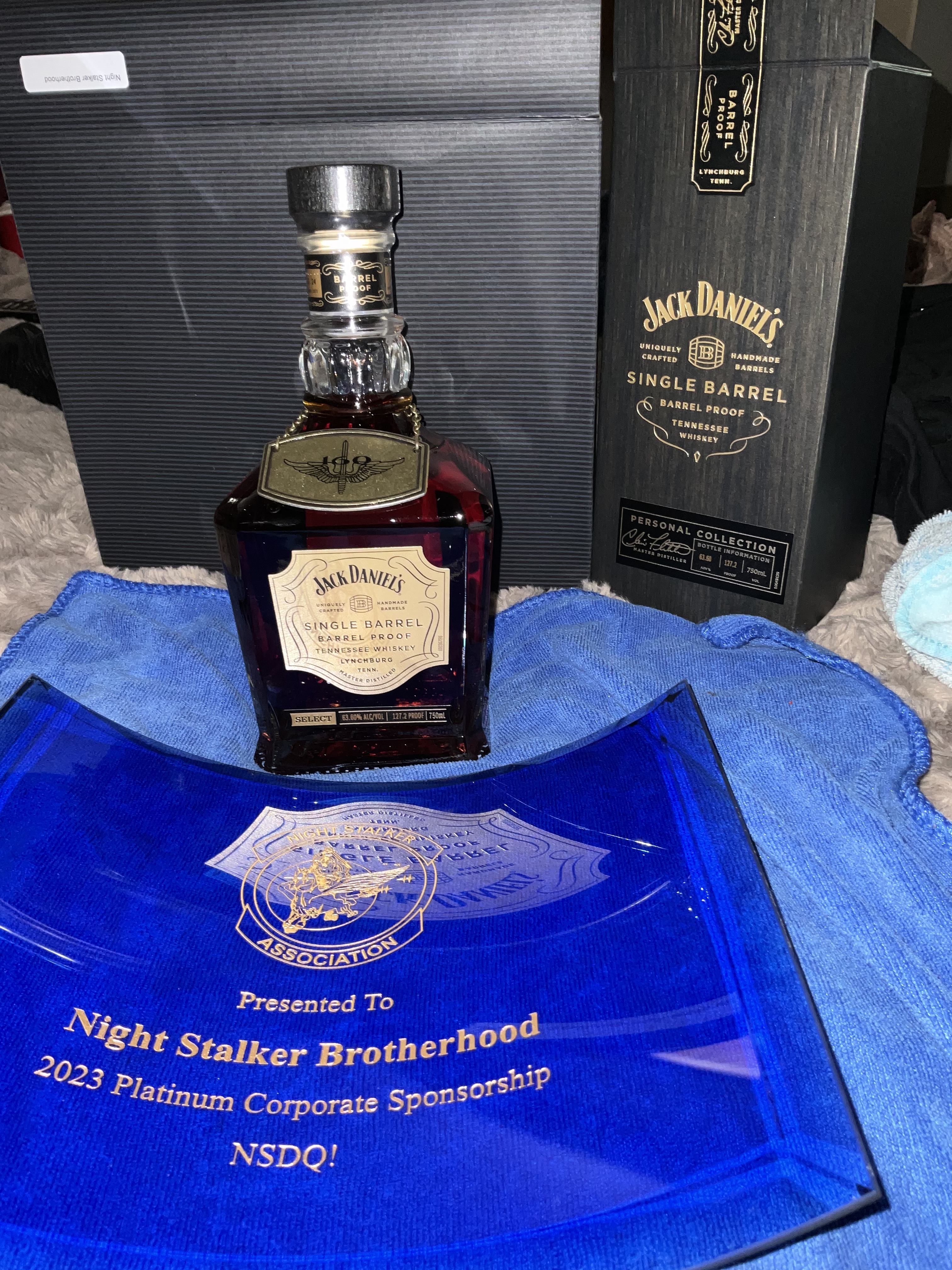
  • Thank You for Another Successful Year of Support!

    To all Members and Supporters of the Nightstalkers Brotherhood Motorcycle Association,

    We are thrilled to announce that for another year , the Nightstalkers Brotherhood Motorcycle Association has been recognized as one of the top donors to the Nightstalker Association. This incredible achievement would not have been possible without the unwavering support and dedication of each and every one of you.

    Your commitment to our cause and your generosity in giving both your time and resources have truly made a difference in the lives of our Nightstalker members and their families. Your contributions have allowed us to provide essential support, resources, and assistance to those who have sacrificed so much in service to our country.

    We are continually inspired by the passion and dedication that each of you brings to our organization. Your willingness to go above and beyond to support our mission is truly commendable and sets a shining example for others to follow.

    As we reflect on another successful year of partnership and collaboration, We want to express our deepest gratitude to each and every one of you. Your continued support is invaluable to us and we are incredibly grateful for everything you do.

    Thank you for your commitment to the Nightstalkers Brotherhood Motorcycle Association , the Nightstalker Association and for being a driving force behind our continued success. Here's to another year of making a positive impact and creating lasting change together.

    Sincerely,
    The Officers of the
    Nightstalkers Brotherhood Motorcycle Association
    Thank You for Another Successful Year of Support! To all Members and Supporters of the Nightstalkers Brotherhood Motorcycle Association, We are thrilled to announce that for another year , the Nightstalkers Brotherhood Motorcycle Association has been recognized as one of the top donors to the Nightstalker Association. This incredible achievement would not have been possible without the unwavering support and dedication of each and every one of you. Your commitment to our cause and your generosity in giving both your time and resources have truly made a difference in the lives of our Nightstalker members and their families. Your contributions have allowed us to provide essential support, resources, and assistance to those who have sacrificed so much in service to our country. We are continually inspired by the passion and dedication that each of you brings to our organization. Your willingness to go above and beyond to support our mission is truly commendable and sets a shining example for others to follow. As we reflect on another successful year of partnership and collaboration, We want to express our deepest gratitude to each and every one of you. Your continued support is invaluable to us and we are incredibly grateful for everything you do. Thank you for your commitment to the Nightstalkers Brotherhood Motorcycle Association , the Nightstalker Association and for being a driving force behind our continued success. Here's to another year of making a positive impact and creating lasting change together. Sincerely, The Officers of the Nightstalkers Brotherhood Motorcycle Association
    0 Σχόλια 0 Μοιράστηκε 26255 Views
  • To our beloved Fallen soldiers…

    Today, we gather with heavy hearts, yet filled with immense gratitude, as we pay tribute to your extraordinary valor and unwavering commitment to our nation. You are not mere names etched on granite walls; you are forever engraved in the depths of our souls, where your memory will eternally reside.

    Your sacrifice embodies the true essence of bravery and selflessness. You embraced the call to duty, leaving behind your families, dreams, and aspirations to protect the liberties we hold dear. With every breath you took, you exemplified the noblest qualities of humanity, reminding us of the profound love you held for our country.

    Though you may have departed this earthly realm, your spirit remains alive within us. We carry your legacy in our hearts, ensuring that your stories are not forgotten. We will recount the tales of your courage, the moments of your sacrifice, and the lives you touched along the way. Your names will echo through generations, as a testament to your unwavering dedication and the profound impact you have left upon us all.

    We will tell the tales & speak the names until we have no breaths left.

    NSDQ NSDF 
    To our beloved Fallen soldiers… Today, we gather with heavy hearts, yet filled with immense gratitude, as we pay tribute to your extraordinary valor and unwavering commitment to our nation. You are not mere names etched on granite walls; you are forever engraved in the depths of our souls, where your memory will eternally reside. Your sacrifice embodies the true essence of bravery and selflessness. You embraced the call to duty, leaving behind your families, dreams, and aspirations to protect the liberties we hold dear. With every breath you took, you exemplified the noblest qualities of humanity, reminding us of the profound love you held for our country. Though you may have departed this earthly realm, your spirit remains alive within us. We carry your legacy in our hearts, ensuring that your stories are not forgotten. We will recount the tales of your courage, the moments of your sacrifice, and the lives you touched along the way. Your names will echo through generations, as a testament to your unwavering dedication and the profound impact you have left upon us all. We will tell the tales & speak the names until we have no breaths left. NSDQ NSDF 
    0 Σχόλια 0 Μοιράστηκε 32472 Views
  • via: U.S. Army Special Operations Aviation Command
    · 13 May 2024

    Today is #ChildrenofFallenPatriotsDay

    ~ We can learn much about resiliency from the Children that endure, sacrifice, and prevail over the tragedy of losing a parent in the line of duty.

    Never forgotten and never left behind!

    NSDQ!
    via: U.S. Army Special Operations Aviation Command · 13 May 2024 Today is #ChildrenofFallenPatriotsDay ~ We can learn much about resiliency from the Children that endure, sacrifice, and prevail over the tragedy of losing a parent in the line of duty. Never forgotten and never left behind! NSDQ!
    0 Σχόλια 0 Μοιράστηκε 30194 Views
  • "We make men without chests and expect of them virtue and enterprise. We laugh at honour and are shocked to find traitors in our midst. We castrate and bid the geldings be fruitful."
    - C.S. Lewis

    "In his book, The Abolition of Man, Lewis was prophetic in pointing out that relativism—the idea that there are no absolute truths—would lead to the decay of morality and a lack of virtue within society. Without a belief in and the teaching of universal moral laws, we fail to educate the heart and are left with intelligent men who behave like animals or as Lewis puts it, “Men without Chests.” Read slowly to follow Lewis’s apologetic:

    It still remains true that no justification of virtue will enable a man to be virtuous. Without the aid of trained emotions the intellect is powerless against the animal organism. I had sooner play cards against a man who was quite skeptical about ethics, but bred to believe that ‘a gentleman does not cheat’, than against an irreproachable moral philosopher who had been brought up among sharpers.

    In battle it is not syllogisms (logical arguments) that will keep the reluctant nerves and muscles to their post in the third hour of the bombardment.

    The crudest sentimentalism about a flag or a country or a regiment will be of more use. We were told it all long ago by Plato. As the king governs by his executive, so Reason in man must rule the mere appetites by means of the ‘spirited element’. The head rules the belly through the chest—the seat, as Alanus tells us, of Magnanimity, of emotions organized by trained habit into stable sentiments. The Chest-Magnanimity-Sentiment—these are the indispensable liaison officers between cerebral man and visceral man.

    It may even be said that it is by this middle element that man is man: for by his intellect he is mere spirit and by his appetite mere animal. The operation of The Green Book (a book promoting relativism) and its kind is to produce what may be called Men without Chests. A persevering devotion to truth, a nice sense of intellectual honour, cannot be long maintained without the aid of a sentiment... It is not excess of thought but defect of fertile and generous emotion that marks them out. Their heads are no bigger than the ordinary: it is the atrophy of the chest beneath that makes them seem so.

    And all the time—such is the tragi-comedy of our situation—we continue to clamour for those very qualities we are rendering impossible. You can hardly open a periodical without coming across the statement that what our civilization needs is more ‘drive’, or dynamism, or self-sacrifice, or ‘creativity’. In a sort of ghastly simplicity we remove the organ and demand the function. We make men without chests and expect of them virtue and enterprise. We laugh at honour and are shocked to find traitors in our midst. We castrate and bid the geldings be fruitful."

    Praise GOD From Whom All Blessings Flow!

    Never Forget! - Never Quit!
    NSDQ!
    "We make men without chests and expect of them virtue and enterprise. We laugh at honour and are shocked to find traitors in our midst. We castrate and bid the geldings be fruitful." - C.S. Lewis "In his book, The Abolition of Man, Lewis was prophetic in pointing out that relativism—the idea that there are no absolute truths—would lead to the decay of morality and a lack of virtue within society. Without a belief in and the teaching of universal moral laws, we fail to educate the heart and are left with intelligent men who behave like animals or as Lewis puts it, “Men without Chests.” Read slowly to follow Lewis’s apologetic: It still remains true that no justification of virtue will enable a man to be virtuous. Without the aid of trained emotions the intellect is powerless against the animal organism. I had sooner play cards against a man who was quite skeptical about ethics, but bred to believe that ‘a gentleman does not cheat’, than against an irreproachable moral philosopher who had been brought up among sharpers. In battle it is not syllogisms (logical arguments) that will keep the reluctant nerves and muscles to their post in the third hour of the bombardment. The crudest sentimentalism about a flag or a country or a regiment will be of more use. We were told it all long ago by Plato. As the king governs by his executive, so Reason in man must rule the mere appetites by means of the ‘spirited element’. The head rules the belly through the chest—the seat, as Alanus tells us, of Magnanimity, of emotions organized by trained habit into stable sentiments. The Chest-Magnanimity-Sentiment—these are the indispensable liaison officers between cerebral man and visceral man. It may even be said that it is by this middle element that man is man: for by his intellect he is mere spirit and by his appetite mere animal. The operation of The Green Book (a book promoting relativism) and its kind is to produce what may be called Men without Chests. A persevering devotion to truth, a nice sense of intellectual honour, cannot be long maintained without the aid of a sentiment... It is not excess of thought but defect of fertile and generous emotion that marks them out. Their heads are no bigger than the ordinary: it is the atrophy of the chest beneath that makes them seem so. And all the time—such is the tragi-comedy of our situation—we continue to clamour for those very qualities we are rendering impossible. You can hardly open a periodical without coming across the statement that what our civilization needs is more ‘drive’, or dynamism, or self-sacrifice, or ‘creativity’. In a sort of ghastly simplicity we remove the organ and demand the function. We make men without chests and expect of them virtue and enterprise. We laugh at honour and are shocked to find traitors in our midst. We castrate and bid the geldings be fruitful." Praise GOD From Whom All Blessings Flow! Never Forget! - Never Quit! NSDQ!
    0 Σχόλια 0 Μοιράστηκε 26928 Views
  • https://taskandpurpose.com/news/75th-rangers-best-ranger-competition/?fbclid=IwAR1gsnXXk8_JMK5bEHz20aDDegBsB84GbVJJ9aOp1jTct9DCcyXawXsb3k4
    https://taskandpurpose.com/news/75th-rangers-best-ranger-competition/?fbclid=IwAR1gsnXXk8_JMK5bEHz20aDDegBsB84GbVJJ9aOp1jTct9DCcyXawXsb3k4
    TASKANDPURPOSE.COM
    75th Ranger Regiments sweeps Best Ranger, Best Mortar, and International Sniper competitions
    Teams from the 75th Ranger Regiment swept the Best Ranger, Best Mortar, and International Sniper Competition this week.
    0 Σχόλια 0 Μοιράστηκε 8037 Views
  • Traces of Texas
    ·
    The Texas Quote of the Day, written by Herman Lehmann, is one of the most interesting I've read in years. Y'all may remember that, in 1870 when he was ten years old, Herman was captured by Apaches just outside of Fredericksburg. He was with the Indians for nine years, six with the Apaches, one on his own, and two with the Comanches (long story there).

    Over time he lost his old life and language and became a full Indian, such that he participated in raids against Anglo settlements, battles with soldiers and Texas rangers etc. He spent a great deal of time with Quanah Parker. He was later discovered by American soldiers and returned to his mother and siblings, though he resisted this. It took a long time for him to adjust back to life among white folks, but he eventually did. In 1927, when he was nearly 70, he wrote "Nine Years Among the Indians 1870-1879." The Texas Quote of the Day comes from that:

    “I am an old man now. I will soon reach the total of three score and ten years allotted to man, if death does not claim me —- seventy years of wonderful experience. I have seen many changes since I came into the world. The ox-cart gave way to the horse-drawn vehicle, and the automobile has surpassed that mode of travel. Speeding railway trains, flying machines, radios, and many other wonders have come to pass. We are living in a fast age. I am glad God has spared my life and permitted me to live to see these wonderful changes. I gave reverence to Him in the only way I knew how when I was an Indian; I worship Him now after the manner of an enlightened white man.

    When I look upon these changes I marvel and wonder how it can be so. Of many of these things I am yet in ignorance; I cannot understand how the human voice can be wafted over the radio thousands of miles without the aid of wires, but it is done, for I have heard it. It is as much a mystery to me as the first telegraph line I ever saw. A party of Indians were coming down into the settlements on a raid when, at a point in the vicinity of Fort Concho [San Angelo], we came upon a newly constructed telegraph line. We stopped and considered it, and wondered what it meant. Each Indian had his own notion about what it was intended for, but we were all wrong.
    The chief said he believed it was to be a fence to be made so high that the Indians could not get through, and so we proceeded to cut it down. Coming on down into the settlement we stole some horses and went back away with the drove, and we found the line had been rebuilt and the wire was in place again.

    And the puffing locomotive and railway train was also an object of wonder when I came back to civilization and beheld them. The first train I ever saw was while I was with the Indians, and of course we did not know what it was, and in consequence got a scare that almost drove us frantic. We had come far down into the settlements on a raid, it may have been near Austin, and one night while we were waiting in a secluded spot in a little ravine, for the moon to come up, a train suddenly came around a curve from behind a mountain and was right on us before we had time to mount our horses. That hideous monster, belching smoke and hissing steam, and with glaring lights bore down upon us at terrific speed, and we ran, scrambling over rocks and through the brush, to get away from it. It followed us for a little ways, but we thought it lost our trail, as it went rushing on away from us. We were somewhat scattered when things became quiet, and I was uneasy for fear the awful thing had caught three of our comrades. But when we gave our agreed assembly signal the Indians came forth from their hiding places and we held a consultation. We decided to leave that region at once and not attempt to steal horses there, for that monster might return and catch us. It was generally agreed among us that it was the Evil Spirit that was abroad, and was seeking to devour all mankind, the white folks included. When we went back to camp and told what we had seen the Indians were greatly alarmed, and the medicine men warned us to stay out of that region.”

    ----- Herman Lehmann, "Nine Years Among the Indians: 1870-1879," published in 1927. Shown here: Herman Lehmann around the time he wrote this book.
    Traces of Texas · The Texas Quote of the Day, written by Herman Lehmann, is one of the most interesting I've read in years. Y'all may remember that, in 1870 when he was ten years old, Herman was captured by Apaches just outside of Fredericksburg. He was with the Indians for nine years, six with the Apaches, one on his own, and two with the Comanches (long story there). Over time he lost his old life and language and became a full Indian, such that he participated in raids against Anglo settlements, battles with soldiers and Texas rangers etc. He spent a great deal of time with Quanah Parker. He was later discovered by American soldiers and returned to his mother and siblings, though he resisted this. It took a long time for him to adjust back to life among white folks, but he eventually did. In 1927, when he was nearly 70, he wrote "Nine Years Among the Indians 1870-1879." The Texas Quote of the Day comes from that: “I am an old man now. I will soon reach the total of three score and ten years allotted to man, if death does not claim me —- seventy years of wonderful experience. I have seen many changes since I came into the world. The ox-cart gave way to the horse-drawn vehicle, and the automobile has surpassed that mode of travel. Speeding railway trains, flying machines, radios, and many other wonders have come to pass. We are living in a fast age. I am glad God has spared my life and permitted me to live to see these wonderful changes. I gave reverence to Him in the only way I knew how when I was an Indian; I worship Him now after the manner of an enlightened white man. When I look upon these changes I marvel and wonder how it can be so. Of many of these things I am yet in ignorance; I cannot understand how the human voice can be wafted over the radio thousands of miles without the aid of wires, but it is done, for I have heard it. It is as much a mystery to me as the first telegraph line I ever saw. A party of Indians were coming down into the settlements on a raid when, at a point in the vicinity of Fort Concho [San Angelo], we came upon a newly constructed telegraph line. We stopped and considered it, and wondered what it meant. Each Indian had his own notion about what it was intended for, but we were all wrong. The chief said he believed it was to be a fence to be made so high that the Indians could not get through, and so we proceeded to cut it down. Coming on down into the settlement we stole some horses and went back away with the drove, and we found the line had been rebuilt and the wire was in place again. And the puffing locomotive and railway train was also an object of wonder when I came back to civilization and beheld them. The first train I ever saw was while I was with the Indians, and of course we did not know what it was, and in consequence got a scare that almost drove us frantic. We had come far down into the settlements on a raid, it may have been near Austin, and one night while we were waiting in a secluded spot in a little ravine, for the moon to come up, a train suddenly came around a curve from behind a mountain and was right on us before we had time to mount our horses. That hideous monster, belching smoke and hissing steam, and with glaring lights bore down upon us at terrific speed, and we ran, scrambling over rocks and through the brush, to get away from it. It followed us for a little ways, but we thought it lost our trail, as it went rushing on away from us. We were somewhat scattered when things became quiet, and I was uneasy for fear the awful thing had caught three of our comrades. But when we gave our agreed assembly signal the Indians came forth from their hiding places and we held a consultation. We decided to leave that region at once and not attempt to steal horses there, for that monster might return and catch us. It was generally agreed among us that it was the Evil Spirit that was abroad, and was seeking to devour all mankind, the white folks included. When we went back to camp and told what we had seen the Indians were greatly alarmed, and the medicine men warned us to stay out of that region.” ----- Herman Lehmann, "Nine Years Among the Indians: 1870-1879," published in 1927. Shown here: Herman Lehmann around the time he wrote this book.
    Salute
    1
    0 Σχόλια 0 Μοιράστηκε 28999 Views
  • Every minute someone leaves this world behind.
    We are all in “the line” without knowing it.
    We never know how many people are before us.
    We cannot move to the back of the line.
    We cannot step out of the line.
    We cannot avoid the line.

    So while we wait in line:
    Make moments count.
    Make priorities.
    Make the time.
    Make your gifts known.
    Make a nobody feel like a somebody.
    Make your voice heard.
    Make the small things big.
    Make someone smile.
    Make the change.
    Make love.
    Make up.
    Make peace.
    Make sure to tell your people they are loved.
    Make sure to have no regrets.
    Make sure you are ready.
    - Author Unknown
    Every minute someone leaves this world behind. We are all in “the line” without knowing it. We never know how many people are before us. We cannot move to the back of the line. We cannot step out of the line. We cannot avoid the line. So while we wait in line: Make moments count. Make priorities. Make the time. Make your gifts known. Make a nobody feel like a somebody. Make your voice heard. Make the small things big. Make someone smile. Make the change. Make love. Make up. Make peace. Make sure to tell your people they are loved. Make sure to have no regrets. Make sure you are ready. - Author Unknown
    0 Σχόλια 0 Μοιράστηκε 5891 Views
  • A Father’s Pride in His Late Son’s Service
    Commentary: A Father’s Pride in His Late Son’s Service
    By Army Maj. Gen. Kurt J. Stein

    Special to American Forces Press Service

    WASHINGTON, March 15, 2010 – While flying on United Airlines last week, I overheard a telephone conversation from a gentleman seated directly behind me. His words went something like this: "Although today was an extremely sad day for me - it was absolutely the happiest day of my life, and I am proud to be an American."

    This gentleman went on to talk about a funeral he attended in South Carolina, and specifically gave great kudos to the U.S. Army for the professionalism displayed at this service. He went into great detail about the funeral service itself and how it was conducted. He went on to say that Jeremiah really enjoyed serving in the Army, and now, he clearly understood why.

    My ears immediately perked up when I overheard him talk about the Army in such a positive way. He boasted about the General who presented the flags to him and his family, the sharp-looking soldiers of the salute battery, the sounds of taps, how the soldiers stood at attention for such a long period of time, how the military paid for his family to fly to South Carolina, the number of letters and calls he received from Jeremiah's command, how the Red Cross assisted, and so on. He could not say enough great things about our Army.

    I quickly pulled a two-star card from my briefcase and wrote him a thank-you note for his kind words about our Army. He had no clue I was in the Army since I was in civilian clothes. Within seconds, he tapped me on the shoulder and with tears in his eyes proceeded to tell me the rest of the story.

    The gentleman's name is Robert Wittman. He was flying with his entire family: wife, son, daughter, Mom, Dad, grandparents and friends. They were carrying home the cremated remains of his son, Sgt. Jeremiah T. Wittman of the 4th Infantry Division, who was killed in Afghanistan on Feb. 13.

    Dad told me that Jeremiah already had two tours in Iraq and ultimately gave his life in Afghanistan. While in Iraq the first time, Jeremiah's vehicle was hit by an improvised explosive device, and several of his buddies were severely injured. He went on to say that his son truly loved the Army and did what he did from the heart.

    His dad was a proud man. He did say that he often wondered why his son stayed in the Army after his initial attack in Iraq. Now that he saw the U.S. Army in action at the funeral, he said – as he had on the phone earlier -- that he now understands why.

    Dad proudly held up the urn and boasted about how beautiful it was, and he continued to brag about the Army for all to hear. The folks around him listened with big ears and inspiration.

    I must admit, although it really was a beautiful urn and a wonderful Army story - it brought a slight tear to my eye, as I, too, have a son —- a captain in the 82nd Airborne Division -- serving in Afghanistan, and this moment hit home.

    Bottom line: Although the family was saddened by the loss of their son, they were all proud to be associated with the U.S. Army. I could see it in their eyes and hear it in their voices. Why? Simply because of the way they were treated by our Army family at the funeral. The 4th ID leadership and others involved did it up right and made a positive, lifetime-lasting impact with this family.

    Great job!

    To top off a memorable flight, when the aircraft came to a halt the pilot announced, "Ladies and gentlemen, may I have your attention please. Among us today is a Great American Soldier named Sgt. Jeremiah Wittman, killed in action on 13 February. Our deepest sympathy, respect and sorrow go out to the Wittman family. We ask that you honor Sergeant Wittman -- our fallen hero -- the entire Wittman family and our armed forces by remaining seated and allowing the family to depart the aircraft first.”

    At that moment, you could have heard a pin drop in the aircraft, but within seconds, everyone on the aircraft was clapping as the family departed on their way.

    The family departed feeling special and honored. I sat there proud to be an American Soldier
    (Army Maj. Gen. Kurt J. Stein is the commanding general of U.S. Army TACOM Life Cycle Management Command.)
    A Father’s Pride in His Late Son’s Service Commentary: A Father’s Pride in His Late Son’s Service By Army Maj. Gen. Kurt J. Stein Special to American Forces Press Service WASHINGTON, March 15, 2010 – While flying on United Airlines last week, I overheard a telephone conversation from a gentleman seated directly behind me. His words went something like this: "Although today was an extremely sad day for me - it was absolutely the happiest day of my life, and I am proud to be an American." This gentleman went on to talk about a funeral he attended in South Carolina, and specifically gave great kudos to the U.S. Army for the professionalism displayed at this service. He went into great detail about the funeral service itself and how it was conducted. He went on to say that Jeremiah really enjoyed serving in the Army, and now, he clearly understood why. My ears immediately perked up when I overheard him talk about the Army in such a positive way. He boasted about the General who presented the flags to him and his family, the sharp-looking soldiers of the salute battery, the sounds of taps, how the soldiers stood at attention for such a long period of time, how the military paid for his family to fly to South Carolina, the number of letters and calls he received from Jeremiah's command, how the Red Cross assisted, and so on. He could not say enough great things about our Army. I quickly pulled a two-star card from my briefcase and wrote him a thank-you note for his kind words about our Army. He had no clue I was in the Army since I was in civilian clothes. Within seconds, he tapped me on the shoulder and with tears in his eyes proceeded to tell me the rest of the story. The gentleman's name is Robert Wittman. He was flying with his entire family: wife, son, daughter, Mom, Dad, grandparents and friends. They were carrying home the cremated remains of his son, Sgt. Jeremiah T. Wittman of the 4th Infantry Division, who was killed in Afghanistan on Feb. 13. Dad told me that Jeremiah already had two tours in Iraq and ultimately gave his life in Afghanistan. While in Iraq the first time, Jeremiah's vehicle was hit by an improvised explosive device, and several of his buddies were severely injured. He went on to say that his son truly loved the Army and did what he did from the heart. His dad was a proud man. He did say that he often wondered why his son stayed in the Army after his initial attack in Iraq. Now that he saw the U.S. Army in action at the funeral, he said – as he had on the phone earlier -- that he now understands why. Dad proudly held up the urn and boasted about how beautiful it was, and he continued to brag about the Army for all to hear. The folks around him listened with big ears and inspiration. I must admit, although it really was a beautiful urn and a wonderful Army story - it brought a slight tear to my eye, as I, too, have a son —- a captain in the 82nd Airborne Division -- serving in Afghanistan, and this moment hit home. Bottom line: Although the family was saddened by the loss of their son, they were all proud to be associated with the U.S. Army. I could see it in their eyes and hear it in their voices. Why? Simply because of the way they were treated by our Army family at the funeral. The 4th ID leadership and others involved did it up right and made a positive, lifetime-lasting impact with this family. Great job! To top off a memorable flight, when the aircraft came to a halt the pilot announced, "Ladies and gentlemen, may I have your attention please. Among us today is a Great American Soldier named Sgt. Jeremiah Wittman, killed in action on 13 February. Our deepest sympathy, respect and sorrow go out to the Wittman family. We ask that you honor Sergeant Wittman -- our fallen hero -- the entire Wittman family and our armed forces by remaining seated and allowing the family to depart the aircraft first.” At that moment, you could have heard a pin drop in the aircraft, but within seconds, everyone on the aircraft was clapping as the family departed on their way. The family departed feeling special and honored. I sat there proud to be an American Soldier (Army Maj. Gen. Kurt J. Stein is the commanding general of U.S. Army TACOM Life Cycle Management Command.)
    Salute
    1
    0 Σχόλια 0 Μοιράστηκε 73746 Views
  • https://www.linkedin.com/posts/shawn-moore-lmsw-127369143_my-husband-a-23-year-army-veteran-died-ugcPost-7173762621593018369-mohy?utm_source=share&utm_medium=member_ios&fbclid=IwAR2i-NzFyavEppDJijDkL8CyLOn5Pc9Yiw2N-4rDi-Ct3-zuXUU97Jl5wZk_aem_ASbUu1JCmKmnGeMuni7H4CKvtHE88bKud1vaiLCk6qY8j2uJJHrl_x54dFFVXBeHZck
    https://www.linkedin.com/posts/shawn-moore-lmsw-127369143_my-husband-a-23-year-army-veteran-died-ugcPost-7173762621593018369-mohy?utm_source=share&utm_medium=member_ios&fbclid=IwAR2i-NzFyavEppDJijDkL8CyLOn5Pc9Yiw2N-4rDi-Ct3-zuXUU97Jl5wZk_aem_ASbUu1JCmKmnGeMuni7H4CKvtHE88bKud1vaiLCk6qY8j2uJJHrl_x54dFFVXBeHZck
    WWW.LINKEDIN.COM
    Shawn Moore, LMSW on LinkedIn: My husband, a 23-year Army Veteran, died by suicide on February 26th… | 75 comments
    My husband, a 23-year Army Veteran, died by suicide on February 26th. I'm sure many things must be going through your mind right now.... he wasn't in care,… | 75 comments on LinkedIn
    Sad
    1
    1 Σχόλια 0 Μοιράστηκε 31912 Views

  • Dear Art “Burt” Reynolds,

    I hope this letter finds you in good health and high spirits. Allow me to extend the Fall In communities sincerest gratitude for your remarkable service and unwavering dedication to our Tribe. Your contributions are instrumental in the growth and success of our platform but have also significantly impacted our community in the most positive ways imaginable.

    Your commitment to excellence and expertise coupled with your unshakable faith in America, is a driving force behind our achievements. Your innovative ideas and proactive approach have propelled us toward new heights, enabling us to offer unparalleled services to our users. Your ability to inspire and lead the team has fostered a collaborative and productive environment, which is truly commendable.

    Furthermore, your dedication has ensured the highest standards of security and reliability instilling confidence and trust among our users. It is evident that your efforts play a crucial role in establishing Fall In as a secure and dependable platform. For this, we are immensely grateful.

    On a personal note, I want to express my appreciation for the support and guidance you provided me, and the Team. Your mentorship has been invaluable, and I am honored by the opportunity to work alongside someone of your caliber.

    Please accept my heartfelt thanks for your service to Fall In and the community we serve. Your legacy of excellence and commitment will continue to inspire us all.

    NSDQ-Serving! & LLTB!

    Warmest regards,

    The Fall In Skipper
    Dear Art “Burt” Reynolds, I hope this letter finds you in good health and high spirits. Allow me to extend the Fall In communities sincerest gratitude for your remarkable service and unwavering dedication to our Tribe. Your contributions are instrumental in the growth and success of our platform but have also significantly impacted our community in the most positive ways imaginable. Your commitment to excellence and expertise coupled with your unshakable faith in America, is a driving force behind our achievements. Your innovative ideas and proactive approach have propelled us toward new heights, enabling us to offer unparalleled services to our users. Your ability to inspire and lead the team has fostered a collaborative and productive environment, which is truly commendable. Furthermore, your dedication has ensured the highest standards of security and reliability instilling confidence and trust among our users. It is evident that your efforts play a crucial role in establishing Fall In as a secure and dependable platform. For this, we are immensely grateful. On a personal note, I want to express my appreciation for the support and guidance you provided me, and the Team. Your mentorship has been invaluable, and I am honored by the opportunity to work alongside someone of your caliber. Please accept my heartfelt thanks for your service to Fall In and the community we serve. Your legacy of excellence and commitment will continue to inspire us all. NSDQ-Serving! & LLTB! Warmest regards, The Fall In Skipper
    Salute
    1
    1 Σχόλια 0 Μοιράστηκε 56693 Views
  • The Enduring Solitude Of Combat Vets:

    Retired Army Special Forces Sgt. Maj. Alan Farrell is one of the more interesting people in this country nowadays, a decorated veteran of the Vietnam War who teaches French at VMI, reviews films and writes poetry. Just your typical sergeant major/brigadier general with a Ph.D. in French and a fistful of other degrees.

    This is a speech that he gave to Vets at the Harvard Business School last Veterans' Day. I know it is long but well worth the read:
    --------
    "Ladies and Gentlemens:

    Kurt Vonnegut -- Corporal Vonnegut -- famously told an assembly like this one that his wife had begged him to "bring light into their tunnels" that night. "Can't do that," said Vonnegut, since, according to him, the audience would at once sense his duplicity, his mendacity, his insincerity... and have yet another reason for despair. I'll not likely have much light to bring into any tunnels this night, either.

    The remarks I'm about to make to you I've made before... in essence at least. I dare to make them again because other Veterans seem to approve. I speak mostly to Veterans. I don't have much to say to them, the others, civilians, real people. These remarks, I offer you for the reaction I got from one of them, though, a prison shrink. I speak in prisons a lot. Because some of our buddies wind up in there. Because their service was a Golden Moment in a life gone sour. Because... because no one else will.

    In the event, I've just got done saying what I'm about to say to you, when the prison psychologist sidles up to me to announce quietly: "You've got it." The "it," of course, is Post Stress Traumatic Traumatic Post Stress Disorder Stress... Post. Can never seem to get the malady nor the abbreviation straight. He's worried about me... that I'm wandering around loose... that I'm talking to his cons. So worried, but so sincere, that I let him make me an appointment at the V.A. for "diagnosis." Sincerity is a rare pearl.

    So I sulk in the stuffy anteroom of the V.A. shrink's office for the requisite two hours (maybe you have), finally get admitted. He's a nice guy. Asks me about my war, scans my 201 File, and, after what I take to be clinical scrutiny, announces without preamble: "You've got it." He can snag me, he says, 30 percent disability. Reimbursement, he says, from Uncle Sam, now till the end of my days. Oh, and by the way, he says, there's a cure. I'm not so sure that I want a cure for 30 percent every month. This inspires him to explain. He takes out a piece of paper and a Magic Marker™. Now: Anybody who takes out a frickin' Magic Marker™ to explain something to you thinks you're a bonehead and by that very gesture says so to God and everybody.

    Anyhow. He draws two big circles on a sheet of paper, then twelve small circles. Apples and grapes, you might say. In fact, he does say. The "grapes," he asserts, stand for the range of emotional response open to a healthy civilian, a normal person: titillation, for instance, then amusement, then pleasure, then joy, then delight and so on across the spectrum through mild distress on through angst -- whatever that is -- to black depression. The apples? That's what you got, traumatized veteran: Ecstasy and Despair. But we can fix that for you. We can make you normal.

    So here's my question: Why on earth would anybody want to be normal?

    And here's what triggered that curious episode:

    The words of the prophet Jeremiah:

    My bowels. My bowels. I am pained at my very heart; my heart maketh a noise in me... [T]hou hast heard, O my soul, the sound of the trumpet, the alarm of war. Destruction upon destruction is cried; for the whole land is spoilt and my curtains... How long shall I see the standard and hear the sound of the trumpet?

    I dunno about Jeremiah's bowels... or his curtains, but I've seen the standard and heard the sound of the trumpet. Again. Civilians mooing about that "Thin Red Line of 'eroes" between them and the Darkness. Again. ‘Course it's not red any more. Used to be olive drab. Then treetop camouflage. Then woodland. Then chocolate chip. Now pixelated, random computer-generated. Multi-cam next, is it? Progress. The kids are in the soup. Again. Me? I can't see the front sights of me piece any more. And if I can still lug my rucksack five miles, I need these days to be defibrillated when I get there. Nope. I got something like six Honorable Discharges from Pharaoh's Army. Your Mom's gonna be wearing Kevlar before I do. Nope. This one's on the kids, I'm afraid, the next generation.

    I can't help them. Not those who make the sacrifice in the desert nor those in the cesspool cities of a land that if two troopers from the One Oh One or two Lance Corporals could find on a map a few years ago, I'll be surprised. Nobody can help... except by trying to build a society Back Here that deserves such a sacrifice.

    We gonna win the war? I dunno. They tell me I lost mine. I know I didn't start it. Soldiers don't start wars. Civilians do. And civilians say when they're over. I'm just satisfied right now that these kids, for better or worse, did their duty as God gave them the light to see it. But I want them back. And I worry not about the fight, but about the after: after the war, after the victory, after... God forbid... the defeat, if it come to that. It's after that things get tricky. After that a Soldier needs the real grit and wit. And after that a Soldier needs to believe. Anybody can believe before. During? A Soldier has company in the fight, in Kandahar or Kabul, Basra or Baghdad. It's enough to believe in the others during. But after... and I can tell you this having come home from a war: After ...a Soldier is alone. A batch of them, maybe... but still alone.

    Years ago, maybe... when I was still in the Army, my A Team got the mission to support an Air Force escape and evasion exercise. Throw a bunch of downed pilots into the wilderness, let local guerrillas (us) feed them into a clandestine escape net and spirit them out by train just like in The Great Escape to... Baltimore, of all places. So we set up an elaborate underground network: farmhouses, caves, barns, pickup trucks, loads of hay where a guy can hide, fifty-five gallon drums to smuggle the evadees through checkpoints in. We've even cozened the Norfolk and Western Railroad out of a boxcar.

    Sooooo... come midnight, with our escapees safely stowed in that car, we wait for a special train to make a detour, back onto the siding, hook it up, and freight the pilots off to Maree-land. Pretty realistic, seems to us.

    Now, for safety's sake the Railroad requires a Line Administrator on site to supervise any special stop. Sure enough, just before midnight two suit-and-ties show up toting a red lantern. Civilians. We sniff at them disdainfully. One of them wigwags to the train. With a clank she couples the boxcar and chugs out into the night. The other guy -- frumpy Babbit from the front office -- shuffles off down the track and out onto a trestle bridge over the gorge. He stands there with his hands behind his back, peering up at the cloud-strewn summertime sky, a thousand bucks worth of Burberry overcoat riffling in the night breeze. I edge over respectfully behind him. Wait. He notices me after a while, looks back. "You know," he says, "Was on a night like this 40 years ago that I jumped into Normandy."

    Who'da thought?

    Who'da thought? Then I thought... back to right after my return from Vietnam. I'm working nights at a convenience store just down the road from this very spot. Lousy job. Whores, bums, burnouts, lowlifes. That's your clientele after midnight in a convenience store. One particular guy I remember drifts in every morning about 0400. Night work. Janitor, maybe. Not much to distinguish him from the rest of the early morning crowd of shadows shuffling around the place. Fingers and teeth yellowed from cigarette smoke. A weathered, leathered face that just dissolves into the colorless crowd of nobodies.

    Never says a word. Buys his margarine and macaroni and Miller's. Plunks down his cash. Hooks a grubby hand around his bag and threads his way out of the place and down the street. Lost in another world. Like the rest of the derelicts. One night, he's fumbling for his keys, drops them on the floor, sets his wallet on the counter -- brown leather, I still remember -- and the wallet flops open. Pinned to the inside of it, worn shiny and smooth, with its gold star gleaming out of the center: combat jump badge from that great World War II... Normandy maybe, just like the suit-and-tie.

    Who'da thought?

    Two guys scarred Out There. Not sure just where or how even. You can lose your life without dying. But the guy who made it to the top and the guy shambling along the bottom are what James Joyce calls in another context "secret messengers." Citizens among the rest, who look like the rest, talk like the rest, act like the rest... but who know prodigious secrets, wherever they wash up and whatever use they make of them. Who know somber despair but inexplicable laughter, the ache of duty but distrust of inaction. Who know risk and exaltation... and that awful drop though empty air we call failure... and solitude! They know solitude.

    Because solitude is what waits for the one who shall have borne the battle. Out There in it together... back here alone.

    Alone to make way in a scrappy, greedy, civilian world "filching lucre and gulping warm beer," as Conrad had it. Alone to learn the skills a self-absorbed, hustling, modern society values. Alone to unlearn the deadly skills of the former -- and bloody -- business. Alone to find a companion -- maybe -- and alone -- maybe -- even with that companion over a lifetime... for who can make someone else who hasn't seen it understand horror, blackness, filth Incommunicado. Voiceless. Alone.

    My Railroad president wandered off by himself to face his memories; my Store 24 regular was clearly a man alone with his.

    For my two guys, it was the after the battle that they endured, and far longer than the moment of terror in the battle. Did my Railroad exec learn in the dark of war to elbow other men aside, to view all other men as the enemy, to "fight" his way up the corporate ladder just as he fought his way out of the bocages of Normandy? Did he find he could never get close to a wife or children again and turn his energy, perhaps his anger toward some other and solitary goal Did the Store/24 guy never get out of his parachute harness and shiver in an endless night patrolled by demons he couldn't get shut of? Did he haul out that tattered wallet and shove his jump badge under the nose of those he'd done wrong to, disappointed, embarrassed? Did he find fewer and fewer citizens Back Here who even knew what it was? Did he keep it because he knew what it was? From what I've seen -- from a distance, of course -- of success, I'd say it's not necessarily sweeter than failure -- which I have seen close up.

    Well, that's what I said that woke up the prison shrink.
    And I say again to you that silence is the reward we reserve for you and your buddies, for my Cadets. Silence is the sound of Honor, which speaks no word and lays no tread. And Nothing is the glory of the one who's done Right. And Alone is the society of those who do it the Hard Way, alone even when they have comrades like themselves in the fight. I've gotta hope as a teacher that my Cadets, as a citizen that you and your buddies will have the inner resources, the stuff of inner life, the values in short, to abide the brute loneliness of after, to find the courage to continue the march, to do Right, to live with what they've done, you've done in our name, to endure that dark hour of frustration, humiliation, failure maybe... or victory, for one or the other is surely waiting Back Here. Unless you opt for those grapes...

    My two guys started at the same place and wound up at the far ends of the spectrum. As we measure their distance from that starting point, they seem to return to it: the one guy in the darkness drawn back to a Golden Moment in his life from a lofty vantage point; t'other guy lugging through God knows what gauntlet of shame and frustration that symbol of his Golden Moment. Today we celebrate your Golden Moment. While a whole generation went ganging after its own indulgence, vanity, appetite, you clung to a foolish commitment, to foolish old traditions; as Soldiers, Sailors, Pilots, Marines you honored pointless ritual, suffered the endless, sluggish monotony of duty, raised that flag not just once, or again, or -- as has become fashionable now -- in time of peril, but every single morning. You stuck it out. You may have had -- as we like to say -- the camaraderie of brothers or sisters to buck each other up or the dubious support (as we like to say... and say more than do, by the way) of the folks back home, us... but in the end you persevered alone. Just as alone you made that long walk from Out There with a duffle bag fulla pixelated, random computer-generated dirty laundry -- along with your bruised dreams, your ecstasy and your despair -- Back Here at tour's end.

    And you will be alone, for all the good intentions and solicitude of them, the other, the civilians. Alone. But...together. Your generation, whom us dumbo civilians couldn't keep out of war, will bear the burden of a soldier's return... alone. And a fresh duty: to complete the lives of your buddies who didn't make it back, to confect for them a living monument to their memory.

    Your comfort, such as it is, will come from the knowledge that others of that tiny fraction of the population that fought for us are alone but grappling with the same dilemmas -- often small and immediate, often undignified or humiliating, now and then immense and overwhelming -- by your persistence courting the risk, by your obstinacy clinging to that Hard Way. Some of you will be stronger than others, but even the strong ones will have their darker moments. Where we can join each other if not relieve each other, we secret messengers, is right here in places like this and on occasions like this -- one lousy day of the year, your day, my day, our day, -- in the company of each other and of the flag we served. Not much cheer in that kerugma. But there's the by-God glory.

    "I know..." says the prophet Isaiah:

    ... I know that thou art obstinate, and thy neck is an iron sinew, and thy brow brass...I have shewed thee new things, even hidden things. Behold, I have refined thee, but not with silver; I have [refined] thee...in the furnace of affliction...

    Well, all right, then. Why on earth would anybody want to be normal? Thanks for Listening and Lord love the lot of youse."
    The Enduring Solitude Of Combat Vets: Retired Army Special Forces Sgt. Maj. Alan Farrell is one of the more interesting people in this country nowadays, a decorated veteran of the Vietnam War who teaches French at VMI, reviews films and writes poetry. Just your typical sergeant major/brigadier general with a Ph.D. in French and a fistful of other degrees. This is a speech that he gave to Vets at the Harvard Business School last Veterans' Day. I know it is long but well worth the read: -------- "Ladies and Gentlemens: Kurt Vonnegut -- Corporal Vonnegut -- famously told an assembly like this one that his wife had begged him to "bring light into their tunnels" that night. "Can't do that," said Vonnegut, since, according to him, the audience would at once sense his duplicity, his mendacity, his insincerity... and have yet another reason for despair. I'll not likely have much light to bring into any tunnels this night, either. The remarks I'm about to make to you I've made before... in essence at least. I dare to make them again because other Veterans seem to approve. I speak mostly to Veterans. I don't have much to say to them, the others, civilians, real people. These remarks, I offer you for the reaction I got from one of them, though, a prison shrink. I speak in prisons a lot. Because some of our buddies wind up in there. Because their service was a Golden Moment in a life gone sour. Because... because no one else will. In the event, I've just got done saying what I'm about to say to you, when the prison psychologist sidles up to me to announce quietly: "You've got it." The "it," of course, is Post Stress Traumatic Traumatic Post Stress Disorder Stress... Post. Can never seem to get the malady nor the abbreviation straight. He's worried about me... that I'm wandering around loose... that I'm talking to his cons. So worried, but so sincere, that I let him make me an appointment at the V.A. for "diagnosis." Sincerity is a rare pearl. So I sulk in the stuffy anteroom of the V.A. shrink's office for the requisite two hours (maybe you have), finally get admitted. He's a nice guy. Asks me about my war, scans my 201 File, and, after what I take to be clinical scrutiny, announces without preamble: "You've got it." He can snag me, he says, 30 percent disability. Reimbursement, he says, from Uncle Sam, now till the end of my days. Oh, and by the way, he says, there's a cure. I'm not so sure that I want a cure for 30 percent every month. This inspires him to explain. He takes out a piece of paper and a Magic Marker™. Now: Anybody who takes out a frickin' Magic Marker™ to explain something to you thinks you're a bonehead and by that very gesture says so to God and everybody. Anyhow. He draws two big circles on a sheet of paper, then twelve small circles. Apples and grapes, you might say. In fact, he does say. The "grapes," he asserts, stand for the range of emotional response open to a healthy civilian, a normal person: titillation, for instance, then amusement, then pleasure, then joy, then delight and so on across the spectrum through mild distress on through angst -- whatever that is -- to black depression. The apples? That's what you got, traumatized veteran: Ecstasy and Despair. But we can fix that for you. We can make you normal. So here's my question: Why on earth would anybody want to be normal? And here's what triggered that curious episode: The words of the prophet Jeremiah: My bowels. My bowels. I am pained at my very heart; my heart maketh a noise in me... [T]hou hast heard, O my soul, the sound of the trumpet, the alarm of war. Destruction upon destruction is cried; for the whole land is spoilt and my curtains... How long shall I see the standard and hear the sound of the trumpet? I dunno about Jeremiah's bowels... or his curtains, but I've seen the standard and heard the sound of the trumpet. Again. Civilians mooing about that "Thin Red Line of 'eroes" between them and the Darkness. Again. ‘Course it's not red any more. Used to be olive drab. Then treetop camouflage. Then woodland. Then chocolate chip. Now pixelated, random computer-generated. Multi-cam next, is it? Progress. The kids are in the soup. Again. Me? I can't see the front sights of me piece any more. And if I can still lug my rucksack five miles, I need these days to be defibrillated when I get there. Nope. I got something like six Honorable Discharges from Pharaoh's Army. Your Mom's gonna be wearing Kevlar before I do. Nope. This one's on the kids, I'm afraid, the next generation. I can't help them. Not those who make the sacrifice in the desert nor those in the cesspool cities of a land that if two troopers from the One Oh One or two Lance Corporals could find on a map a few years ago, I'll be surprised. Nobody can help... except by trying to build a society Back Here that deserves such a sacrifice. We gonna win the war? I dunno. They tell me I lost mine. I know I didn't start it. Soldiers don't start wars. Civilians do. And civilians say when they're over. I'm just satisfied right now that these kids, for better or worse, did their duty as God gave them the light to see it. But I want them back. And I worry not about the fight, but about the after: after the war, after the victory, after... God forbid... the defeat, if it come to that. It's after that things get tricky. After that a Soldier needs the real grit and wit. And after that a Soldier needs to believe. Anybody can believe before. During? A Soldier has company in the fight, in Kandahar or Kabul, Basra or Baghdad. It's enough to believe in the others during. But after... and I can tell you this having come home from a war: After ...a Soldier is alone. A batch of them, maybe... but still alone. Years ago, maybe... when I was still in the Army, my A Team got the mission to support an Air Force escape and evasion exercise. Throw a bunch of downed pilots into the wilderness, let local guerrillas (us) feed them into a clandestine escape net and spirit them out by train just like in The Great Escape to... Baltimore, of all places. So we set up an elaborate underground network: farmhouses, caves, barns, pickup trucks, loads of hay where a guy can hide, fifty-five gallon drums to smuggle the evadees through checkpoints in. We've even cozened the Norfolk and Western Railroad out of a boxcar. Sooooo... come midnight, with our escapees safely stowed in that car, we wait for a special train to make a detour, back onto the siding, hook it up, and freight the pilots off to Maree-land. Pretty realistic, seems to us. Now, for safety's sake the Railroad requires a Line Administrator on site to supervise any special stop. Sure enough, just before midnight two suit-and-ties show up toting a red lantern. Civilians. We sniff at them disdainfully. One of them wigwags to the train. With a clank she couples the boxcar and chugs out into the night. The other guy -- frumpy Babbit from the front office -- shuffles off down the track and out onto a trestle bridge over the gorge. He stands there with his hands behind his back, peering up at the cloud-strewn summertime sky, a thousand bucks worth of Burberry overcoat riffling in the night breeze. I edge over respectfully behind him. Wait. He notices me after a while, looks back. "You know," he says, "Was on a night like this 40 years ago that I jumped into Normandy." Who'da thought? Who'da thought? Then I thought... back to right after my return from Vietnam. I'm working nights at a convenience store just down the road from this very spot. Lousy job. Whores, bums, burnouts, lowlifes. That's your clientele after midnight in a convenience store. One particular guy I remember drifts in every morning about 0400. Night work. Janitor, maybe. Not much to distinguish him from the rest of the early morning crowd of shadows shuffling around the place. Fingers and teeth yellowed from cigarette smoke. A weathered, leathered face that just dissolves into the colorless crowd of nobodies. Never says a word. Buys his margarine and macaroni and Miller's. Plunks down his cash. Hooks a grubby hand around his bag and threads his way out of the place and down the street. Lost in another world. Like the rest of the derelicts. One night, he's fumbling for his keys, drops them on the floor, sets his wallet on the counter -- brown leather, I still remember -- and the wallet flops open. Pinned to the inside of it, worn shiny and smooth, with its gold star gleaming out of the center: combat jump badge from that great World War II... Normandy maybe, just like the suit-and-tie. Who'da thought? Two guys scarred Out There. Not sure just where or how even. You can lose your life without dying. But the guy who made it to the top and the guy shambling along the bottom are what James Joyce calls in another context "secret messengers." Citizens among the rest, who look like the rest, talk like the rest, act like the rest... but who know prodigious secrets, wherever they wash up and whatever use they make of them. Who know somber despair but inexplicable laughter, the ache of duty but distrust of inaction. Who know risk and exaltation... and that awful drop though empty air we call failure... and solitude! They know solitude. Because solitude is what waits for the one who shall have borne the battle. Out There in it together... back here alone. Alone to make way in a scrappy, greedy, civilian world "filching lucre and gulping warm beer," as Conrad had it. Alone to learn the skills a self-absorbed, hustling, modern society values. Alone to unlearn the deadly skills of the former -- and bloody -- business. Alone to find a companion -- maybe -- and alone -- maybe -- even with that companion over a lifetime... for who can make someone else who hasn't seen it understand horror, blackness, filth Incommunicado. Voiceless. Alone. My Railroad president wandered off by himself to face his memories; my Store 24 regular was clearly a man alone with his. For my two guys, it was the after the battle that they endured, and far longer than the moment of terror in the battle. Did my Railroad exec learn in the dark of war to elbow other men aside, to view all other men as the enemy, to "fight" his way up the corporate ladder just as he fought his way out of the bocages of Normandy? Did he find he could never get close to a wife or children again and turn his energy, perhaps his anger toward some other and solitary goal Did the Store/24 guy never get out of his parachute harness and shiver in an endless night patrolled by demons he couldn't get shut of? Did he haul out that tattered wallet and shove his jump badge under the nose of those he'd done wrong to, disappointed, embarrassed? Did he find fewer and fewer citizens Back Here who even knew what it was? Did he keep it because he knew what it was? From what I've seen -- from a distance, of course -- of success, I'd say it's not necessarily sweeter than failure -- which I have seen close up. Well, that's what I said that woke up the prison shrink. And I say again to you that silence is the reward we reserve for you and your buddies, for my Cadets. Silence is the sound of Honor, which speaks no word and lays no tread. And Nothing is the glory of the one who's done Right. And Alone is the society of those who do it the Hard Way, alone even when they have comrades like themselves in the fight. I've gotta hope as a teacher that my Cadets, as a citizen that you and your buddies will have the inner resources, the stuff of inner life, the values in short, to abide the brute loneliness of after, to find the courage to continue the march, to do Right, to live with what they've done, you've done in our name, to endure that dark hour of frustration, humiliation, failure maybe... or victory, for one or the other is surely waiting Back Here. Unless you opt for those grapes... My two guys started at the same place and wound up at the far ends of the spectrum. As we measure their distance from that starting point, they seem to return to it: the one guy in the darkness drawn back to a Golden Moment in his life from a lofty vantage point; t'other guy lugging through God knows what gauntlet of shame and frustration that symbol of his Golden Moment. Today we celebrate your Golden Moment. While a whole generation went ganging after its own indulgence, vanity, appetite, you clung to a foolish commitment, to foolish old traditions; as Soldiers, Sailors, Pilots, Marines you honored pointless ritual, suffered the endless, sluggish monotony of duty, raised that flag not just once, or again, or -- as has become fashionable now -- in time of peril, but every single morning. You stuck it out. You may have had -- as we like to say -- the camaraderie of brothers or sisters to buck each other up or the dubious support (as we like to say... and say more than do, by the way) of the folks back home, us... but in the end you persevered alone. Just as alone you made that long walk from Out There with a duffle bag fulla pixelated, random computer-generated dirty laundry -- along with your bruised dreams, your ecstasy and your despair -- Back Here at tour's end. And you will be alone, for all the good intentions and solicitude of them, the other, the civilians. Alone. But...together. Your generation, whom us dumbo civilians couldn't keep out of war, will bear the burden of a soldier's return... alone. And a fresh duty: to complete the lives of your buddies who didn't make it back, to confect for them a living monument to their memory. Your comfort, such as it is, will come from the knowledge that others of that tiny fraction of the population that fought for us are alone but grappling with the same dilemmas -- often small and immediate, often undignified or humiliating, now and then immense and overwhelming -- by your persistence courting the risk, by your obstinacy clinging to that Hard Way. Some of you will be stronger than others, but even the strong ones will have their darker moments. Where we can join each other if not relieve each other, we secret messengers, is right here in places like this and on occasions like this -- one lousy day of the year, your day, my day, our day, -- in the company of each other and of the flag we served. Not much cheer in that kerugma. But there's the by-God glory. "I know..." says the prophet Isaiah: ... I know that thou art obstinate, and thy neck is an iron sinew, and thy brow brass...I have shewed thee new things, even hidden things. Behold, I have refined thee, but not with silver; I have [refined] thee...in the furnace of affliction... Well, all right, then. Why on earth would anybody want to be normal? Thanks for Listening and Lord love the lot of youse."
    Like
    Salute
    2
    1 Σχόλια 0 Μοιράστηκε 78731 Views
  • via: The Giant Killer
    ·
    Pictured are the eight U.S. Marines of the suicide mission "Doom Patrol" to recover the body of a dead Marine, Charlie Company, 7th Marine in Quảng Nam Province, 1968.

    In February 1968, eight Marines volunteered for a suicide mission. After 32 US casualties were incurred during the first 30 hours of Operation Pursuit. The operation was initiated in mid-February 1968 by the 1st Marine Division to search for enemy rocket caches in the mountains west of Da Nang.

    Operation Pursuit began at 11 a.m. on Feb. 14 as Charlie Company crossed the western end of Hill 10 while Delta Company departed from Hill 41, about 2 miles to the southeast. Accompanying them were 1st Division combat correspondent Sgt. Robert Bayer and photographer Cpl. R.J. Del Vecchio.

    The two companies linked up on the approach to Hills 270 and 310. The dense jungle growth at the base of Hill 270 channeled the Marines into a single-file column during the slow, exhausting climb that forced the men to hack out a trail with machetes. By 6:30 p.m., Delta Company had secured Objective 1, the saddle between Hills 270 and 310. Charlie Company had secured Objective 2, the top of Hill 270.

    Pfc. Michael J. Kelly, a member of the point squad who had been with the company for only two months, was hit by an enemy bullet that struck a grenade on his cartridge belt. The detonation killed Kelly, severing a leg in the process.

    Lt. Col. Bill Davis ordered Charlie and Delta companies of the 1st Battalion, 7th Marine Regiment, to get off Hills 270 and 310 and return to their base camps in the flatlands to the east.

    A little later the morning of Feb. 16, the acting commander of Charlie Company, 1st Lt. Dana F. MacCormack, whose men were descending from Hill 270, radioed Davis: “Here come the NVA, Colonel! I’ve got one more KIA that the last helo did not have room for. We are having a hell of a time carrying this body, and the bones are cutting up the body bag.”

    Davis, on Hill 310 with the battalion command group, told MacCormack to get Charlie Company off the mountain immediately to avoid any more casualties. And that meant leaving the body behind.

    Thousands of North Vietnamese Army troops had trekked down the Ho Chi Minh Trail in eastern Laos and moved through South Vietnam’s A Shau Valley before making their way to high ground, including Hills 270 and 310, overlooking an area known as Happy Valley and the Marine positions to the east.

    In early afternoon, out of food and water and low on ammunition, the weary, battle-shocked Marines of Charlie Company arrived at Hill 10 and were met by the actual company commander, Capt. Karl Ripplemeyer, who had been on leave and just returned. Delta Company, meanwhile, had reached its base camp on Hill 41.

    Davis radioed the regimental commander, Col. Ross R. Miner, and told him that the Marines were back at the command posts, but added that a dead Marine had to be left behind. A few hours later, Miner told Davis that a B-52 bombing mission was scheduled to strike Hills 270 and 310 and ordered him to send a team to recover Kelly’s body before the bombing started. Davis, however, did not want to risk any more lives in those mountains before the bombing runs were completed and argued against an immediate recovery mission, but Miner wouldn’t rescind his order.

    Davis discussed Miner’s order with Ripplemeyer, as well as the battalion operations officer and the officer who coordinated air support for the battalion. Davis decided to use Charlie Company volunteers for the recovery since they knew the location of Kelly’s body.

    “It was 100% a suicide mission,” Whittier, the 2nd Platoon lieutenant, would write to his wife on Feb. 17. “This is a point I can’t too heavily emphasize.”

    “Suicide mission” was an unintentionally appropriate term, given Charlie Company’s longstanding nickname: “Suicide Charley.” The unit had earned its nickname during the October 1942 Japanese assault on Guadalcanal, when 1st Battalion was led by Lt. Col. Lewis B. “Chesty” Puller, who later became the Corps’ most decorated Marine and finished his career as a lieutenant general. During that battle, Charlie Company held its line against a far larger Japanese force despite suffering heavy losses. The day after the fight, a white flag of parachute cloth with a picture of a skull and crossbones rose over the company’s position. Emblazoned on the flag was “Suicide Charley.”

    The patrol to recover Kelly’s body had only a few hours to prepare for its departure. A runner was sent to Charlie Company seeking the volunteers, including an experienced squad leader. John D. McCreless, then a 20-year-old sergeant, recalled: “When the decision came down to use a squad of volunteers, I got crazy and raised my hand and said I’d lead it.”

    Lance Cpl. Stephen B. McCashin responded similarly: “When I heard they were asking for volunteers, I said anyone who would go back into those mountains again would have to be crazy. I thought it was a suicide mission, but since I’m on my second tour here, I must be crazy, so I decided to go.”

    Pfc. Joseph A. Hamrick signed up because, he said, “I was the only one of the volunteers who knew exactly where the body was, so even though I had only been in the ‘Nam’ for a month and had never walked point, I figured I could go right to it.”

    The other Marines on the eight-man patrol were Pfc. Thomas M. Adamson, Lance Cpl. Tyree Albert Chamberlain, Pfc. Alfred P. Granados, Cpl. Billy R. Ranes and Pfc. Pedro A. Rodriguez. Someone—no one can remember exactly who—dubbed the volunteers the “Doom Patrol.”

    Granados, the radio operator, remembers their preparations. “Our equipment was light for a short recon patrol—no helmets, flak jackets or cartridge belts, and all but one of the men of the Doom Patrol asked to trade their M16s for the more reliable M14, and permission was granted,” he said. “We were to make no enemy contact, travel by stealth in the dark, get the body and return. If we ran into a superior enemy force, we were to abort, split up and get back any way we could.”

    Before the men departed, a senior staff sergeant told McCreless: “None of you will probably return alive, but to increase your chances, if things get hairy you can just bring back the leg.” The eight Marines weren’t totally on their own for the mission. The battalion air officer had arranged for continuous air support for the patrol.

    At 2 a.m. on Feb. 17, McCreless’ squad left Hill 10. A little more than an hour later, near the abandoned village of Phuoc Ninh —military maps distinguished villages with the same name by numbering them—the Marines spotted NVA soldiers moving toward their position. Chamberlain opened fire and killed one of them, but the patrol was now compromised. McCreless faced a difficult decision: abort the mission or stay the course. He spoke to the battalion command center and was told to proceed. No one wanted an empty casket sent to Kelly’s family, and the men on the mission knew the odds when they volunteered.

    On the move again toward the base of Hill 270, the Marines observed another enemy patrol, and McCreless stopped for an hour near another abandoned village, Phuoc Ninh, a precautionary pause in the dark to make sure there was no other NVA activity in the area before continuing their journey.

    By sunrise, around 5 a.m., the patrol had cleared the open rice paddy areas and started into the dense jungle on the side of the mountain—with a long march still ahead, which meant they would have to conduct their “stealth” mission in broad daylight. Three hours later, the men were in a flat area above the bomb crater where Kelly’s body lay, covered with a poncho. There they waited while pilots in O1-Bird Dog propeller-driven planes called in airstrikes.

    One of the pilots radioed McCreless to tell him that napalm drops by F-4 Phantom II fighter-bombers would land just forward of the bomb crater. He instructed the patrol members to take cover, take three deep breaths, exhale and hold their next breath. The napalm struck about a 100 yards in front of the patrol.
    Granados still remembers the intense heat and dust being sucked past his face into the inferno. The shock waves from the blast seemed to raise him off the ground.

    After the napalm flames diminished, Granados saw NVA soldiers emerging from bunkers and spider holes.
    McCreless, worried that the enemy troops were about to move against his seriously outnumbered men, yelled: “Get the leg, and let’s get the hell out!”

    Moments later, Ranes and Adamson dashed to the crater. They grabbed the severed leg and quickly strapped it to a backpack that Chamberlain carried. The eight Marines then ran back down the trail, amid the still-smoldering napalm and the enemy fire tearing into trees and brush around them. A final strafing run by F-4 Phantoms silenced the firing.

    After reaching the flatlands, the patrol came upon Charlie Company’s 1st Platoon, sent to assist the squad if any of the men had been wounded or killed. The platoon escorted McCreless’ squad to base camp, and by 2 p.m. all the Marines were back on Hill 10.

    Amid great rejoicing, Davis summoned the men to his quarters and handed them cigars and cold beer to celebrate their incredible accomplishment. (He wasn’t aware at that time that the full body had not been recovered.) As recounted in his autobiography Tet Marine, Davis told the Doom Patrol that he had been a fan of Suicide Charley since the Chosin Reservoir battle during the Korean War. “I’ve been proud of them during all these years, because they did great things at the Reservoir,” he said. “But never did they do anything greater than YOU did, as volunteers, last night and today.”

    McCreless said: “The only reason I can think of why we were able to pull it off is that the NVA just couldn’t believe that we were stupid enough to go in there and do what we did. They must have thought we were bait for some kind of trap.”

    After the celebration, Davis typed a letter to the commander of the 7th Marine Regiment:

    “Dear Colonel Miner, I’ve never been prouder to be a Marine than at this moment! This magnificent squad [from Suicide Charley] went on what appeared to be a suicide mission. I wish you could have heard this young Marine [Pfc. Joseph Hamrick] describe why he volunteered. He just couldn’t imagine that an empty casket would go to a Marine’s parents. He knew they had to do the job, and while he was scared all the way out, and all the way back, he knew that they just had to succeed. I’ve just lived through an experience that I’ll always hold dear to me. Semper Fi.”

    Within 10 hours of the patrol’s return, the B-52s from Andersen Air Force Base on Guam devastated the high ground on Hills 270 and 310. But the NVA would return to Hill 310, and many more Marines were wounded or killed there the following month during Operation Worth and in August during Operation Mameluke Thrust.

    On March 8, Whittier and McCreless were wounded. Later that day, at the Navy hospital in Da Nang, Whittier died from his wounds. A few days later, McCreless was medevaced to Japan for additional surgery. During fighting on May 30, Doom Patrol volunteer Rodriguez was killed.

    Men from E Company, 2nd Battalion, 7th Marines, found Kelly’s body on March 25 during Operation Worth. A medevac helicopter picked up the remains and took them to the mortuary in Da Nang. A funeral with a casket containing Kelly’s leg was held in his hometown of Findlay, Ohio, in March 1968. A second funeral, with the rest of his remains, was held in April 1968.

    Story by Jack Wells
    — Jack Wells served in Vietnam during 1968-69 as an artillery forward observer with Alpha and Bravo companies, 1st Battalion, 7th Marine Regiment, 1st Marine Division, and later as executive officer of H Battery, 3rd Battalion, 11th Marine Regiment, 1st Marine Division.

    SALUTE!
    via: The Giant Killer · Pictured are the eight U.S. Marines of the suicide mission "Doom Patrol" to recover the body of a dead Marine, Charlie Company, 7th Marine in Quảng Nam Province, 1968. In February 1968, eight Marines volunteered for a suicide mission. After 32 US casualties were incurred during the first 30 hours of Operation Pursuit. The operation was initiated in mid-February 1968 by the 1st Marine Division to search for enemy rocket caches in the mountains west of Da Nang. Operation Pursuit began at 11 a.m. on Feb. 14 as Charlie Company crossed the western end of Hill 10 while Delta Company departed from Hill 41, about 2 miles to the southeast. Accompanying them were 1st Division combat correspondent Sgt. Robert Bayer and photographer Cpl. R.J. Del Vecchio. The two companies linked up on the approach to Hills 270 and 310. The dense jungle growth at the base of Hill 270 channeled the Marines into a single-file column during the slow, exhausting climb that forced the men to hack out a trail with machetes. By 6:30 p.m., Delta Company had secured Objective 1, the saddle between Hills 270 and 310. Charlie Company had secured Objective 2, the top of Hill 270. Pfc. Michael J. Kelly, a member of the point squad who had been with the company for only two months, was hit by an enemy bullet that struck a grenade on his cartridge belt. The detonation killed Kelly, severing a leg in the process. Lt. Col. Bill Davis ordered Charlie and Delta companies of the 1st Battalion, 7th Marine Regiment, to get off Hills 270 and 310 and return to their base camps in the flatlands to the east. A little later the morning of Feb. 16, the acting commander of Charlie Company, 1st Lt. Dana F. MacCormack, whose men were descending from Hill 270, radioed Davis: “Here come the NVA, Colonel! I’ve got one more KIA that the last helo did not have room for. We are having a hell of a time carrying this body, and the bones are cutting up the body bag.” Davis, on Hill 310 with the battalion command group, told MacCormack to get Charlie Company off the mountain immediately to avoid any more casualties. And that meant leaving the body behind. Thousands of North Vietnamese Army troops had trekked down the Ho Chi Minh Trail in eastern Laos and moved through South Vietnam’s A Shau Valley before making their way to high ground, including Hills 270 and 310, overlooking an area known as Happy Valley and the Marine positions to the east. In early afternoon, out of food and water and low on ammunition, the weary, battle-shocked Marines of Charlie Company arrived at Hill 10 and were met by the actual company commander, Capt. Karl Ripplemeyer, who had been on leave and just returned. Delta Company, meanwhile, had reached its base camp on Hill 41. Davis radioed the regimental commander, Col. Ross R. Miner, and told him that the Marines were back at the command posts, but added that a dead Marine had to be left behind. A few hours later, Miner told Davis that a B-52 bombing mission was scheduled to strike Hills 270 and 310 and ordered him to send a team to recover Kelly’s body before the bombing started. Davis, however, did not want to risk any more lives in those mountains before the bombing runs were completed and argued against an immediate recovery mission, but Miner wouldn’t rescind his order. Davis discussed Miner’s order with Ripplemeyer, as well as the battalion operations officer and the officer who coordinated air support for the battalion. Davis decided to use Charlie Company volunteers for the recovery since they knew the location of Kelly’s body. “It was 100% a suicide mission,” Whittier, the 2nd Platoon lieutenant, would write to his wife on Feb. 17. “This is a point I can’t too heavily emphasize.” “Suicide mission” was an unintentionally appropriate term, given Charlie Company’s longstanding nickname: “Suicide Charley.” The unit had earned its nickname during the October 1942 Japanese assault on Guadalcanal, when 1st Battalion was led by Lt. Col. Lewis B. “Chesty” Puller, who later became the Corps’ most decorated Marine and finished his career as a lieutenant general. During that battle, Charlie Company held its line against a far larger Japanese force despite suffering heavy losses. The day after the fight, a white flag of parachute cloth with a picture of a skull and crossbones rose over the company’s position. Emblazoned on the flag was “Suicide Charley.” The patrol to recover Kelly’s body had only a few hours to prepare for its departure. A runner was sent to Charlie Company seeking the volunteers, including an experienced squad leader. John D. McCreless, then a 20-year-old sergeant, recalled: “When the decision came down to use a squad of volunteers, I got crazy and raised my hand and said I’d lead it.” Lance Cpl. Stephen B. McCashin responded similarly: “When I heard they were asking for volunteers, I said anyone who would go back into those mountains again would have to be crazy. I thought it was a suicide mission, but since I’m on my second tour here, I must be crazy, so I decided to go.” Pfc. Joseph A. Hamrick signed up because, he said, “I was the only one of the volunteers who knew exactly where the body was, so even though I had only been in the ‘Nam’ for a month and had never walked point, I figured I could go right to it.” The other Marines on the eight-man patrol were Pfc. Thomas M. Adamson, Lance Cpl. Tyree Albert Chamberlain, Pfc. Alfred P. Granados, Cpl. Billy R. Ranes and Pfc. Pedro A. Rodriguez. Someone—no one can remember exactly who—dubbed the volunteers the “Doom Patrol.” Granados, the radio operator, remembers their preparations. “Our equipment was light for a short recon patrol—no helmets, flak jackets or cartridge belts, and all but one of the men of the Doom Patrol asked to trade their M16s for the more reliable M14, and permission was granted,” he said. “We were to make no enemy contact, travel by stealth in the dark, get the body and return. If we ran into a superior enemy force, we were to abort, split up and get back any way we could.” Before the men departed, a senior staff sergeant told McCreless: “None of you will probably return alive, but to increase your chances, if things get hairy you can just bring back the leg.” The eight Marines weren’t totally on their own for the mission. The battalion air officer had arranged for continuous air support for the patrol. At 2 a.m. on Feb. 17, McCreless’ squad left Hill 10. A little more than an hour later, near the abandoned village of Phuoc Ninh —military maps distinguished villages with the same name by numbering them—the Marines spotted NVA soldiers moving toward their position. Chamberlain opened fire and killed one of them, but the patrol was now compromised. McCreless faced a difficult decision: abort the mission or stay the course. He spoke to the battalion command center and was told to proceed. No one wanted an empty casket sent to Kelly’s family, and the men on the mission knew the odds when they volunteered. On the move again toward the base of Hill 270, the Marines observed another enemy patrol, and McCreless stopped for an hour near another abandoned village, Phuoc Ninh, a precautionary pause in the dark to make sure there was no other NVA activity in the area before continuing their journey. By sunrise, around 5 a.m., the patrol had cleared the open rice paddy areas and started into the dense jungle on the side of the mountain—with a long march still ahead, which meant they would have to conduct their “stealth” mission in broad daylight. Three hours later, the men were in a flat area above the bomb crater where Kelly’s body lay, covered with a poncho. There they waited while pilots in O1-Bird Dog propeller-driven planes called in airstrikes. One of the pilots radioed McCreless to tell him that napalm drops by F-4 Phantom II fighter-bombers would land just forward of the bomb crater. He instructed the patrol members to take cover, take three deep breaths, exhale and hold their next breath. The napalm struck about a 100 yards in front of the patrol. Granados still remembers the intense heat and dust being sucked past his face into the inferno. The shock waves from the blast seemed to raise him off the ground. After the napalm flames diminished, Granados saw NVA soldiers emerging from bunkers and spider holes. McCreless, worried that the enemy troops were about to move against his seriously outnumbered men, yelled: “Get the leg, and let’s get the hell out!” Moments later, Ranes and Adamson dashed to the crater. They grabbed the severed leg and quickly strapped it to a backpack that Chamberlain carried. The eight Marines then ran back down the trail, amid the still-smoldering napalm and the enemy fire tearing into trees and brush around them. A final strafing run by F-4 Phantoms silenced the firing. After reaching the flatlands, the patrol came upon Charlie Company’s 1st Platoon, sent to assist the squad if any of the men had been wounded or killed. The platoon escorted McCreless’ squad to base camp, and by 2 p.m. all the Marines were back on Hill 10. Amid great rejoicing, Davis summoned the men to his quarters and handed them cigars and cold beer to celebrate their incredible accomplishment. (He wasn’t aware at that time that the full body had not been recovered.) As recounted in his autobiography Tet Marine, Davis told the Doom Patrol that he had been a fan of Suicide Charley since the Chosin Reservoir battle during the Korean War. “I’ve been proud of them during all these years, because they did great things at the Reservoir,” he said. “But never did they do anything greater than YOU did, as volunteers, last night and today.” McCreless said: “The only reason I can think of why we were able to pull it off is that the NVA just couldn’t believe that we were stupid enough to go in there and do what we did. They must have thought we were bait for some kind of trap.” After the celebration, Davis typed a letter to the commander of the 7th Marine Regiment: “Dear Colonel Miner, I’ve never been prouder to be a Marine than at this moment! This magnificent squad [from Suicide Charley] went on what appeared to be a suicide mission. I wish you could have heard this young Marine [Pfc. Joseph Hamrick] describe why he volunteered. He just couldn’t imagine that an empty casket would go to a Marine’s parents. He knew they had to do the job, and while he was scared all the way out, and all the way back, he knew that they just had to succeed. I’ve just lived through an experience that I’ll always hold dear to me. Semper Fi.” Within 10 hours of the patrol’s return, the B-52s from Andersen Air Force Base on Guam devastated the high ground on Hills 270 and 310. But the NVA would return to Hill 310, and many more Marines were wounded or killed there the following month during Operation Worth and in August during Operation Mameluke Thrust. On March 8, Whittier and McCreless were wounded. Later that day, at the Navy hospital in Da Nang, Whittier died from his wounds. A few days later, McCreless was medevaced to Japan for additional surgery. During fighting on May 30, Doom Patrol volunteer Rodriguez was killed. Men from E Company, 2nd Battalion, 7th Marines, found Kelly’s body on March 25 during Operation Worth. A medevac helicopter picked up the remains and took them to the mortuary in Da Nang. A funeral with a casket containing Kelly’s leg was held in his hometown of Findlay, Ohio, in March 1968. A second funeral, with the rest of his remains, was held in April 1968. Story by Jack Wells — Jack Wells served in Vietnam during 1968-69 as an artillery forward observer with Alpha and Bravo companies, 1st Battalion, 7th Marine Regiment, 1st Marine Division, and later as executive officer of H Battery, 3rd Battalion, 11th Marine Regiment, 1st Marine Division. SALUTE!
    Salute
    1
    0 Σχόλια 0 Μοιράστηκε 72303 Views
  • via: The 75th Ranger Regiment
    ·
    On this date in Ranger History: Feb. 22, 1969:
    Medal of Honor: Specialist Four Robert D. Law

    For conspicuous gallantry and intrepidity in action at the risk of his life above and beyond the call of duty.

    Sp4c. Law distinguished himself while serving with Company 1. While on a long-range reconnaissance patrol in Tinh Phuoc Thanh province, Sp4c. Law and 5 comrades made contact with a small enemy patrol. As the opposing elements exchanged intense fire, he maneuvered to a perilously exposed position flanking his comrades, and began placing suppressive fire on the hostile troops. Although his team was hindered by a low supply of ammunition and suffered from an unidentified irritating gas in the air, Sp4c. Law's spirited defense and challenging counter-assault rallied his fellow soldiers against the well-equipped hostile troops.

    When an enemy grenade landed in his team's position, Sp4c. Law, instead of diving into the safety of a stream behind him, threw himself on the grenade to save the lives of his comrades. Sp4c. Law's extraordinary courage and profound concern for his fellow soldiers were in keeping with the highest traditions of the military service and reflect great credit on himself, his unit, and the U.S. Army.

    Rangers Lead the Way!
    via: The 75th Ranger Regiment · On this date in Ranger History: Feb. 22, 1969: Medal of Honor: Specialist Four Robert D. Law For conspicuous gallantry and intrepidity in action at the risk of his life above and beyond the call of duty. Sp4c. Law distinguished himself while serving with Company 1. While on a long-range reconnaissance patrol in Tinh Phuoc Thanh province, Sp4c. Law and 5 comrades made contact with a small enemy patrol. As the opposing elements exchanged intense fire, he maneuvered to a perilously exposed position flanking his comrades, and began placing suppressive fire on the hostile troops. Although his team was hindered by a low supply of ammunition and suffered from an unidentified irritating gas in the air, Sp4c. Law's spirited defense and challenging counter-assault rallied his fellow soldiers against the well-equipped hostile troops. When an enemy grenade landed in his team's position, Sp4c. Law, instead of diving into the safety of a stream behind him, threw himself on the grenade to save the lives of his comrades. Sp4c. Law's extraordinary courage and profound concern for his fellow soldiers were in keeping with the highest traditions of the military service and reflect great credit on himself, his unit, and the U.S. Army. Rangers Lead the Way!
    Salute
    2
    0 Σχόλια 0 Μοιράστηκε 45200 Views
  • The Giant Killer
    February 21, 2022
    ·
    The incredible story behind this picture of two Vietnam Vets that never knew each other meet on a chance encounter and create an iconic picture.

    Vietnam veteran, Eddie Robinson, in a wheelchair, watching the Chattanooga Armed Forces Day parade with his child. This photograph won a Pulitzer Prize in 1977.

    Chattanooga, Tennessee. May 15, 1976. Photo by Vietnam Vet Robin Hood.

    “By the spring of 1976, the Vietnam War is over. But its effects are deeply embedded in the lives of millions.
    Robin Hood learned a trade in Vietnam — he went over as an Army information officer and came back as a photographer. Eddie Robinson served in Vietnam, too. But the war took something away from him: his legs.

    The two Veterans crossed paths at the Armed Forces Day Parade in Chattanooga, Tenn., on May 15, 1976. Hood is walking along the sidelines, taking pictures for the Chattanooga News-Free Press.

    “I had just finished photographing a group of small Vietnamese children who had been relocated to Chattanooga as war refugees and were now watching the parade and waving small American flags.” Then Hood sees Robinson, in army fatigues, a rain poncho — and a wheelchair. “The thought occurred to me that here was a man who had made a supreme sacrifice for the Freedom of those (Vietnamese) children-” Hood releases the shutter. Robinson wistfully watches the parade and protects a child from the rain.

    And the truth is that all Veterans pay with their lives... Some pay all at once, while others pay over a lifetime.
    - JM Storm
    The Giant Killer February 21, 2022 · The incredible story behind this picture of two Vietnam Vets that never knew each other meet on a chance encounter and create an iconic picture. Vietnam veteran, Eddie Robinson, in a wheelchair, watching the Chattanooga Armed Forces Day parade with his child. This photograph won a Pulitzer Prize in 1977. Chattanooga, Tennessee. May 15, 1976. Photo by Vietnam Vet Robin Hood. “By the spring of 1976, the Vietnam War is over. But its effects are deeply embedded in the lives of millions. Robin Hood learned a trade in Vietnam — he went over as an Army information officer and came back as a photographer. Eddie Robinson served in Vietnam, too. But the war took something away from him: his legs. The two Veterans crossed paths at the Armed Forces Day Parade in Chattanooga, Tenn., on May 15, 1976. Hood is walking along the sidelines, taking pictures for the Chattanooga News-Free Press. “I had just finished photographing a group of small Vietnamese children who had been relocated to Chattanooga as war refugees and were now watching the parade and waving small American flags.” Then Hood sees Robinson, in army fatigues, a rain poncho — and a wheelchair. “The thought occurred to me that here was a man who had made a supreme sacrifice for the Freedom of those (Vietnamese) children-” Hood releases the shutter. Robinson wistfully watches the parade and protects a child from the rain. And the truth is that all Veterans pay with their lives... Some pay all at once, while others pay over a lifetime. - JM Storm
    Salute
    1
    0 Σχόλια 0 Μοιράστηκε 42482 Views
  • via: SIERRA HOTEL AERONAUTICS
    ·
    February 19th 1916 – Ernst Mach passed away; Austrian physicist and philosopher, noted for his contributions to physics, including the Mach number and the study of supersonic shock waves.

    "There was a demon that lived in the air. They said whoever challenged him would die. Their controls would freeze up, their planes would buffet wildly, and they would disintegrate. The demon lived at Mach 1 on the meter, 750 miles an hour, where the air could no longer move out of the way. He lived behind a barrier through which they said no man could ever pass. They called it: The sound barrier."

    www.Sierrahotel.net
    Image: JO2 (SW) David Valdez
    via: SIERRA HOTEL AERONAUTICS · February 19th 1916 – Ernst Mach passed away; Austrian physicist and philosopher, noted for his contributions to physics, including the Mach number and the study of supersonic shock waves. "There was a demon that lived in the air. They said whoever challenged him would die. Their controls would freeze up, their planes would buffet wildly, and they would disintegrate. The demon lived at Mach 1 on the meter, 750 miles an hour, where the air could no longer move out of the way. He lived behind a barrier through which they said no man could ever pass. They called it: The sound barrier." www.Sierrahotel.net Image: JO2 (SW) David Valdez
    0 Σχόλια 0 Μοιράστηκε 1932 Views
  • The Enduring Solitude Of Combat Vets:

    Retired Army Special Forces Sgt. Maj. Alan Farrell is one of the more interesting people in this country nowadays, a decorated veteran of the Vietnam War who teaches French at VMI, reviews films and writes poetry. Just your typical sergeant major/brigadier general with a Ph.D. in French and a fistful of other degrees.
    This is a speech that he gave to Vets at the Harvard Business School last Veterans' Day. I know it is long but well worth the read:
    --------
    "Ladies and Gentlemens:
    Kurt Vonnegut -- Corporal Vonnegut -- famously told an assembly like this one that his wife had begged him to "bring light into their tunnels" that night. "Can't do that," said Vonnegut, since, according to him, the audience would at once sense his duplicity, his mendacity, his insincerity... and have yet another reason for despair. I'll not likely have much light to bring into any tunnels this night, either.

    The remarks I'm about to make to you I've made before... in essence at least. I dare to make them again because other Veterans seem to approve. I speak mostly to Veterans. I don't have much to say to them, the others, civilians, real people. These remarks, I offer you for the reaction I got from one of them, though, a prison shrink. I speak in prisons a lot. Because some of our buddies wind up in there. Because their service was a Golden Moment in a life gone sour. Because... because no one else will.

    In the event, I've just got done saying what I'm about to say to you, when the prison psychologist sidles up to me to announce quietly: "You've got it." The "it," of course, is Post Stress Traumatic Traumatic Post Stress Disorder Stress... Post. Can never seem to get the malady nor the abbreviation straight. He's worried about me... that I'm wandering around loose... that I'm talking to his cons. So worried, but so sincere, that I let him make me an appointment at the V.A. for "diagnosis." Sincerity is a rare pearl.

    So I sulk in the stuffy anteroom of the V.A. shrink's office for the requisite two hours (maybe you have), finally get admitted. He's a nice guy. Asks me about my war, scans my 201 File, and, after what I take to be clinical scrutiny, announces without preamble: "You've got it." He can snag me, he says, 30 percent disability. Reimbursement, he says, from Uncle Sam, now till the end of my days. Oh, and by the way, he says, there's a cure. I'm not so sure that I want a cure for 30 percent every month. This inspires him to explain. He takes out a piece of paper and a Magic Marker™. Now: Anybody who takes out a frickin' Magic Marker™ to explain something to you thinks you're a bonehead and by that very gesture says so to God and everybody.

    Anyhow. He draws two big circles on a sheet of paper, then twelve small circles. Apples and grapes, you might say. In fact, he does say. The "grapes," he asserts, stand for the range of emotional response open to a healthy civilian, a normal person: titillation, for instance, then amusement, then pleasure, then joy, then delight and so on across the spectrum through mild distress on through angst -- whatever that is -- to black depression. The apples? That's what you got, traumatized veteran: Ecstasy and Despair. But we can fix that for you. We can make you normal.

    So here's my question: Why on earth would anybody want to be normal?

    And here's what triggered that curious episode:
    The words of the prophet Jeremiah:

    "My bowels. My bowels. I am pained at my very heart; my heart maketh a noise in me... [T]hou hast heard, O my soul, the sound of the trumpet, the alarm of war. Destruction upon destruction is cried; for the whole land is spoilt and my curtains... How long shall I see the standard and hear the sound of the trumpet?"

    I dunno about Jeremiah's bowels... or his curtains, but I've seen the standard and heard the sound of the trumpet.

    Again. Civilians mooing about that "Thin Red Line of 'eroes" between them and the Darkness.

    Again. ‘Course it's not red any more. Used to be olive drab. Then treetop camouflage. Then woodland. Then chocolate chip. Now pixelated, random computer-generated. Multi-cam next, is it? Progress. The kids are in the soup.

    Again. Me? I can't see the front sights of me piece any more. And if I can still lug my rucksack five miles, I need these days to be defibrillated when I get there. Nope. I got something like six Honorable Discharges from Pharaoh's Army. Your Mom's gonna be wearing Kevlar before I do. Nope. This one's on the kids, I'm afraid, the next generation.

    I can't help them. Not those who make the sacrifice in the desert nor those in the cesspool cities of a land that if two troopers from the One Oh One or two Lance Corporals could find on a map a few years ago, I'll be surprised. Nobody can help... except by trying to build a society Back Here that deserves such a sacrifice.

    We gonna win the war? I dunno. They tell me I lost mine. I know I didn't start it. Soldiers don't start wars. Civilians do. And civilians say when they're over. I'm just satisfied right now that these kids, for better or worse, did their duty as God gave them the light to see it. But I want them back. And I worry not about the fight, but about the after: after the war, after the victory, after... God forbid... the defeat, if it come to that. It's after that things get tricky. After that a Soldier needs the real grit and wit. And after that a Soldier needs to believe.

    Anybody can believe before. During? A Soldier has company in the fight, in Kandahar or Kabul, Basra or Baghdad. It's enough to believe in the others during. But after... and I can tell you this having come home from a war: After ...a Soldier is alone. A batch of them, maybe... but still alone.

    Years ago, maybe... when I was still in the Army, my A Team got the mission to support an Air Force escape and evasion exercise. Throw a bunch of downed pilots into the wilderness, let local guerrillas (us) feed them into a clandestine escape net and spirit them out by train just like in The Great Escape to... Baltimore, of all places. So we set up an elaborate underground network: farmhouses, caves, barns, pickup trucks, loads of hay where a guy can hide, fifty-five gallon drums to smuggle the evadees through checkpoints in. We've even cozened the Norfolk and Western Railroad out of a boxcar.

    Sooooo... come midnight, with our escapees safely stowed in that car, we wait for a special train to make a detour, back onto the siding, hook it up, and freight the pilots off to Maree-land. Pretty realistic, seems to us.

    Now, for safety's sake the Railroad requires a Line Administrator on site to supervise any special stop. Sure enough, just before midnight two suit-and-ties show up toting a red lantern. Civilians. We sniff at them disdainfully. One of them wigwags to the train. With a clank she couples the boxcar and chugs out into the night. The other guy -- frumpy Babbit from the front office -- shuffles off down the track and out onto a trestle bridge over the gorge. He stands there with his hands behind his back, peering up at the cloud-strewn summertime sky, a thousand bucks worth of Burberry overcoat riffling in the night breeze. I edge over respectfully behind him. Wait. He notices me after a while, looks back. "You know," he says, "Was on a night like this 40 years ago that I jumped into Normandy."

    Who'da thought?

    Who'da thought? Then I thought... back to right after my return from Vietnam. I'm working nights at a convenience store just down the road from this very spot. Lousy job. Whores, bums, burnouts, lowlifes. That's your clientele after midnight in a convenience store. One particular guy I remember drifts in every morning about 0400. Night work. Janitor, maybe. Not much to distinguish him from the rest of the early morning crowd of shadows shuffling around the place. Fingers and teeth yellowed from cigarette smoke. A weathered, leathered face that just dissolves into the colorless crowd of nobodies.

    Never says a word. Buys his margarine and macaroni and Miller's. Plunks down his cash. Hooks a grubby hand around his bag and threads his way out of the place and down the street. Lost in another world. Like the rest of the derelicts. One night, he's fumbling for his keys, drops them on the floor, sets his wallet on the counter -- brown leather, I still remember -- and the wallet flops open. Pinned to the inside of it, worn shiny and smooth, with its gold star gleaming out of the center: combat jump badge from that great World War II... Normandy maybe, just like the suit-and-tie.

    Who'da thought?

    Two guys scarred Out There. Not sure just where or how even. You can lose your life without dying. But the guy who made it to the top and the guy shambling along the bottom are what James Joyce calls in another context "secret messengers." Citizens among the rest, who look like the rest, talk like the rest, act like the rest... but who know prodigious secrets, wherever they wash up and whatever use they make of them. Who know somber despair but inexplicable laughter, the ache of duty but distrust of inaction. Who know risk and exaltation... and that awful drop though empty air we call failure... and solitude!

    They know solitude.
    Because solitude is what waits for the one who shall have borne the battle. Out There in it together... back here alone.

    Alone to make way in a scrappy, greedy, civilian world "filching lucre and gulping warm beer," as Conrad had it. Alone to learn the skills a self-absorbed, hustling, modern society values. Alone to unlearn the deadly skills of the former -- and bloody -- business. Alone to find a companion -- maybe -- and alone -- maybe -- even with that companion over a lifetime... for who can make someone else who hasn't seen it understand horror, blackness, filth Incommunicado. Voiceless. Alone.

    My Railroad president wandered off by himself to face his memories; my Store 24 regular was clearly a man alone with his.

    For my two guys, it was the after the battle that they endured, and far longer than the moment of terror in the battle. Did my Railroad exec learn in the dark of war to elbow other men aside, to view all other men as the enemy, to "fight" his way up the corporate ladder just as he fought his way out of the bocages of Normandy?

    Did he find he could never get close to a wife or children again and turn his energy, perhaps his anger toward some other and solitary goal Did the Store/24 guy never get out of his parachute harness and shiver in an endless night patrolled by demons he couldn't get shut of? Did he haul out that tattered wallet and shove his jump badge under the nose of those he'd done wrong to, disappointed, embarrassed? Did he find fewer and fewer citizens Back Here who even knew what it was? Did he keep it because he knew what it was? From what I've seen -- from a distance, of course -- of success, I'd say it's not necessarily sweeter than failure -- which I have seen close up.

    Well, that's what I said that woke up the prison shrink.

    And I say again to you that silence is the reward we reserve for you and your buddies, for my Cadets. Silence is the sound of Honor, which speaks no word and lays no tread. And Nothing is the glory of the one who's done Right. And Alone is the society of those who do it the Hard Way, alone even when they have comrades like themselves in the fight. I've gotta hope as a teacher that my Cadets, as a citizen that you and your buddies will have the inner resources, the stuff of inner life, the values in short, to abide the brute loneliness of after, to find the courage to continue the march, to do Right, to live with what they've done, you've done in our name, to endure that dark hour of frustration, humiliation, failure maybe... or victory, for one or the other is surely waiting Back Here. Unless you opt for those grapes...

    My two guys started at the same place and wound up at the far ends of the spectrum. As we measure their distance from that starting point, they seem to return to it: the one guy in the darkness drawn back to a Golden Moment in his life from a lofty vantage point; t'other guy lugging through God knows what gauntlet of shame and frustration that symbol of his Golden Moment. Today we celebrate your Golden Moment. While a whole generation went ganging after its own indulgence, vanity, appetite, you clung to a foolish commitment, to foolish old traditions; as Soldiers, Sailors, Pilots, Marines you honored pointless ritual, suffered the endless, sluggish monotony of duty, raised that flag not just once, or again, or -- as has become fashionable now -- in time of peril, but every single morning. You stuck it out. You may have had -- as we like to say -- the camaraderie of brothers or sisters to buck each other up or the dubious support (as we like to say... and say more than do, by the way) of the folks back home, us... but in the end you persevered alone. Just as alone you made that long walk from Out There with a duffle bag fulla pixelated, random computer-generated dirty laundry -- along with your bruised dreams, your ecstasy and your despair -- Back Here at tour's end.

    And you will be alone, for all the good intentions and solicitude of them, the other, the civilians. Alone. But...together. Your generation, whom us dumbo civilians couldn't keep out of war, will bear the burden of a soldier's return... alone. And a fresh duty: to complete the lives of your buddies who didn't make it back, to confect for them a living monument to their memory.

    Your comfort, such as it is, will come from the knowledge that others of that tiny fraction of the population that fought for us are alone but grappling with the same dilemmas -- often small and immediate, often undignified or humiliating, now and then immense and overwhelming -- by your persistence courting the risk, by your obstinacy clinging to that Hard Way. Some of you will be stronger than others, but even the strong ones will have their darker moments. Where we can join each other if not relieve each other, we secret messengers, is right here in places like this and on occasions like this -- one lousy day of the year, your day, my day, our day, -- in the company of each other and of the flag we served. Not much cheer in that kerugma.

    But there's the by-God glory.

    "I know..." says the prophet Isaiah:
    ... I know that thou art obstinate, and thy neck is an iron sinew, and thy brow brass...I have shewed thee new things, even hidden things. Behold, I have refined thee, but not with silver; I have [refined] thee...in the furnace of affliction...

    Well, all right, then.

    Why on earth would anybody want to be normal?

    Thanks for Listening and Lord love the lot of youse."

    The Enduring Solitude Of Combat Vets: Retired Army Special Forces Sgt. Maj. Alan Farrell is one of the more interesting people in this country nowadays, a decorated veteran of the Vietnam War who teaches French at VMI, reviews films and writes poetry. Just your typical sergeant major/brigadier general with a Ph.D. in French and a fistful of other degrees. This is a speech that he gave to Vets at the Harvard Business School last Veterans' Day. I know it is long but well worth the read: -------- "Ladies and Gentlemens: Kurt Vonnegut -- Corporal Vonnegut -- famously told an assembly like this one that his wife had begged him to "bring light into their tunnels" that night. "Can't do that," said Vonnegut, since, according to him, the audience would at once sense his duplicity, his mendacity, his insincerity... and have yet another reason for despair. I'll not likely have much light to bring into any tunnels this night, either. The remarks I'm about to make to you I've made before... in essence at least. I dare to make them again because other Veterans seem to approve. I speak mostly to Veterans. I don't have much to say to them, the others, civilians, real people. These remarks, I offer you for the reaction I got from one of them, though, a prison shrink. I speak in prisons a lot. Because some of our buddies wind up in there. Because their service was a Golden Moment in a life gone sour. Because... because no one else will. In the event, I've just got done saying what I'm about to say to you, when the prison psychologist sidles up to me to announce quietly: "You've got it." The "it," of course, is Post Stress Traumatic Traumatic Post Stress Disorder Stress... Post. Can never seem to get the malady nor the abbreviation straight. He's worried about me... that I'm wandering around loose... that I'm talking to his cons. So worried, but so sincere, that I let him make me an appointment at the V.A. for "diagnosis." Sincerity is a rare pearl. So I sulk in the stuffy anteroom of the V.A. shrink's office for the requisite two hours (maybe you have), finally get admitted. He's a nice guy. Asks me about my war, scans my 201 File, and, after what I take to be clinical scrutiny, announces without preamble: "You've got it." He can snag me, he says, 30 percent disability. Reimbursement, he says, from Uncle Sam, now till the end of my days. Oh, and by the way, he says, there's a cure. I'm not so sure that I want a cure for 30 percent every month. This inspires him to explain. He takes out a piece of paper and a Magic Marker™. Now: Anybody who takes out a frickin' Magic Marker™ to explain something to you thinks you're a bonehead and by that very gesture says so to God and everybody. Anyhow. He draws two big circles on a sheet of paper, then twelve small circles. Apples and grapes, you might say. In fact, he does say. The "grapes," he asserts, stand for the range of emotional response open to a healthy civilian, a normal person: titillation, for instance, then amusement, then pleasure, then joy, then delight and so on across the spectrum through mild distress on through angst -- whatever that is -- to black depression. The apples? That's what you got, traumatized veteran: Ecstasy and Despair. But we can fix that for you. We can make you normal. So here's my question: Why on earth would anybody want to be normal? And here's what triggered that curious episode: The words of the prophet Jeremiah: "My bowels. My bowels. I am pained at my very heart; my heart maketh a noise in me... [T]hou hast heard, O my soul, the sound of the trumpet, the alarm of war. Destruction upon destruction is cried; for the whole land is spoilt and my curtains... How long shall I see the standard and hear the sound of the trumpet?" I dunno about Jeremiah's bowels... or his curtains, but I've seen the standard and heard the sound of the trumpet. Again. Civilians mooing about that "Thin Red Line of 'eroes" between them and the Darkness. Again. ‘Course it's not red any more. Used to be olive drab. Then treetop camouflage. Then woodland. Then chocolate chip. Now pixelated, random computer-generated. Multi-cam next, is it? Progress. The kids are in the soup. Again. Me? I can't see the front sights of me piece any more. And if I can still lug my rucksack five miles, I need these days to be defibrillated when I get there. Nope. I got something like six Honorable Discharges from Pharaoh's Army. Your Mom's gonna be wearing Kevlar before I do. Nope. This one's on the kids, I'm afraid, the next generation. I can't help them. Not those who make the sacrifice in the desert nor those in the cesspool cities of a land that if two troopers from the One Oh One or two Lance Corporals could find on a map a few years ago, I'll be surprised. Nobody can help... except by trying to build a society Back Here that deserves such a sacrifice. We gonna win the war? I dunno. They tell me I lost mine. I know I didn't start it. Soldiers don't start wars. Civilians do. And civilians say when they're over. I'm just satisfied right now that these kids, for better or worse, did their duty as God gave them the light to see it. But I want them back. And I worry not about the fight, but about the after: after the war, after the victory, after... God forbid... the defeat, if it come to that. It's after that things get tricky. After that a Soldier needs the real grit and wit. And after that a Soldier needs to believe. Anybody can believe before. During? A Soldier has company in the fight, in Kandahar or Kabul, Basra or Baghdad. It's enough to believe in the others during. But after... and I can tell you this having come home from a war: After ...a Soldier is alone. A batch of them, maybe... but still alone. Years ago, maybe... when I was still in the Army, my A Team got the mission to support an Air Force escape and evasion exercise. Throw a bunch of downed pilots into the wilderness, let local guerrillas (us) feed them into a clandestine escape net and spirit them out by train just like in The Great Escape to... Baltimore, of all places. So we set up an elaborate underground network: farmhouses, caves, barns, pickup trucks, loads of hay where a guy can hide, fifty-five gallon drums to smuggle the evadees through checkpoints in. We've even cozened the Norfolk and Western Railroad out of a boxcar. Sooooo... come midnight, with our escapees safely stowed in that car, we wait for a special train to make a detour, back onto the siding, hook it up, and freight the pilots off to Maree-land. Pretty realistic, seems to us. Now, for safety's sake the Railroad requires a Line Administrator on site to supervise any special stop. Sure enough, just before midnight two suit-and-ties show up toting a red lantern. Civilians. We sniff at them disdainfully. One of them wigwags to the train. With a clank she couples the boxcar and chugs out into the night. The other guy -- frumpy Babbit from the front office -- shuffles off down the track and out onto a trestle bridge over the gorge. He stands there with his hands behind his back, peering up at the cloud-strewn summertime sky, a thousand bucks worth of Burberry overcoat riffling in the night breeze. I edge over respectfully behind him. Wait. He notices me after a while, looks back. "You know," he says, "Was on a night like this 40 years ago that I jumped into Normandy." Who'da thought? Who'da thought? Then I thought... back to right after my return from Vietnam. I'm working nights at a convenience store just down the road from this very spot. Lousy job. Whores, bums, burnouts, lowlifes. That's your clientele after midnight in a convenience store. One particular guy I remember drifts in every morning about 0400. Night work. Janitor, maybe. Not much to distinguish him from the rest of the early morning crowd of shadows shuffling around the place. Fingers and teeth yellowed from cigarette smoke. A weathered, leathered face that just dissolves into the colorless crowd of nobodies. Never says a word. Buys his margarine and macaroni and Miller's. Plunks down his cash. Hooks a grubby hand around his bag and threads his way out of the place and down the street. Lost in another world. Like the rest of the derelicts. One night, he's fumbling for his keys, drops them on the floor, sets his wallet on the counter -- brown leather, I still remember -- and the wallet flops open. Pinned to the inside of it, worn shiny and smooth, with its gold star gleaming out of the center: combat jump badge from that great World War II... Normandy maybe, just like the suit-and-tie. Who'da thought? Two guys scarred Out There. Not sure just where or how even. You can lose your life without dying. But the guy who made it to the top and the guy shambling along the bottom are what James Joyce calls in another context "secret messengers." Citizens among the rest, who look like the rest, talk like the rest, act like the rest... but who know prodigious secrets, wherever they wash up and whatever use they make of them. Who know somber despair but inexplicable laughter, the ache of duty but distrust of inaction. Who know risk and exaltation... and that awful drop though empty air we call failure... and solitude! They know solitude. Because solitude is what waits for the one who shall have borne the battle. Out There in it together... back here alone. Alone to make way in a scrappy, greedy, civilian world "filching lucre and gulping warm beer," as Conrad had it. Alone to learn the skills a self-absorbed, hustling, modern society values. Alone to unlearn the deadly skills of the former -- and bloody -- business. Alone to find a companion -- maybe -- and alone -- maybe -- even with that companion over a lifetime... for who can make someone else who hasn't seen it understand horror, blackness, filth Incommunicado. Voiceless. Alone. My Railroad president wandered off by himself to face his memories; my Store 24 regular was clearly a man alone with his. For my two guys, it was the after the battle that they endured, and far longer than the moment of terror in the battle. Did my Railroad exec learn in the dark of war to elbow other men aside, to view all other men as the enemy, to "fight" his way up the corporate ladder just as he fought his way out of the bocages of Normandy? Did he find he could never get close to a wife or children again and turn his energy, perhaps his anger toward some other and solitary goal Did the Store/24 guy never get out of his parachute harness and shiver in an endless night patrolled by demons he couldn't get shut of? Did he haul out that tattered wallet and shove his jump badge under the nose of those he'd done wrong to, disappointed, embarrassed? Did he find fewer and fewer citizens Back Here who even knew what it was? Did he keep it because he knew what it was? From what I've seen -- from a distance, of course -- of success, I'd say it's not necessarily sweeter than failure -- which I have seen close up. Well, that's what I said that woke up the prison shrink. And I say again to you that silence is the reward we reserve for you and your buddies, for my Cadets. Silence is the sound of Honor, which speaks no word and lays no tread. And Nothing is the glory of the one who's done Right. And Alone is the society of those who do it the Hard Way, alone even when they have comrades like themselves in the fight. I've gotta hope as a teacher that my Cadets, as a citizen that you and your buddies will have the inner resources, the stuff of inner life, the values in short, to abide the brute loneliness of after, to find the courage to continue the march, to do Right, to live with what they've done, you've done in our name, to endure that dark hour of frustration, humiliation, failure maybe... or victory, for one or the other is surely waiting Back Here. Unless you opt for those grapes... My two guys started at the same place and wound up at the far ends of the spectrum. As we measure their distance from that starting point, they seem to return to it: the one guy in the darkness drawn back to a Golden Moment in his life from a lofty vantage point; t'other guy lugging through God knows what gauntlet of shame and frustration that symbol of his Golden Moment. Today we celebrate your Golden Moment. While a whole generation went ganging after its own indulgence, vanity, appetite, you clung to a foolish commitment, to foolish old traditions; as Soldiers, Sailors, Pilots, Marines you honored pointless ritual, suffered the endless, sluggish monotony of duty, raised that flag not just once, or again, or -- as has become fashionable now -- in time of peril, but every single morning. You stuck it out. You may have had -- as we like to say -- the camaraderie of brothers or sisters to buck each other up or the dubious support (as we like to say... and say more than do, by the way) of the folks back home, us... but in the end you persevered alone. Just as alone you made that long walk from Out There with a duffle bag fulla pixelated, random computer-generated dirty laundry -- along with your bruised dreams, your ecstasy and your despair -- Back Here at tour's end. And you will be alone, for all the good intentions and solicitude of them, the other, the civilians. Alone. But...together. Your generation, whom us dumbo civilians couldn't keep out of war, will bear the burden of a soldier's return... alone. And a fresh duty: to complete the lives of your buddies who didn't make it back, to confect for them a living monument to their memory. Your comfort, such as it is, will come from the knowledge that others of that tiny fraction of the population that fought for us are alone but grappling with the same dilemmas -- often small and immediate, often undignified or humiliating, now and then immense and overwhelming -- by your persistence courting the risk, by your obstinacy clinging to that Hard Way. Some of you will be stronger than others, but even the strong ones will have their darker moments. Where we can join each other if not relieve each other, we secret messengers, is right here in places like this and on occasions like this -- one lousy day of the year, your day, my day, our day, -- in the company of each other and of the flag we served. Not much cheer in that kerugma. But there's the by-God glory. "I know..." says the prophet Isaiah: ... I know that thou art obstinate, and thy neck is an iron sinew, and thy brow brass...I have shewed thee new things, even hidden things. Behold, I have refined thee, but not with silver; I have [refined] thee...in the furnace of affliction... Well, all right, then. Why on earth would anybody want to be normal? Thanks for Listening and Lord love the lot of youse."
    0 Σχόλια 0 Μοιράστηκε 76144 Views
  • It isn’t for everyone, nor should it be ,but…….Are you struck in a place you don’t know how you got into?? Does your anxiety, depression, or even guilt from not being who you feel you were meant to be define the course of your day?? Do you struggle with substances or manic behavior?? You aren’t alone!! Nor will you ever be, but the phone won’t just ring. You have to pick it up and make a call. https://vetsolutions.org/healing-grants/
    It isn’t for everyone, nor should it be ,but…….Are you struck in a place you don’t know how you got into?? Does your anxiety, depression, or even guilt from not being who you feel you were meant to be define the course of your day?? Do you struggle with substances or manic behavior?? You aren’t alone!! Nor will you ever be, but the phone won’t just ring. You have to pick it up and make a call. https://vetsolutions.org/healing-grants/
    VETSOLUTIONS.ORG
    Healing Grants | VETS
    Since 2019, VETS has provided grants for hundreds of U.S. Special Operations Forces (SOF) veterans to receive psychedelic-assisted therapy treatment …
    Like
    2
    0 Σχόλια 2 Μοιράστηκε 12736 Views
  • Pilgrim’s Progress
    By MATT GALLAGHER

    Home Fires features the writing of men and women who have returned from wartime service in the United States military.

    I’m one of the lucky ones.

    War destroys without regard to what’s fair or just. This isn’t a new or terribly profound revelation, but witnessing it, and sometimes participating in it, makes it seem like both. In a professional military, the entire point of training is to minimize the nature of chance in combat. But all the training in the world will never eliminate happenstance in war, or even render it negligible.

    I returned from Iraq with all of my limbs, most of my mental faculties and a book deal. I wake up every morning in an apartment in New York City. I’m working toward a graduate degree. I have a beautiful fiancée who reminds me to slow down when I’m drinking. And every day I feel more and more detached and removed from the Iraq dustlands I promised myself I’d shed like snakeskin if I ever got back home.

    Like I said, one of the lucky ones.

    I didn’t really appreciate the concept of becoming ‘unstuck’ in time until I returned from war.

    Meanwhile, the black bracelet on my wrist carries the names of four individuals who weren’t so lucky. One got shot through the armpit with a ricocheting bullet and bled out on an outpost roof. Two drove over the wrong piece of street at the wrong time and likely didn’t even know it was a roadside bomb that ended it all. The last one made it through 15 months of war only to get drunk one night back in the States and shoot himself in the face during an emotional breakdown.

    In Kurt Vonnegut’s classic novel “Slaughterhouse-Five,” the protagonist Billy Pilgrim becomes “unstuck in time.” Much of the novel focuses on Pilgrim’s experience of the fire bombing of Dresden in World War II, something Vonnegut himself survived as an American prisoner of war. Like many American literature students, I was required to read “Slaughterhouse-Five” in high school, and if memory serves, I even enjoyed that assignment at 16. But I didn’t really appreciate the concept of becoming unstuck in time until I returned from war. Just like anyone who poured blood, sweat and tears into missions in faraway foreign lands, I left part of myself over there, and it remains there, while the rest of me goes about my business 6000 miles away — a paradox of time and space Vonnegut captured all too brilliantly.

    I’ve walked by manholes in New York City streets and smelled the sludge river I walked along in north Baghdad in 2008. I’ve stopped dead in my tracks to watch a street hawker in Midtown, a large black man with a rolling laugh and a British accent, who looked just like my old scout platoon’s interpreter. And I’ve had every single slamming dumpster lid — every single damn one — rip off my fatalistic cloak and reveal me to be, still, a panicked young man desperate not to die because of an unseen I.E.D.

    Despite these metaphysical dalliances with time travel the names on my black bracelet are, in fact, stuck in time. Or, more accurately, stuck in memory, where they’ll fade out and disappear like distant stars before becoming shadows of the men we served with and knew.

    So it goes.

    So it went for my friend Rob. During the invasion of Iraq in 2003 his unit drove through a neighborhood near Baghdad airport in doorless Humvees. A civilian vehicle pulled out in front of them, temporarily blocking their path. A group of teenage boys stood aimlessly on the street, and one exchanged nods with Rob, who sat in the front passenger seat. Rob glanced away quickly, to see if the civilian vehicle had moved yet, and then, suddenly, a grenade bounced off of the inside of the windshield and into the vehicle. Rob followed the small plume of smoke and rattling noises, grabbing the grenade from behind the radio to his left. He picked it up, intending to throw it back out of the vehicle, but it slipped out of his hand and dropped, landing between his feet. He reached back down for it, fingers just meeting casing when it exploded. He lost a hand and suffered severe nerve damage in his right leg as a result.

    Back from Iraq, I carried my self-righteousness around in the form of a portable soapbox.

    Recounting the story over drinks one night Rob said he wished he and the other soldiers in his Humvee hadn’t taken their eyes off of the Iraqi teens. Then he added that “luck was for sure on our side that day,” because had he not dropped the grenade but tossed it away as planned, it would’ve exploded at head level, likely killing him and possibly the Humvee’s driver, as well. He laughed deeply, and clinked his prosthetic hook against my pint glass.

    Everything’s relative, I guess. Especially luck.

    If chance is war’s dirty little not-so-secret, self-righteousness is the veterans’. Upon returning to American society, it’s all too easy to fall into pitfalls about what civilians get or don’t get. Nine years of war fought by an all-volunteer force that constitutes less than 1 percent of the total population has augmented this disconnect between soldier and citizen; in many ways, a separate warrior caste has evolved into being. The impact on our republic of fighting protracted, landlocked wars with an all-volunteer force can be debated. The impact of it on those actually fighting can’t be.

    After returning from Iraq and separating from active duty, I carried my self-righteousness around in the form a portable soapbox for many months. Occasionally this proved necessary — sometimes the pejorative “they” really didn’t get it. There was the drunk Wall Street-type who told me, without a trace of irony but with plenty of faux-jingoist twang, “it must be awesome to kill hajjis.” And there was the too-cool-ultra-progressive who couldn’t help but smirk condescendingly while pointing out that “we” signed on the dotted line, after all, so “we” should’ve been ready for anything and everything before we departed for Iraq. Then, as passive-aggressively as possible, he analogized modern American soldiers to mercenaries.

    Though I’m certainly no tough guy, the primal urge to put both of these guys’ faces through the nearest window was very real and very pointed. I didn’t do that though, for better or worse. Instead, I told the former that some of my best friends were Muslim and that such a black-and-white understanding of the war is what got us into so much trouble over there in the first place. For the latter, I nodded and smiled, telling him that for someone who hadn’t left the borough of Brooklyn in over a decade, he certainly possessed one hell of a world view.

    Neither talked to me again. So it goes.

    Most of the time though, my soapbox and self-righteousness and sardonic wrath were unnecessary. Not because people didn’t get it, but because I finally realized it wasn’t their fault they didn’t get it. They’re not supposed to get it — this isn’t Sparta, nor is it even post-World War II America. Sometimes — many times, actually — they wanted to get it. Slowly and surely, I found the all too obvious solution of simply answering people’s questions as considerately as I could, careful not to ascribe my experiences as universal to all of Iraq or all of Afghanistan. I’d rather ramble, I reasoned, and provide nuance and opinion than serve as the representational hollow caricature born only to sacrifice for fast food and online shopping and general postmodern excess.

    Just one man’s solution to a litany of complexities, I guess.

    I got unstuck in time again last month, right when winter graced the Eastern seaboard with its presence. I was getting out of the Union Square subway station, headphones in, mind tuned out, stomach craving a cheeseburger. I don’t qualify as a full-fledged New Yorker yet, but I’ve lived here long enough not to be disturbed by the sight of a cold and decrepit-looking homeless person. So, coming up the subway steps, I strolled by a young man with a scraggly yellow beard wrapped in an urban camo jacket without anything more than a passing glance. He held a cardboard sign marked in black marker with the words “IRAQ VET, HOMELESS, PLEASE HELP.” I didn’t help, nor did I give the man a second thought until two blocks later, when I cynically scolded him in my head for using the veteran title to his advantage.

    Coming to terms with this permanent state of combat readiness has made me realize just how much I miss war (or parts of it).

    “But what if he really is an Iraq vet?” I asked myself. I’d read the statistics — according to the Department of Veterans Affairs, more than 100,000 veterans are homeless on a given night in America; the figure is twice that over the course of the month. Not all of the unlucky ones are dead, after all. So the old platoon leader in me kicked in, and I turned back around, to see if I could verify any of this. Certainly a legitimate vet would remember names, units, places … something. And then? And then I’d help. Or I’d bring him to the people or organizations who could help. Maybe, if he seemed legit and came across as relatively stable, I could talk my fiancée into letting him sleep on the couch for a night or two. Just to get him back on his feet, of course.

    He was no longer there. Or anywhere nearby. Maybe someone else had helped him. But probably not. I initially breathed out a sigh of relief, and then a sigh of shame. I thought about how these wars may be coming to some sort of end, but veterans’ issues for my generation are really just beginning. I only deployed for 15 months, and had all kinds of support systems in place upon my return. What about the men and women who have done nothing but deploy, redeploy, rinse and repeat since 9/11? What about those soldiers who return to broken homes, mountains of debt, no professional goals beyond not going to war again? What about them?

    I smacked my lips and tasted guilt. Then I walked to a restaurant and ate a cheeseburger.

    Like the veterans who came before and the ones who will come after, I walk the streets of New York City forever the soldier I no longer am. Oh, I’m no longer lean, hungry, or clean-cut — I’ve put on a little weight, grown my hair out and sport a patchy beard that can best be described as pirate-fashionable. But I still scan crowds for suicide vests, seek out corner vantage points like a bloodhound and value competency in a human being above all else. Jumping back into civilian life headlong, like I originally attempted, proved both disastrous and shortsighted. And coming to terms with this permanent state of combat readiness has made me realize just how much I miss war (or parts of it), and how lucky — and twisted — I am to be able to even write those words. I miss the camaraderie. I miss the raw excitement. I miss the Iraqi locals, from the kids who walked our daytime patrols with us to the frightened mothers who just wanted us to go away. I miss the soldiers, the N.C.O.’s, and even some of the officers. I miss that daily sense of purpose, survive or die, that simply can’t be replicated in everyday existence. I miss standing for something more than myself, even if I never figured out just what the hell that something was supposed to be.

    I don’t miss all of it, of course. I got out of the Army for some very good reasons. Love. Sanity. Bureaucracy. A Holy Trinity for our time. But there is a messy ambiguity at the core of this that must be conveyed, if not necessarily understood.

    I’m one of the lucky ones. Unstuck in time. Stuck with chance. Stuck at war. Considering the alternatives, I wouldn’t want it any other way.
    Pilgrim’s Progress By MATT GALLAGHER Home Fires features the writing of men and women who have returned from wartime service in the United States military. I’m one of the lucky ones. War destroys without regard to what’s fair or just. This isn’t a new or terribly profound revelation, but witnessing it, and sometimes participating in it, makes it seem like both. In a professional military, the entire point of training is to minimize the nature of chance in combat. But all the training in the world will never eliminate happenstance in war, or even render it negligible. I returned from Iraq with all of my limbs, most of my mental faculties and a book deal. I wake up every morning in an apartment in New York City. I’m working toward a graduate degree. I have a beautiful fiancée who reminds me to slow down when I’m drinking. And every day I feel more and more detached and removed from the Iraq dustlands I promised myself I’d shed like snakeskin if I ever got back home. Like I said, one of the lucky ones. I didn’t really appreciate the concept of becoming ‘unstuck’ in time until I returned from war. Meanwhile, the black bracelet on my wrist carries the names of four individuals who weren’t so lucky. One got shot through the armpit with a ricocheting bullet and bled out on an outpost roof. Two drove over the wrong piece of street at the wrong time and likely didn’t even know it was a roadside bomb that ended it all. The last one made it through 15 months of war only to get drunk one night back in the States and shoot himself in the face during an emotional breakdown. In Kurt Vonnegut’s classic novel “Slaughterhouse-Five,” the protagonist Billy Pilgrim becomes “unstuck in time.” Much of the novel focuses on Pilgrim’s experience of the fire bombing of Dresden in World War II, something Vonnegut himself survived as an American prisoner of war. Like many American literature students, I was required to read “Slaughterhouse-Five” in high school, and if memory serves, I even enjoyed that assignment at 16. But I didn’t really appreciate the concept of becoming unstuck in time until I returned from war. Just like anyone who poured blood, sweat and tears into missions in faraway foreign lands, I left part of myself over there, and it remains there, while the rest of me goes about my business 6000 miles away — a paradox of time and space Vonnegut captured all too brilliantly. I’ve walked by manholes in New York City streets and smelled the sludge river I walked along in north Baghdad in 2008. I’ve stopped dead in my tracks to watch a street hawker in Midtown, a large black man with a rolling laugh and a British accent, who looked just like my old scout platoon’s interpreter. And I’ve had every single slamming dumpster lid — every single damn one — rip off my fatalistic cloak and reveal me to be, still, a panicked young man desperate not to die because of an unseen I.E.D. Despite these metaphysical dalliances with time travel the names on my black bracelet are, in fact, stuck in time. Or, more accurately, stuck in memory, where they’ll fade out and disappear like distant stars before becoming shadows of the men we served with and knew. So it goes. So it went for my friend Rob. During the invasion of Iraq in 2003 his unit drove through a neighborhood near Baghdad airport in doorless Humvees. A civilian vehicle pulled out in front of them, temporarily blocking their path. A group of teenage boys stood aimlessly on the street, and one exchanged nods with Rob, who sat in the front passenger seat. Rob glanced away quickly, to see if the civilian vehicle had moved yet, and then, suddenly, a grenade bounced off of the inside of the windshield and into the vehicle. Rob followed the small plume of smoke and rattling noises, grabbing the grenade from behind the radio to his left. He picked it up, intending to throw it back out of the vehicle, but it slipped out of his hand and dropped, landing between his feet. He reached back down for it, fingers just meeting casing when it exploded. He lost a hand and suffered severe nerve damage in his right leg as a result. Back from Iraq, I carried my self-righteousness around in the form of a portable soapbox. Recounting the story over drinks one night Rob said he wished he and the other soldiers in his Humvee hadn’t taken their eyes off of the Iraqi teens. Then he added that “luck was for sure on our side that day,” because had he not dropped the grenade but tossed it away as planned, it would’ve exploded at head level, likely killing him and possibly the Humvee’s driver, as well. He laughed deeply, and clinked his prosthetic hook against my pint glass. Everything’s relative, I guess. Especially luck. If chance is war’s dirty little not-so-secret, self-righteousness is the veterans’. Upon returning to American society, it’s all too easy to fall into pitfalls about what civilians get or don’t get. Nine years of war fought by an all-volunteer force that constitutes less than 1 percent of the total population has augmented this disconnect between soldier and citizen; in many ways, a separate warrior caste has evolved into being. The impact on our republic of fighting protracted, landlocked wars with an all-volunteer force can be debated. The impact of it on those actually fighting can’t be. After returning from Iraq and separating from active duty, I carried my self-righteousness around in the form a portable soapbox for many months. Occasionally this proved necessary — sometimes the pejorative “they” really didn’t get it. There was the drunk Wall Street-type who told me, without a trace of irony but with plenty of faux-jingoist twang, “it must be awesome to kill hajjis.” And there was the too-cool-ultra-progressive who couldn’t help but smirk condescendingly while pointing out that “we” signed on the dotted line, after all, so “we” should’ve been ready for anything and everything before we departed for Iraq. Then, as passive-aggressively as possible, he analogized modern American soldiers to mercenaries. Though I’m certainly no tough guy, the primal urge to put both of these guys’ faces through the nearest window was very real and very pointed. I didn’t do that though, for better or worse. Instead, I told the former that some of my best friends were Muslim and that such a black-and-white understanding of the war is what got us into so much trouble over there in the first place. For the latter, I nodded and smiled, telling him that for someone who hadn’t left the borough of Brooklyn in over a decade, he certainly possessed one hell of a world view. Neither talked to me again. So it goes. Most of the time though, my soapbox and self-righteousness and sardonic wrath were unnecessary. Not because people didn’t get it, but because I finally realized it wasn’t their fault they didn’t get it. They’re not supposed to get it — this isn’t Sparta, nor is it even post-World War II America. Sometimes — many times, actually — they wanted to get it. Slowly and surely, I found the all too obvious solution of simply answering people’s questions as considerately as I could, careful not to ascribe my experiences as universal to all of Iraq or all of Afghanistan. I’d rather ramble, I reasoned, and provide nuance and opinion than serve as the representational hollow caricature born only to sacrifice for fast food and online shopping and general postmodern excess. Just one man’s solution to a litany of complexities, I guess. I got unstuck in time again last month, right when winter graced the Eastern seaboard with its presence. I was getting out of the Union Square subway station, headphones in, mind tuned out, stomach craving a cheeseburger. I don’t qualify as a full-fledged New Yorker yet, but I’ve lived here long enough not to be disturbed by the sight of a cold and decrepit-looking homeless person. So, coming up the subway steps, I strolled by a young man with a scraggly yellow beard wrapped in an urban camo jacket without anything more than a passing glance. He held a cardboard sign marked in black marker with the words “IRAQ VET, HOMELESS, PLEASE HELP.” I didn’t help, nor did I give the man a second thought until two blocks later, when I cynically scolded him in my head for using the veteran title to his advantage. Coming to terms with this permanent state of combat readiness has made me realize just how much I miss war (or parts of it). “But what if he really is an Iraq vet?” I asked myself. I’d read the statistics — according to the Department of Veterans Affairs, more than 100,000 veterans are homeless on a given night in America; the figure is twice that over the course of the month. Not all of the unlucky ones are dead, after all. So the old platoon leader in me kicked in, and I turned back around, to see if I could verify any of this. Certainly a legitimate vet would remember names, units, places … something. And then? And then I’d help. Or I’d bring him to the people or organizations who could help. Maybe, if he seemed legit and came across as relatively stable, I could talk my fiancée into letting him sleep on the couch for a night or two. Just to get him back on his feet, of course. He was no longer there. Or anywhere nearby. Maybe someone else had helped him. But probably not. I initially breathed out a sigh of relief, and then a sigh of shame. I thought about how these wars may be coming to some sort of end, but veterans’ issues for my generation are really just beginning. I only deployed for 15 months, and had all kinds of support systems in place upon my return. What about the men and women who have done nothing but deploy, redeploy, rinse and repeat since 9/11? What about those soldiers who return to broken homes, mountains of debt, no professional goals beyond not going to war again? What about them? I smacked my lips and tasted guilt. Then I walked to a restaurant and ate a cheeseburger. Like the veterans who came before and the ones who will come after, I walk the streets of New York City forever the soldier I no longer am. Oh, I’m no longer lean, hungry, or clean-cut — I’ve put on a little weight, grown my hair out and sport a patchy beard that can best be described as pirate-fashionable. But I still scan crowds for suicide vests, seek out corner vantage points like a bloodhound and value competency in a human being above all else. Jumping back into civilian life headlong, like I originally attempted, proved both disastrous and shortsighted. And coming to terms with this permanent state of combat readiness has made me realize just how much I miss war (or parts of it), and how lucky — and twisted — I am to be able to even write those words. I miss the camaraderie. I miss the raw excitement. I miss the Iraqi locals, from the kids who walked our daytime patrols with us to the frightened mothers who just wanted us to go away. I miss the soldiers, the N.C.O.’s, and even some of the officers. I miss that daily sense of purpose, survive or die, that simply can’t be replicated in everyday existence. I miss standing for something more than myself, even if I never figured out just what the hell that something was supposed to be. I don’t miss all of it, of course. I got out of the Army for some very good reasons. Love. Sanity. Bureaucracy. A Holy Trinity for our time. But there is a messy ambiguity at the core of this that must be conveyed, if not necessarily understood. I’m one of the lucky ones. Unstuck in time. Stuck with chance. Stuck at war. Considering the alternatives, I wouldn’t want it any other way.
    Love
    1
    0 Σχόλια 0 Μοιράστηκε 77271 Views
  • Airborne & Special Operations Museum Foundation:

    In this colorized photo taken on the evening of June 5th, 1944, Soldiers from Fox Company, 506th Parachute Infantry Regiment, 101st Airborne Division are pictured waiting for their C-47 to take off to Normandy.

    Robert “Bob” Noody is pictured second from right with the bazooka. Looking back, Noody said he must have weighed at least 250 lbs., encumbered with his M-1 rifle, a bazooka, three rockets, land mines, and other assorted "necessities".

    Fifty feet of rope hung from his chest, which he later used to lower his leg bag to the ground, easing his fall and ensuring he was ready to fight. He landed behind the mayor’s house at Ste. Mere-Eglise. In the ensuing days, Noody utilized his bazooka to destroy a German tank that threatened his unit outside of Carentan. For this action, Robert Noody received a Bronze Star with Oakleaf Cluster. It was his first and last bazooka usage, as he expended the three rockets he carried into battle. A leg wound at Carentan ended his Normandy adventure.

    He was only 20 years old on D-Day, and later in the war, Noody made the Operation Market Garden jump and fought with Fox Company from Eindhoven to the Rhine. Noody was discharged from the Army in November 1945 at Fort Dix, New Jersey, and received two Purple Hearts, the Bronze Star for his actions in Carentan, two Presidential Unit Citations, and the French Croix de Guerre.

    What a hero!
    #FlashbackFriday #militaryhistory #airborne #WWII #DDay
    Airborne & Special Operations Museum Foundation: In this colorized photo taken on the evening of June 5th, 1944, Soldiers from Fox Company, 506th Parachute Infantry Regiment, 101st Airborne Division are pictured waiting for their C-47 to take off to Normandy. Robert “Bob” Noody is pictured second from right with the bazooka. Looking back, Noody said he must have weighed at least 250 lbs., encumbered with his M-1 rifle, a bazooka, three rockets, land mines, and other assorted "necessities". Fifty feet of rope hung from his chest, which he later used to lower his leg bag to the ground, easing his fall and ensuring he was ready to fight. He landed behind the mayor’s house at Ste. Mere-Eglise. In the ensuing days, Noody utilized his bazooka to destroy a German tank that threatened his unit outside of Carentan. For this action, Robert Noody received a Bronze Star with Oakleaf Cluster. It was his first and last bazooka usage, as he expended the three rockets he carried into battle. A leg wound at Carentan ended his Normandy adventure. He was only 20 years old on D-Day, and later in the war, Noody made the Operation Market Garden jump and fought with Fox Company from Eindhoven to the Rhine. Noody was discharged from the Army in November 1945 at Fort Dix, New Jersey, and received two Purple Hearts, the Bronze Star for his actions in Carentan, two Presidential Unit Citations, and the French Croix de Guerre. What a hero! #FlashbackFriday #militaryhistory #airborne #WWII #DDay
    Salute
    1
    0 Σχόλια 0 Μοιράστηκε 55838 Views
  • The incredible story of POW Navy Pilot Dieter Dengler and his escape from a prison camp in Laos.

    Dieter Dengler (May 22, 1938 – February 7, 2001) was a German-born United States Navy aviator during the Vietnam War and, following six months of imprisonment and torture, became the first captured U.S. airman to escape enemy captivity during the war. Of seven prisoners of war who escaped together from a Pathet Lao prison camp in Laos, Dengler was one of two survivors (the other was Thailand citizen Phisit Intharathat). Dengler was rescued after 23 days on the run.

    Dieter Dengler was born and raised in the small town of Wildberg, in the Black Forest region of the German state of Baden-Württemberg. He grew up not knowing his father, who had been drafted into the German army in 1939 and was killed during World War II on the Eastern Front during the winter of 1943/44. Dengler became very close to his mother and brothers. Dengler's maternal grandfather, Hermann Schnuerle, claimed he refused to vote for Adolf Hitler in the 1934 elections. Subsequently he was paraded around town with a placard around his neck, was spat upon, and was then sent to labor in a rock mine for a year. Dengler credited his grandfather's resolve as a major inspiration during his time in Laos. His grandfather's steadfastness despite the great risks was one reason Dengler refused a North Vietnamese demand that he sign a document condemning American aggression in Southeast Asia.

    Dieter grew up in extreme poverty but always found ways to help his family survive. Dieter and his brothers would go into bombed-out buildings, tear off wallpaper, and bring it to their mother to boil for the nutrients in the wheat-based wallpaper paste. When members of the small group of Moroccans who lived in the area would slaughter sheep for their meals, Dieter would sneak over to their lodgings to take the scraps and leftovers they would not eat and his mother would make dinner from them. He also built a bicycle by scavenging from dumps. Dieter was apprenticed to a blacksmith at the age of 14. The blacksmith and the other boys, who worked six days a week building giant clocks and clock faces to repair German cathedrals, regularly beat him. Later in life Dieter thanked his former master "for his disciplined training and for helping Dieter become more capable, self-reliant and yes, 'tough enough to survive'".

    After seeing an advertisement in an American magazine, expressing a need for pilots, he decided to go to the United States. Although a family friend agreed to sponsor him, he lacked money for passage and came up with a plan to independently salvage brass and other metals to sell.

    In 1956, when he turned 18 and upon completion of his apprenticeship, Dengler hitchhiked to Hamburg and spent two weeks surviving on the streets before the ship set sail for New York City. While on the ship he saved fruit and sandwiches for the coming days and when going through customs the agent was astonished when the food tumbled out of his shirt. He lived on the streets of Manhattan for just over a week and eventually found his way to an Air Force recruiter. He was assured that piloting aircraft was what the Air Force was all about so he enlisted in June 1957 and went to basic training at Lackland AFB in San Antonio, Texas. After basic training, Dengler spent two years peeling potatoes and then transferred to a motor pool as a mechanic. His qualifications as a machinist led to an assignment as a gunsmith. He passed the test for aviation cadets but was told that only college graduates were selected to be pilots and his enlistment expired before he was selected for pilot training.

    After his discharge Dengler joined his brother working in a bakery shop near San Francisco and enrolled in San Francisco City College, then transferred to the College of San Mateo, where he studied aeronautics. Upon completion of two years of college he applied for the US Navy aviation cadet program and was accepted.
    Dengler would do whatever it took to become a pilot. In his inaugural flight at primary flight training, for example, the instructor told Dengler that if he became airsick and vomited in the cockpit that he would receive a "down" on his record. Students were only allowed three downs then they would wash out of flight training. The instructor took the plane through spins and loops causing Dengler to become dizzy and disoriented. Knowing he was about to vomit and not wanting to receive a "down", Dengler took off his boot, threw up into it and put it back on. At the end of the flight the instructor checked the cockpit and could smell the vomit, but couldn't find any evidence of it. He didn't get a "down".

    After his completion of flight training Dengler went to the Naval Air Station Corpus Christi, Texas for training as an attack pilot in the Douglas AD Skyraider. He joined VA-145 while the squadron was on shore duty at Naval Air Station Alameda, California. In 1965 the squadron joined the carrier USS Ranger. In December the carrier set sail for the coast of Vietnam. He was stationed initially at Dixie Station, off South Vietnam then moved north to Yankee Station for operations against North Vietnam.

    On February 1, 1966, the day after the carrier began flying missions from Yankee Station, Lieutenant, Junior Grade Dengler launched from the Ranger with three other aircraft on an interdiction mission against a truck convoy that had been reported in North Vietnam. Thunderstorms forced the pilots to divert to their secondary target, a road intersection located west of the Mu Gia Pass in Laos. At the time, U.S. air operations in Laos were classified "secret". Visibility was poor due to smoke from burning fields, and upon rolling in on the target, Dengler and the remainder of his flight lost sight of one another. Visibility was poor, and as Dengler rolled his Skyraider in on the target after flying for two-and-a-half hours into enemy territory, he was hit by anti-aircraft fire.

    "There was a large explosion on my right side," he remembered when interviewed shortly before his death in 2001.

    It was like lightning striking. The right wing was gone. The airplane seemed to cartwheel through the sky in slow motion. There were more explosions—boom, boom, boom—and I was still able to guide the plane into a clearing in Laos.
    He said: "Many times, people have asked me if I was afraid. Just before dying, there is no more fear. I felt I was floating."

    When his squadron mates realized that he had been downed, they remained confident that he would be rescued. Immediately after he was shot down, Dengler smashed his survival radio and hid most of his other survival equipment to keep Vietnamese or Lao search parties from finding it. The day after being shot down Dengler was apprehended by Pathet Lao troops, the Laotian equivalent of the Viet Cong.

    He was marched through the jungle, was tied on the ground to four stakes spreadeagled in order to stop him escaping at night. In the morning his face would be swollen from mosquito bites and he was unable to see.

    After an early escape attempt he was recaptured while drinking from a spring. According to Dengler he was tortured in retaliation:

    I had escaped from them, [and] they wanted to get even. He was hung upside down by his ankles with a nest of biting ants over his face until he lost consciousness, suspended in a freezing well at night so that if he fell asleep he might drown. On other occasions he was dragged through villages by a water buffalo, to the amusement of his guards, as they goaded the animal with a whip. He was asked by Pathet Lao officials to sign a document condemning the United States, but he refused and as a result he was tortured as tiny wedges of bamboo were inserted under his fingernails and into incisions on his body which grew and festered.

    "They were always thinking of something new to do to me." Dengler recalled. "One guy made a rope tourniquet around my upper arm. He inserted a piece of wood, and twisted and twisted until my nerves cut against the bone. The hand was completely unusable for six months."

    After some weeks Dengler was handed over to the Vietnamese. As they marched him through a village, a man slipped Dengler's engagement ring from his finger. Dengler complained to his guards. They found the culprit, summarily chopped off his finger with a machete and handed the ring back to Dengler.

    "I realized right there and then that you don't fool around with the Viet Cong", he said.
    Dengler had trained in escaping and survival at the Navy SERE survival school, where he had twice escaped from the mock-POW camp run by SERE instructors and Marine guards and was planning a third escape when the training ended. He had also set a record as the only student to gain weight (three pounds) during the SERE course; his childhood experiences had made him unafraid of eating whatever he could find and he had feasted on food the course instructors had thrown in the garbage.

    Dengler was eventually brought to a prison camp near the village of Par Kung where he met other POWs. The other six prisoners were:
    Phisit Intharathat (Thai)
    Prasit Promsuwan (Thai)
    Prasit Thanee (Thai)
    Y.C. To (Chinese)
    Eugene DeBruin (American)
    Duane W. Martin (American)

    Except for Martin, an Air Force helicopter pilot who had been shot down in North Vietnam nearly a year before, the other prisoners were civilians employed by Air America, a civilian airline owned by the Central Intelligence Agency. The civilians had been held by the Pathet Lao for over two and a half years when Dengler joined them.

    "I had hoped to see other pilots. What I saw horrified me. The first one who came out was carrying his intestines around in his hands. One had no teeth - plagued by awful infections, he had begged the others to knock them out with a rock and a rusty nail in order to release pus from his gums". "They had been there for two and a half years," said Dengler. "I looked at them and it was just awful. I realized that was how I would look in six months. I had to escape."

    The day he arrived in the camp, Dengler advised the other prisoners that he intended to escape and invited them to join him. They advised that he wait until the monsoon season when there would be plenty of water.

    Shortly after Dengler arrived, the prisoners were moved to a new camp ten miles away at Hoi Het. After the move, a strong debate ensued among the prisoners with Dengler, Martin and Prasit arguing for escape which the other prisoners, particularly Phisit initially opposed.

    As food began to run out, tension between the men grew: they were given just a single handful of rice to share while the guards would stalk deer, pulling the grass out of the animal's stomach for the prisoners to eat while they shared the meat. The prisoners' only "treats" were snakes they occasionally caught from the communal latrine or the rats that lived under their hut which they could spear with sharpened bamboo. At night the men were handcuffed together and shackled to wooden foot blocks. They suffered chronic dysentery and were made to lie in their excrement until morning.

    After several months, one of the Thai prisoners overheard the guards talking about shooting them in the jungle and making it look like an escape attempt. They too, were starving and wanted to return to their villages. With that revelation, everyone agreed and a date to escape was set. Their plan was to take over the camp and signal a C-130 Hercules flare-ship that made nightly visits to the area. Dengler loosened logs under the hut that allowed the prisoners to squeeze through. The plan was for him to go out when the guards were eating and seize their weapons and pass them to Phisit Intharathat and Promsuwan while Martin and DeBruin procured others from other locations.

    "I planned to capture the guards at lunchtime, when they put down their rifles to get their food. There were two minutes and twenty seconds in the day when I could strike." In that time Dengler had to release all the men from their handcuffs.

    Escape
    On June 29, 1966 while the guards were eating, the group slipped out of their hand-cuffs and foot restraints and grabbed the guards' unattended weapons which included M1 rifles, Chinese automatic rifles, an American carbine and at least one sub-machine gun as well as an early version of the AK47 automatic rifle, which Dengler used during the escape from the POW camp. Dengler went out first followed by Martin. He went to the guard hut and seized an M1 for himself and passed the American carbine to Martin. The guards realized the prisoners had escaped and five of them rushed toward Dengler, who shot at least three with the AK47. Phisit killed another guard as he reached for his rifle. Two others ran off, presumably to get help, although at least one had been wounded. The seven prisoners split into three groups. DeBruin was originally supposed to go with Dengler and Martin but decided to go with To, who was recovering from a fever and unable to keep up. They intended to get over the nearest ridge and wait for rescue. Dengler and Martin went off by themselves with the intention of heading for the Mekong River to escape to Thailand, but they never got more than a few miles from the camp from which they had escaped.

    "Seven of us escaped," said Dengler. "I was the only one who came out alive."
    With the exception of Phisit, who was recaptured and later rescued by Laotian troops, none of the other prisoners were ever seen again. DeBruin was reportedly captured and placed in another camp, then disappeared in 1968.

    Rescue
    Escape proved to be hazardous. Soon, the two men's feet were white, mangled stumps from trekking through the dense jungle. They found the sole of an old tennis shoe, which they wore alternately, strapping it onto a foot with rattan for a few moments' respite. In this way they were able to make their way to a fast-flowing river.

    "It was the highway to freedom," said Dengler, "We knew it would flow into the Mekong River, which would take us over the border into Thailand and to safety."

    The men built a raft and floated downstream on ferocious rapids, tying themselves to trees at night to stop themselves being washed away in the torrential water. By morning they would be covered in mud and hundreds of leeches. When they thought they were on their way to the Mekong, they discovered that they had gone around in a circle. They had spotted several villages but had not been detected. They set up camp in an abandoned village where they found shelter from the nearly incessant rain. They had brought rice with them and found other food, but were still on the verge of starvation. Their intent had been to signal a C-130 but at first lacked the energy to build a fire using primitive methods of rubbing bamboo together. Dengler finally managed to locate carbine cartridges that Martin had thrown away and used their powder to enhance the tinder and got a fire going. That night they lit torches and waved them in the shape of an S and O when a C-130 came over. The airplane circled and dropped a couple of flares and they were overjoyed, believing they had been spotted. They woke up the next morning to find the landscape covered by fog and drizzle, but when it lifted, no rescue force appeared.

    Martin, who was weak from starvation and was suffering from malaria, wanted to approach a nearby Akha village to steal some food. Dengler knew it was not a good idea, but refused to let his friend go near the village alone. They saw a little boy playing with a dog and the child ran into the village calling out "American!" Within seconds a villager appeared and they knelt down on the trail in supplication, but the man swung his machete and struck Martin in the leg. With the next swipe, Martin's head came off. Dengler jumped to his feet and rushed toward the villager, who turned and ran into the village to get help.

    I reached for the rubber sole from his foot, grabbed it and ran. From that moment on, all my motions became mechanical. I couldn't care less if I lived or died.

    Dengler recalls, it was a wild animal who gave him the mental strength to continue.
    "I was followed by this beautiful bear. He became like my pet dog and was the only friend I had."
    These were his darkest hours. Little more than a walking skeleton after weeks on the run, he floated in and out of a hallucinatory state.

    "I was just crawling along," he said. "Then I had a vision: these enormous doors opened up. Lots of horses came galloping out. They were not driven by death, but by angels. Death didn't want me."

    Dengler managed to evade the searchers who went out after him and escaped back into the jungle. He returned to the abandoned village where the two had been spending their time and where he and Martin had signaled the C-130. That night when a C-130 flare-ship came, Dengler set fire to the huts and burned the village down. The C-130 crew spotted the fires and dropped flares, but even though the crew reported their sighting when they returned to Udorn Royal Thai Air Force Base, the fires were not recognized by intelligence as having been a signal from a survivor.

    Deatrick has long marvelled at the fact that had he stuck to his original flight schedule on the morning of July 20, 1966, Dieter would not have been at the river to be sighted at that earlier hour. "If God put me on the earth for one reason," Deatrick says, "it was to find Dieter over there in the jungle." As it was, Deatrick describes it as "a million-in-one chance."
    -Excerpt from Dengler biography regarding the role of pilot Eugene Deatrick

    When a rescue force again failed to materialize, Dengler decided to find one of the parachutes from a flare for use as a possible signal. He found one on a bush and placed it in his rucksack. On July 20, 1966, after 23 days in the jungle, Dengler managed to signal an Air Force pilot with the parachute. A 2-ship flight of Air Force Skyraiders from the 1st Air Commando Squadron happened to fly up the river where Dengler was. Eugene Peyton Deatrick, the pilot of the lead plane and the squadron commander, spotted a flash of white while making a turn at the river's bend and came back and spotted a man waving something white. Deatrick and his wingman contacted rescue forces, but were told to ignore the sighting, as no airmen were known to be down in the area. Deatrick persisted and eventually managed to convince the command and control center to dispatch a rescue force. Fearing that Dengler might be a Viet Cong soldier, the helicopter crew restrained him when he was brought aboard.

    According to the documentary Little Dieter Needs to Fly Dengler said one of the flight crew who was holding him down pulled out a half eaten snake from underneath Dengler's clothing and was so surprised he nearly fell out of the helicopter. Dengler was stripped of his clothes to ensure he was not armed or in possession of a hand grenade. When questioned, Dengler told Air Force pararescue specialist Michael Leonard that he was a Navy Lieutenant JG who had escaped from a North Vietnamese prisoner of war camp two months earlier. Deatrick radioed the rescue helicopter crew to see if they could identify the person they had just hoisted up from the jungle. They reported that they had a man who claimed to be a downed Navy pilot who flew a Douglas A-1H Skyraider.

    It wasn't until after he reached the hospital at Da Nang that Dengler's identity was confirmed. A conflict between the Air Force and the Navy developed over who should control his debriefing and recovery. In an apparent attempt to prevent the Air Force from embarrassing them in some way, the Navy sent a team of SEALs into the hospital to steal Dengler. He was brought out of the hospital in a covered gurney and rushed to the air field, where he was placed aboard a Navy carrier delivery transport Grumman C-2A from VR-21 and flown to the Ranger where a welcoming party had been prepared. At night, however, he was tormented by awful terrors, and had to be tied to his bed. In the end, his friends put him to sleep in a cockpit, surrounded by pillows. "It was the only place I felt safe," he said.

    Dengler's deprivation from malnutrition and parasites caused the Navy doctors to order that he be airlifted to the United States.

    Later life and death
    Dengler recovered physically, but never put his ordeal behind him. As Werner Herzog described it in his documentary about Dengler, "Men are often haunted by things that happen to them in life, especially in war Their lives seem to be normal, but they are not."

    He remained in the navy for a year, was promoted to Lieutenant, and was trained to fly jets. When his military obligation was satisfied, he resigned from the Navy and applied for a position as an airline pilot with Trans World Airlines (TWA). He continued flying and survived four subsequent crashes as a civilian test pilot.

    In 1977, during a time when he was furloughed from TWA, Dengler returned to Laos and was greeted as a celebrity by the Pathet Lao. He was taken to the camp from which he had escaped and was surprised to discover that at one point he and Martin had been within a mile and a half of it.

    His fascination with airplanes and aviation continued for the remainder of his life. He continued flying almost up until his death. He took an early-retirement as a pilot for TWA sometime prior to 1985, but continued flying his meticulously restored Cessna 195, putting it on static display at numerous California air shows.

    In 2000, Dengler was inducted into the Gathering of Eagles program and told the story of his escape to groups of young military officers. Dengler was diagnosed with amyotrophic lateral sclerosis, an incurable neurological disorder; on February 7, 2001, he rolled his wheelchair from his house down to the driveway of a fire station and shot himself. He was buried at Arlington National Cemetery. A Navy honor guard was present at the burial as well as a fly-over by Navy F-14 Tomcats.
    The incredible story of POW Navy Pilot Dieter Dengler and his escape from a prison camp in Laos. Dieter Dengler (May 22, 1938 – February 7, 2001) was a German-born United States Navy aviator during the Vietnam War and, following six months of imprisonment and torture, became the first captured U.S. airman to escape enemy captivity during the war. Of seven prisoners of war who escaped together from a Pathet Lao prison camp in Laos, Dengler was one of two survivors (the other was Thailand citizen Phisit Intharathat). Dengler was rescued after 23 days on the run. Dieter Dengler was born and raised in the small town of Wildberg, in the Black Forest region of the German state of Baden-Württemberg. He grew up not knowing his father, who had been drafted into the German army in 1939 and was killed during World War II on the Eastern Front during the winter of 1943/44. Dengler became very close to his mother and brothers. Dengler's maternal grandfather, Hermann Schnuerle, claimed he refused to vote for Adolf Hitler in the 1934 elections. Subsequently he was paraded around town with a placard around his neck, was spat upon, and was then sent to labor in a rock mine for a year. Dengler credited his grandfather's resolve as a major inspiration during his time in Laos. His grandfather's steadfastness despite the great risks was one reason Dengler refused a North Vietnamese demand that he sign a document condemning American aggression in Southeast Asia. Dieter grew up in extreme poverty but always found ways to help his family survive. Dieter and his brothers would go into bombed-out buildings, tear off wallpaper, and bring it to their mother to boil for the nutrients in the wheat-based wallpaper paste. When members of the small group of Moroccans who lived in the area would slaughter sheep for their meals, Dieter would sneak over to their lodgings to take the scraps and leftovers they would not eat and his mother would make dinner from them. He also built a bicycle by scavenging from dumps. Dieter was apprenticed to a blacksmith at the age of 14. The blacksmith and the other boys, who worked six days a week building giant clocks and clock faces to repair German cathedrals, regularly beat him. Later in life Dieter thanked his former master "for his disciplined training and for helping Dieter become more capable, self-reliant and yes, 'tough enough to survive'". After seeing an advertisement in an American magazine, expressing a need for pilots, he decided to go to the United States. Although a family friend agreed to sponsor him, he lacked money for passage and came up with a plan to independently salvage brass and other metals to sell. In 1956, when he turned 18 and upon completion of his apprenticeship, Dengler hitchhiked to Hamburg and spent two weeks surviving on the streets before the ship set sail for New York City. While on the ship he saved fruit and sandwiches for the coming days and when going through customs the agent was astonished when the food tumbled out of his shirt. He lived on the streets of Manhattan for just over a week and eventually found his way to an Air Force recruiter. He was assured that piloting aircraft was what the Air Force was all about so he enlisted in June 1957 and went to basic training at Lackland AFB in San Antonio, Texas. After basic training, Dengler spent two years peeling potatoes and then transferred to a motor pool as a mechanic. His qualifications as a machinist led to an assignment as a gunsmith. He passed the test for aviation cadets but was told that only college graduates were selected to be pilots and his enlistment expired before he was selected for pilot training. After his discharge Dengler joined his brother working in a bakery shop near San Francisco and enrolled in San Francisco City College, then transferred to the College of San Mateo, where he studied aeronautics. Upon completion of two years of college he applied for the US Navy aviation cadet program and was accepted. Dengler would do whatever it took to become a pilot. In his inaugural flight at primary flight training, for example, the instructor told Dengler that if he became airsick and vomited in the cockpit that he would receive a "down" on his record. Students were only allowed three downs then they would wash out of flight training. The instructor took the plane through spins and loops causing Dengler to become dizzy and disoriented. Knowing he was about to vomit and not wanting to receive a "down", Dengler took off his boot, threw up into it and put it back on. At the end of the flight the instructor checked the cockpit and could smell the vomit, but couldn't find any evidence of it. He didn't get a "down". After his completion of flight training Dengler went to the Naval Air Station Corpus Christi, Texas for training as an attack pilot in the Douglas AD Skyraider. He joined VA-145 while the squadron was on shore duty at Naval Air Station Alameda, California. In 1965 the squadron joined the carrier USS Ranger. In December the carrier set sail for the coast of Vietnam. He was stationed initially at Dixie Station, off South Vietnam then moved north to Yankee Station for operations against North Vietnam. On February 1, 1966, the day after the carrier began flying missions from Yankee Station, Lieutenant, Junior Grade Dengler launched from the Ranger with three other aircraft on an interdiction mission against a truck convoy that had been reported in North Vietnam. Thunderstorms forced the pilots to divert to their secondary target, a road intersection located west of the Mu Gia Pass in Laos. At the time, U.S. air operations in Laos were classified "secret". Visibility was poor due to smoke from burning fields, and upon rolling in on the target, Dengler and the remainder of his flight lost sight of one another. Visibility was poor, and as Dengler rolled his Skyraider in on the target after flying for two-and-a-half hours into enemy territory, he was hit by anti-aircraft fire. "There was a large explosion on my right side," he remembered when interviewed shortly before his death in 2001. It was like lightning striking. The right wing was gone. The airplane seemed to cartwheel through the sky in slow motion. There were more explosions—boom, boom, boom—and I was still able to guide the plane into a clearing in Laos. He said: "Many times, people have asked me if I was afraid. Just before dying, there is no more fear. I felt I was floating." When his squadron mates realized that he had been downed, they remained confident that he would be rescued. Immediately after he was shot down, Dengler smashed his survival radio and hid most of his other survival equipment to keep Vietnamese or Lao search parties from finding it. The day after being shot down Dengler was apprehended by Pathet Lao troops, the Laotian equivalent of the Viet Cong. He was marched through the jungle, was tied on the ground to four stakes spreadeagled in order to stop him escaping at night. In the morning his face would be swollen from mosquito bites and he was unable to see. After an early escape attempt he was recaptured while drinking from a spring. According to Dengler he was tortured in retaliation: I had escaped from them, [and] they wanted to get even. He was hung upside down by his ankles with a nest of biting ants over his face until he lost consciousness, suspended in a freezing well at night so that if he fell asleep he might drown. On other occasions he was dragged through villages by a water buffalo, to the amusement of his guards, as they goaded the animal with a whip. He was asked by Pathet Lao officials to sign a document condemning the United States, but he refused and as a result he was tortured as tiny wedges of bamboo were inserted under his fingernails and into incisions on his body which grew and festered. "They were always thinking of something new to do to me." Dengler recalled. "One guy made a rope tourniquet around my upper arm. He inserted a piece of wood, and twisted and twisted until my nerves cut against the bone. The hand was completely unusable for six months." After some weeks Dengler was handed over to the Vietnamese. As they marched him through a village, a man slipped Dengler's engagement ring from his finger. Dengler complained to his guards. They found the culprit, summarily chopped off his finger with a machete and handed the ring back to Dengler. "I realized right there and then that you don't fool around with the Viet Cong", he said. Dengler had trained in escaping and survival at the Navy SERE survival school, where he had twice escaped from the mock-POW camp run by SERE instructors and Marine guards and was planning a third escape when the training ended. He had also set a record as the only student to gain weight (three pounds) during the SERE course; his childhood experiences had made him unafraid of eating whatever he could find and he had feasted on food the course instructors had thrown in the garbage. Dengler was eventually brought to a prison camp near the village of Par Kung where he met other POWs. The other six prisoners were: Phisit Intharathat (Thai) Prasit Promsuwan (Thai) Prasit Thanee (Thai) Y.C. To (Chinese) Eugene DeBruin (American) Duane W. Martin (American) Except for Martin, an Air Force helicopter pilot who had been shot down in North Vietnam nearly a year before, the other prisoners were civilians employed by Air America, a civilian airline owned by the Central Intelligence Agency. The civilians had been held by the Pathet Lao for over two and a half years when Dengler joined them. "I had hoped to see other pilots. What I saw horrified me. The first one who came out was carrying his intestines around in his hands. One had no teeth - plagued by awful infections, he had begged the others to knock them out with a rock and a rusty nail in order to release pus from his gums". "They had been there for two and a half years," said Dengler. "I looked at them and it was just awful. I realized that was how I would look in six months. I had to escape." The day he arrived in the camp, Dengler advised the other prisoners that he intended to escape and invited them to join him. They advised that he wait until the monsoon season when there would be plenty of water. Shortly after Dengler arrived, the prisoners were moved to a new camp ten miles away at Hoi Het. After the move, a strong debate ensued among the prisoners with Dengler, Martin and Prasit arguing for escape which the other prisoners, particularly Phisit initially opposed. As food began to run out, tension between the men grew: they were given just a single handful of rice to share while the guards would stalk deer, pulling the grass out of the animal's stomach for the prisoners to eat while they shared the meat. The prisoners' only "treats" were snakes they occasionally caught from the communal latrine or the rats that lived under their hut which they could spear with sharpened bamboo. At night the men were handcuffed together and shackled to wooden foot blocks. They suffered chronic dysentery and were made to lie in their excrement until morning. After several months, one of the Thai prisoners overheard the guards talking about shooting them in the jungle and making it look like an escape attempt. They too, were starving and wanted to return to their villages. With that revelation, everyone agreed and a date to escape was set. Their plan was to take over the camp and signal a C-130 Hercules flare-ship that made nightly visits to the area. Dengler loosened logs under the hut that allowed the prisoners to squeeze through. The plan was for him to go out when the guards were eating and seize their weapons and pass them to Phisit Intharathat and Promsuwan while Martin and DeBruin procured others from other locations. "I planned to capture the guards at lunchtime, when they put down their rifles to get their food. There were two minutes and twenty seconds in the day when I could strike." In that time Dengler had to release all the men from their handcuffs. Escape On June 29, 1966 while the guards were eating, the group slipped out of their hand-cuffs and foot restraints and grabbed the guards' unattended weapons which included M1 rifles, Chinese automatic rifles, an American carbine and at least one sub-machine gun as well as an early version of the AK47 automatic rifle, which Dengler used during the escape from the POW camp. Dengler went out first followed by Martin. He went to the guard hut and seized an M1 for himself and passed the American carbine to Martin. The guards realized the prisoners had escaped and five of them rushed toward Dengler, who shot at least three with the AK47. Phisit killed another guard as he reached for his rifle. Two others ran off, presumably to get help, although at least one had been wounded. The seven prisoners split into three groups. DeBruin was originally supposed to go with Dengler and Martin but decided to go with To, who was recovering from a fever and unable to keep up. They intended to get over the nearest ridge and wait for rescue. Dengler and Martin went off by themselves with the intention of heading for the Mekong River to escape to Thailand, but they never got more than a few miles from the camp from which they had escaped. "Seven of us escaped," said Dengler. "I was the only one who came out alive." With the exception of Phisit, who was recaptured and later rescued by Laotian troops, none of the other prisoners were ever seen again. DeBruin was reportedly captured and placed in another camp, then disappeared in 1968. Rescue Escape proved to be hazardous. Soon, the two men's feet were white, mangled stumps from trekking through the dense jungle. They found the sole of an old tennis shoe, which they wore alternately, strapping it onto a foot with rattan for a few moments' respite. In this way they were able to make their way to a fast-flowing river. "It was the highway to freedom," said Dengler, "We knew it would flow into the Mekong River, which would take us over the border into Thailand and to safety." The men built a raft and floated downstream on ferocious rapids, tying themselves to trees at night to stop themselves being washed away in the torrential water. By morning they would be covered in mud and hundreds of leeches. When they thought they were on their way to the Mekong, they discovered that they had gone around in a circle. They had spotted several villages but had not been detected. They set up camp in an abandoned village where they found shelter from the nearly incessant rain. They had brought rice with them and found other food, but were still on the verge of starvation. Their intent had been to signal a C-130 but at first lacked the energy to build a fire using primitive methods of rubbing bamboo together. Dengler finally managed to locate carbine cartridges that Martin had thrown away and used their powder to enhance the tinder and got a fire going. That night they lit torches and waved them in the shape of an S and O when a C-130 came over. The airplane circled and dropped a couple of flares and they were overjoyed, believing they had been spotted. They woke up the next morning to find the landscape covered by fog and drizzle, but when it lifted, no rescue force appeared. Martin, who was weak from starvation and was suffering from malaria, wanted to approach a nearby Akha village to steal some food. Dengler knew it was not a good idea, but refused to let his friend go near the village alone. They saw a little boy playing with a dog and the child ran into the village calling out "American!" Within seconds a villager appeared and they knelt down on the trail in supplication, but the man swung his machete and struck Martin in the leg. With the next swipe, Martin's head came off. Dengler jumped to his feet and rushed toward the villager, who turned and ran into the village to get help. I reached for the rubber sole from his foot, grabbed it and ran. From that moment on, all my motions became mechanical. I couldn't care less if I lived or died. Dengler recalls, it was a wild animal who gave him the mental strength to continue. "I was followed by this beautiful bear. He became like my pet dog and was the only friend I had." These were his darkest hours. Little more than a walking skeleton after weeks on the run, he floated in and out of a hallucinatory state. "I was just crawling along," he said. "Then I had a vision: these enormous doors opened up. Lots of horses came galloping out. They were not driven by death, but by angels. Death didn't want me." Dengler managed to evade the searchers who went out after him and escaped back into the jungle. He returned to the abandoned village where the two had been spending their time and where he and Martin had signaled the C-130. That night when a C-130 flare-ship came, Dengler set fire to the huts and burned the village down. The C-130 crew spotted the fires and dropped flares, but even though the crew reported their sighting when they returned to Udorn Royal Thai Air Force Base, the fires were not recognized by intelligence as having been a signal from a survivor. Deatrick has long marvelled at the fact that had he stuck to his original flight schedule on the morning of July 20, 1966, Dieter would not have been at the river to be sighted at that earlier hour. "If God put me on the earth for one reason," Deatrick says, "it was to find Dieter over there in the jungle." As it was, Deatrick describes it as "a million-in-one chance." -Excerpt from Dengler biography regarding the role of pilot Eugene Deatrick When a rescue force again failed to materialize, Dengler decided to find one of the parachutes from a flare for use as a possible signal. He found one on a bush and placed it in his rucksack. On July 20, 1966, after 23 days in the jungle, Dengler managed to signal an Air Force pilot with the parachute. A 2-ship flight of Air Force Skyraiders from the 1st Air Commando Squadron happened to fly up the river where Dengler was. Eugene Peyton Deatrick, the pilot of the lead plane and the squadron commander, spotted a flash of white while making a turn at the river's bend and came back and spotted a man waving something white. Deatrick and his wingman contacted rescue forces, but were told to ignore the sighting, as no airmen were known to be down in the area. Deatrick persisted and eventually managed to convince the command and control center to dispatch a rescue force. Fearing that Dengler might be a Viet Cong soldier, the helicopter crew restrained him when he was brought aboard. According to the documentary Little Dieter Needs to Fly Dengler said one of the flight crew who was holding him down pulled out a half eaten snake from underneath Dengler's clothing and was so surprised he nearly fell out of the helicopter. Dengler was stripped of his clothes to ensure he was not armed or in possession of a hand grenade. When questioned, Dengler told Air Force pararescue specialist Michael Leonard that he was a Navy Lieutenant JG who had escaped from a North Vietnamese prisoner of war camp two months earlier. Deatrick radioed the rescue helicopter crew to see if they could identify the person they had just hoisted up from the jungle. They reported that they had a man who claimed to be a downed Navy pilot who flew a Douglas A-1H Skyraider. It wasn't until after he reached the hospital at Da Nang that Dengler's identity was confirmed. A conflict between the Air Force and the Navy developed over who should control his debriefing and recovery. In an apparent attempt to prevent the Air Force from embarrassing them in some way, the Navy sent a team of SEALs into the hospital to steal Dengler. He was brought out of the hospital in a covered gurney and rushed to the air field, where he was placed aboard a Navy carrier delivery transport Grumman C-2A from VR-21 and flown to the Ranger where a welcoming party had been prepared. At night, however, he was tormented by awful terrors, and had to be tied to his bed. In the end, his friends put him to sleep in a cockpit, surrounded by pillows. "It was the only place I felt safe," he said. Dengler's deprivation from malnutrition and parasites caused the Navy doctors to order that he be airlifted to the United States. Later life and death Dengler recovered physically, but never put his ordeal behind him. As Werner Herzog described it in his documentary about Dengler, "Men are often haunted by things that happen to them in life, especially in war Their lives seem to be normal, but they are not." He remained in the navy for a year, was promoted to Lieutenant, and was trained to fly jets. When his military obligation was satisfied, he resigned from the Navy and applied for a position as an airline pilot with Trans World Airlines (TWA). He continued flying and survived four subsequent crashes as a civilian test pilot. In 1977, during a time when he was furloughed from TWA, Dengler returned to Laos and was greeted as a celebrity by the Pathet Lao. He was taken to the camp from which he had escaped and was surprised to discover that at one point he and Martin had been within a mile and a half of it. His fascination with airplanes and aviation continued for the remainder of his life. He continued flying almost up until his death. He took an early-retirement as a pilot for TWA sometime prior to 1985, but continued flying his meticulously restored Cessna 195, putting it on static display at numerous California air shows. In 2000, Dengler was inducted into the Gathering of Eagles program and told the story of his escape to groups of young military officers. Dengler was diagnosed with amyotrophic lateral sclerosis, an incurable neurological disorder; on February 7, 2001, he rolled his wheelchair from his house down to the driveway of a fire station and shot himself. He was buried at Arlington National Cemetery. A Navy honor guard was present at the burial as well as a fly-over by Navy F-14 Tomcats.
    Like
    1
    0 Σχόλια 0 Μοιράστηκε 98904 Views
  • Today is Walt B's Funeral/Memorial Service, info as follows:
    All family and friends are welcome to attend his service on January 6th, 2024, at 1:00p, at Forest Lawns Memory Garden in Savannah, GA. Please keep his family in your thoughts and prayers.

    Obituary info:
    Walter C Battisti, 70, of Savannah, GA, passed away on December 15th, 2023 after a battle with a brief illness.

    Walter was born on October 23rd, 1953 to Saturno and Angela Battisti in San Juan, PR. He joined the US Army in 1973 where he worked as a CH-47 Mechanic. Walter had an extensive and successful military career. He was incredibly proud of being in the 160th Special Operations Aviation Regiment, which made a significant impact on his life. He carried this achievement with pride until his final days. Walter retired from the military in 1997.

    His love for aviation inspired him to become a contractor for the 224th Military Intelligence Battalion. Adopting the name Waldo, he went on many deployments and met many friends during his time spent there. In his personal life, Walter was a man of few words. Although he was a quiet man, you could always see when he was deep in thought. Whenever something needed to be said, he always made his loved ones laugh with his quick wit.

    Behind that sometimes old grumpy man persona, he had the biggest heart. Walter was a big animal lover as he leaves behind his three dogs Sophie, Lulu, and Abby. Walter also seemed to be a turtle magnet as he would rescue any turtle he found. He was a very doting grandfather who loved his grandson, Anthony, and would get excited with the smallest things he would do.

    Walter will be deeply missed by his family, friends, and pets. He is predeceased by his parents and his son, Kenneth. He is survived by his wife, Nilsa Battisti, his two daughters, Angela Battisti, Barbara Battisti Bell, son in law Richard Bell, and his grandson, Anthony Bell.

    Rest Easy, Brother Thank You for all provided, yours was A Life Well-Spent in the Service of Others.
    We shall freshly Remember and Honor You today - Prayers Outbound for your Family!
    Never Forget! - Never Quit!
    NSDQ!
    Today is Walt B's Funeral/Memorial Service, info as follows: All family and friends are welcome to attend his service on January 6th, 2024, at 1:00p, at Forest Lawns Memory Garden in Savannah, GA. Please keep his family in your thoughts and prayers. Obituary info: Walter C Battisti, 70, of Savannah, GA, passed away on December 15th, 2023 after a battle with a brief illness. Walter was born on October 23rd, 1953 to Saturno and Angela Battisti in San Juan, PR. He joined the US Army in 1973 where he worked as a CH-47 Mechanic. Walter had an extensive and successful military career. He was incredibly proud of being in the 160th Special Operations Aviation Regiment, which made a significant impact on his life. He carried this achievement with pride until his final days. Walter retired from the military in 1997. His love for aviation inspired him to become a contractor for the 224th Military Intelligence Battalion. Adopting the name Waldo, he went on many deployments and met many friends during his time spent there. In his personal life, Walter was a man of few words. Although he was a quiet man, you could always see when he was deep in thought. Whenever something needed to be said, he always made his loved ones laugh with his quick wit. Behind that sometimes old grumpy man persona, he had the biggest heart. Walter was a big animal lover as he leaves behind his three dogs Sophie, Lulu, and Abby. Walter also seemed to be a turtle magnet as he would rescue any turtle he found. He was a very doting grandfather who loved his grandson, Anthony, and would get excited with the smallest things he would do. Walter will be deeply missed by his family, friends, and pets. He is predeceased by his parents and his son, Kenneth. He is survived by his wife, Nilsa Battisti, his two daughters, Angela Battisti, Barbara Battisti Bell, son in law Richard Bell, and his grandson, Anthony Bell. Rest Easy, Brother Thank You for all provided, yours was A Life Well-Spent in the Service of Others. We shall freshly Remember and Honor You today - Prayers Outbound for your Family! Never Forget! - Never Quit! NSDQ!
    Love
    1
    0 Σχόλια 0 Μοιράστηκε 47273 Views
  • Awesome read; if it doesn't bring a tear to your eye, you're not human; I am so proud to have been in an organization that instilled the values described in LTC Lofaro's speech below:

    Dining-in speech at U.S. Military Academy
    by LTC Guy Lofaro:

    "Let me say before beginning that it has been my pleasure to attend several dinings-in here at West Point and hence I have some basis for comparison. You people have done a fine job and you ought to congratulate yourselves. In fact, why don't we take this time to have the persons who were responsible for this event stand so we can acknowledge them publicly.

    I guess I am honored with these invitations because there exists this rumor that I can tell a story. Cadets who I have had in class sometimes approach me beforehand and request that, during my speech, I tell some of the stories I've told them in class. For the longest time I have resisted this. I simply didn't think this the right forum for story-telling, so I tried instead, with varying degrees of success, to use this time to impart some higher lesson - some thought that would perhaps stay with one or two of you a little longer than the 10 or 15 minutes I will be standing here. I tried this again last week at another dining in and I bombed. Big time. Of course, the cadets didn't say that. They said all the polite things- "Thank you, sir, for those inspiring words" - "You've provided us much food for thought" - "We all certainly learned something from you tonight, sir." And I'm thinking - yeah - you learned something all right. You learned never to invite that SOB to be a dining in speaker again.

    So in the interim I've spent quite a bit of time thinking about what I would say to you to night. What can I say that will stay with you? And as I reflected on this I turned it on myself - what stays with me? What makes a mark on me? What do I remember, and why? How have I learned the higher lessons I so desperately want to impart to you? Well - I've learned those higher lessons through experience. And as I thought further, I realized that there's only one way to relate experience -that is to tell some stories. So I'm going to try something new here this evening. I'm going to give you your stories and attempt to relate what I've learned by living them. I'm going to let you crawl inside my eye-sockets and see some of the things I've seen these past 18 years.

    Imagine you are a brand new second lieutenant on a peacekeeping mission in the Sinai Peninsula. You are less than a year out of West Point, and only a few weeks out of the basic course. You are standing at a strict position of attention in front of your battalion commander, a man you will come to realize was one of the finest soldiers with whom you've ever served, and you are being questioned about a mistake - a big mistake - that you've made. You see, your platoon lost some live ammo. Oh sure, it was eventually found, but for a few hours you had the entire battalion scrambling. Your battalion commander is not yelling at you though, he's not demeaning you, he's simply taking this opportunity to ensure you learn from the experience. And you do- you learn that people make mistakes, that those mistakes do not usually result in the end of the world, and that such occasions are valuable opportunities to impart some higher lessons. Then, out of the corner of your eye, you see your platoon sergeant emerge from behind a building. He's an old soldier - a fine soldier though - whose knees have seen a few too many airborne operations. He sees you and the colonel - and he takes off at a run. You see him approaching from behind the colonel and the next thing you see is the back of your platoon sergeant's head. He is now standing between you and your battalion commander - the two are eyeball to eyeball. Your platoon sergeant says, a touch of indignance in his voice "Leave my lieutenant alone, sir. He didn't lose the ammo, I did. I was the one who miscounted. You want someone's ass, you take mine."

    And you learn another lesson - you learn about loyalty.

    It's a few months later and you are one of two soldiers left on a hot PZ on some Caribbean island. There's been another foul up - not yours this time, but you're going to pay for it. It's you and your RTO, a nineteen-year-old surfer from Florida who can quote Shakespeare because his Mom was a high school literature teacher and who joined the army because his Dad was a WWII Ranger. The last UH-60 has taken off on an air assault and someone is supposed to come back and get you guys. But the fire is getting heavy, and you're not sure anything can get down there without getting shot up. You're taking fire from some heavily forested hills. At least two machineguns, maybe three, maybe more, and quite a few AKs, but you can't make out anything else. You and your RTO are in a hole, hunkered down as the bad guys are peppering your hole with small arms fire. Your RTO is trying to get some help - another bird to come get you, some artillery, some attack helicopters - anything. But there are other firefights happening elsewhere on this island involving much larger numbers.

    So as the cosmos unfold at; that particular moment, in that particular place, you and that RTO are well down the order of merit list. You feel a tug at your pants leg. Ketch, that's what you call him, Ketch tells you he got a "wait, out" when he asked for help. The radio is jammed with calls for fire and requests for support from other parts of the island. "What we gonna do, sir?' he asks. And all of a sudden, you're learning another lesson. You're learning about the weightiness of command, because it's not just you in that hole, it's this kid you've spent every day with for the last five months. This kid you've come to love like a kid brother. There is only one way out and that's through the bad guys. You see, you are on a peninsula that rises about 100 feet from the sea. The inland side is where the bad guys are. You figure you are safe in this hole, so long as they don't bring in any indirect fire stuff, but if they come down off those hills, onto the peninsula, then you're going to have to fight it out. And that's what you tell your RTO. We either get help or, if the bad guys come for us, we fight. He looks at you. You don't know how long. And he says only four words. Two sentences. "Roger, sir. Let's rock." Appropriate coming from a surfer. Then he slithers back down to the bottom of the hole. Staying on the radio, your lifeline, trying to get some help. You are peering over the edge of the hole, careful not to make too big a target. You're thinking about your wife and that little month-old baby you left a few days ago. It was two o'clock in the morning when you got the call. "Pack your gear and get in here." You kissed them both and told them to watch the news. Hell, you didn't know where here you were going or why, but you were told to go, and you went.

    Then all of a sudden it gets real loud, and things are flying all around and then there's a shadow that passes over you. You look up and find yourself staring at the bottom of a Blackhawk, about 15 feet over the deck, flying fast and low, and as it passes over your hole you see the door gunner dealing death and destruction on the bad guys in those hills. It sets down about 25 meters from your hole, as close as it can get. You look up and see the crew chief kneeling inside, waving frantically to you, the door gunner still dealing with it, trying to keep the bad guys' heads down, who have now switched their fire to the bird, a much bigger, and better, target. You look at Ketch and then you're off - and you run 25 meters faster than 25 meters have ever been run since humans began to walk upright. And you dive through the open doors onto the floor of the Blackhawk. There are no seats in the bird since this is combat and we don't use them in the real deal. And you are hugging your RTO, face-to-face, like a lover, and shouting at him "You OKAY? You OKAY? You OKAY?" but he doesn't tell you he's OKAY since he's yelling the same thing at you -- "You OKAY? You OKAY? You OKAY?" And then the pilot pulls pitch and executes a violent and steep ascent out of there and had you not been holding on to the d-rings in the floor and the crew chief not been holding your legs you might have fallen out. Then you're over the water, you're safe, and the bird levels out, and you roll over to your back and close your eyes - and you think you fall asleep. But then you feel a hand on your blouse, and you open your eyes and see the crew chief kneeling over you with a head set in his hand. He wants you to put it on so you do. And the first thing you hear is "I-Beamer, buddy boy. I Beamer." You were in I-4 while a cadet, and that was your rallying cry. And you look up to where the pilots sit and you see a head sticking out from behind one of the seats. He's looking at you and it's his voice you hear, but you can't make out who it is because his visor is down. Then he lifts it, and you see the face of a man who was 2 years ahead of you in your company. He tells you that he knew you were there and he wasn't going to leave an I-Beamer like that. And you learn about courage, and camaraderie. And friendship that never dies.

    It's a few years later and you've already had your company command. You're in grad school, studying at Michigan. You get a phone call one night, one of the sergeants from your company. He tells you Harvey Moore is dead, killed in a training accident when his Blackhawk flew into the ground. Harvey Moore. Two time winner of the Best Ranger Competition. Great soldier. Got drunk one night after his wife left him and took his son. You see, staff sergeants don't make as much money as lawyers, so she left with the lawyer. He got stinking drunk, though it didn't take much since he didn't drink at all before this, and got into his car. Then had an accident. Then got a DUI. He was an E-6 promotable when this happened, and the SOP was a general-officer article 15 and a reduction one grade, which would really be two for him because he was on the promotion list. But Harvey Moore is a good soldier, and it's time to go to bat for a guy who, if your company command was any sort of a success, played a significant part in making it so. And you go with your battalion commander to see the CG, and you stand at attention in front of the CG's desk for 20 minutes convincing him that Harvey Moore deserves a break. You win. Harvey Moore never drinks again. He makes E-7. And when you change command, he grabs your arm, with tears in his eyes, and thanks you for all you've done. Then the phone call. And you learn about grief.

    And then you're a major and you're back in the 82d - your home. And one day some SOB having a bad week decides it's time to take it out on the world and he shoots up a PT formation. Takes out 20 guys. You're one of them. 5.56 tracer round right to the gut. Range about 10 meters. And you're dead for a little while, but it's not your time yet - there are still too many lessons to learn. And you wake up after 5 surgeries and 45 days in a coma. And you look down at your body and you don't recognize it - it has become a receptacle for hospital tubing and electronic monitoring devices. You have a tracheotomy, so there's a huge tube going down your throat and you can't talk, but that thing is making sure you breathe. And there's a tube in your nose that goes down into your stomach - that's how you eat. And there are four IVs - one in each arm and two in the veins in the top of your feet. There is a tube through your right clavicle - that's where they inject the high-powered antibiotics that turns your hair white and makes you see things. But disease is the enemy now and it's gotta be done. And there are three tubes emerging from three separate holes in your stomach. They are there to drain the liquids from your stomach cavity. It drains into some bags hanging on the right;side of your bed. And they've shaved your chest and attached countless electrodes to monitor your heartbeat, blood pressure, and anything else they can measure. They have these things stuck all over your head as well, and on your wrists and ankles. And your family gathers around, and they are like rocks, and they pull you through. But there's also a guy, dressed in BDUs, with a maroon beret in his and, who stands quietly in the corner. Never says anything. Just smiles. And looks at you. He's there every day. Not every hour of every day, but he comes every day.

    Sometimes he's there when you wake up. Sometimes he's there when you go to sleep. He comes during his lunch break. He stays an hour, or two, or three. And just stands in the corner. And smiles. No one told him to be there. But he made it his place of duty. His guard post. You see, it's your sergeant major, and his ranger buddy is down, and a ranger never leaves a fallen comrade. And you learn, through this man, the value of a creed.
    (Note from Guy): if you've never read the Ranger Creed, Google it. The men of the Ranger Regiment live this creed every day. It is probably more powerful than wedding vows, and once you've lived by it, it's part of your life forever)

    And every four hours two huge male nurses come in and gently roll you on your side. The bullet exited through your left buttock and made a hole the size of a softball. The bandages need to be changed. Take the soiled wads out and put clean ones in. And a second lieutenant comes in. She seems to be there all the time. She's the one changing the bandages. And it hurts like hell, but she, too, is smiling, and talking to you, and she's gentle. And you know you've seen her before, but you can't talk - you still have that tube in your throat. But she knows. And she tells you that you taught her Military Art History, that now it's her turn to take care of you, that she's in charge of you and the team of nurses assigned to you, and she won't let you down. And you learn about compassion.

    And then it's months later and you're still recovering. Most of the tubes are gone but it's time for another round of major surgeries. And you go into one of the last, this one about 9 hours long. And they put you back together. And you wake up in the ICU one more time. Only one IV this time. And when you open your eyes, there's a huge figure standing over your bed. BDUs. Green beret in his hand. Bigger than God. And he's smiling. "It's about damn time you woke up you lazy bastard" he says. And you know it's your friend and former commander and you've got to come back with something quick - something good. He's the deputy Delta Force commander, soon to be the commander. And you say "Don't you have someplace else to be? Don't you have something more important to do?" And without skipping a beat, without losing that smile he says "Right now, I am doing what I consider the most important thing in the world."

    And you learn about leadership.

    So there you have them. Some stories. I've tried to let you see the world as I've seen it a various points in time these 18 years. I hope you've learned something. I certainly have."

    For the record, I know these men personally, and I served during these times the writer is describing, I was there @ Hill AFB that dark night on 29 Oct '92 during the final hit of Operation Embryo Stage when RANGER Moore departed this rock, he was my buddy... I also recall very clearly that damn sniper doing his evil down @ Bragg... this world just never quits jackin with the good folks seems like. My point of all of this is while you are in the middle of it all, this Serving stuff, pay attention to those around you, that is what is Truly of most importance, gubmints will come and go, Honor, Courage, being Solid under extreme pressure and circumstance will be your test... make this world a little better of a place while you are among the living... and Never Forget the RANGER Harvey Moore's that you will meet along the way...

    HOOAH!
    RLTW! - NSDQ!
    Awesome read; if it doesn't bring a tear to your eye, you're not human; I am so proud to have been in an organization that instilled the values described in LTC Lofaro's speech below: Dining-in speech at U.S. Military Academy by LTC Guy Lofaro: "Let me say before beginning that it has been my pleasure to attend several dinings-in here at West Point and hence I have some basis for comparison. You people have done a fine job and you ought to congratulate yourselves. In fact, why don't we take this time to have the persons who were responsible for this event stand so we can acknowledge them publicly. I guess I am honored with these invitations because there exists this rumor that I can tell a story. Cadets who I have had in class sometimes approach me beforehand and request that, during my speech, I tell some of the stories I've told them in class. For the longest time I have resisted this. I simply didn't think this the right forum for story-telling, so I tried instead, with varying degrees of success, to use this time to impart some higher lesson - some thought that would perhaps stay with one or two of you a little longer than the 10 or 15 minutes I will be standing here. I tried this again last week at another dining in and I bombed. Big time. Of course, the cadets didn't say that. They said all the polite things- "Thank you, sir, for those inspiring words" - "You've provided us much food for thought" - "We all certainly learned something from you tonight, sir." And I'm thinking - yeah - you learned something all right. You learned never to invite that SOB to be a dining in speaker again. So in the interim I've spent quite a bit of time thinking about what I would say to you to night. What can I say that will stay with you? And as I reflected on this I turned it on myself - what stays with me? What makes a mark on me? What do I remember, and why? How have I learned the higher lessons I so desperately want to impart to you? Well - I've learned those higher lessons through experience. And as I thought further, I realized that there's only one way to relate experience -that is to tell some stories. So I'm going to try something new here this evening. I'm going to give you your stories and attempt to relate what I've learned by living them. I'm going to let you crawl inside my eye-sockets and see some of the things I've seen these past 18 years. Imagine you are a brand new second lieutenant on a peacekeeping mission in the Sinai Peninsula. You are less than a year out of West Point, and only a few weeks out of the basic course. You are standing at a strict position of attention in front of your battalion commander, a man you will come to realize was one of the finest soldiers with whom you've ever served, and you are being questioned about a mistake - a big mistake - that you've made. You see, your platoon lost some live ammo. Oh sure, it was eventually found, but for a few hours you had the entire battalion scrambling. Your battalion commander is not yelling at you though, he's not demeaning you, he's simply taking this opportunity to ensure you learn from the experience. And you do- you learn that people make mistakes, that those mistakes do not usually result in the end of the world, and that such occasions are valuable opportunities to impart some higher lessons. Then, out of the corner of your eye, you see your platoon sergeant emerge from behind a building. He's an old soldier - a fine soldier though - whose knees have seen a few too many airborne operations. He sees you and the colonel - and he takes off at a run. You see him approaching from behind the colonel and the next thing you see is the back of your platoon sergeant's head. He is now standing between you and your battalion commander - the two are eyeball to eyeball. Your platoon sergeant says, a touch of indignance in his voice "Leave my lieutenant alone, sir. He didn't lose the ammo, I did. I was the one who miscounted. You want someone's ass, you take mine." And you learn another lesson - you learn about loyalty. It's a few months later and you are one of two soldiers left on a hot PZ on some Caribbean island. There's been another foul up - not yours this time, but you're going to pay for it. It's you and your RTO, a nineteen-year-old surfer from Florida who can quote Shakespeare because his Mom was a high school literature teacher and who joined the army because his Dad was a WWII Ranger. The last UH-60 has taken off on an air assault and someone is supposed to come back and get you guys. But the fire is getting heavy, and you're not sure anything can get down there without getting shot up. You're taking fire from some heavily forested hills. At least two machineguns, maybe three, maybe more, and quite a few AKs, but you can't make out anything else. You and your RTO are in a hole, hunkered down as the bad guys are peppering your hole with small arms fire. Your RTO is trying to get some help - another bird to come get you, some artillery, some attack helicopters - anything. But there are other firefights happening elsewhere on this island involving much larger numbers. So as the cosmos unfold at; that particular moment, in that particular place, you and that RTO are well down the order of merit list. You feel a tug at your pants leg. Ketch, that's what you call him, Ketch tells you he got a "wait, out" when he asked for help. The radio is jammed with calls for fire and requests for support from other parts of the island. "What we gonna do, sir?' he asks. And all of a sudden, you're learning another lesson. You're learning about the weightiness of command, because it's not just you in that hole, it's this kid you've spent every day with for the last five months. This kid you've come to love like a kid brother. There is only one way out and that's through the bad guys. You see, you are on a peninsula that rises about 100 feet from the sea. The inland side is where the bad guys are. You figure you are safe in this hole, so long as they don't bring in any indirect fire stuff, but if they come down off those hills, onto the peninsula, then you're going to have to fight it out. And that's what you tell your RTO. We either get help or, if the bad guys come for us, we fight. He looks at you. You don't know how long. And he says only four words. Two sentences. "Roger, sir. Let's rock." Appropriate coming from a surfer. Then he slithers back down to the bottom of the hole. Staying on the radio, your lifeline, trying to get some help. You are peering over the edge of the hole, careful not to make too big a target. You're thinking about your wife and that little month-old baby you left a few days ago. It was two o'clock in the morning when you got the call. "Pack your gear and get in here." You kissed them both and told them to watch the news. Hell, you didn't know where here you were going or why, but you were told to go, and you went. Then all of a sudden it gets real loud, and things are flying all around and then there's a shadow that passes over you. You look up and find yourself staring at the bottom of a Blackhawk, about 15 feet over the deck, flying fast and low, and as it passes over your hole you see the door gunner dealing death and destruction on the bad guys in those hills. It sets down about 25 meters from your hole, as close as it can get. You look up and see the crew chief kneeling inside, waving frantically to you, the door gunner still dealing with it, trying to keep the bad guys' heads down, who have now switched their fire to the bird, a much bigger, and better, target. You look at Ketch and then you're off - and you run 25 meters faster than 25 meters have ever been run since humans began to walk upright. And you dive through the open doors onto the floor of the Blackhawk. There are no seats in the bird since this is combat and we don't use them in the real deal. And you are hugging your RTO, face-to-face, like a lover, and shouting at him "You OKAY? You OKAY? You OKAY?" but he doesn't tell you he's OKAY since he's yelling the same thing at you -- "You OKAY? You OKAY? You OKAY?" And then the pilot pulls pitch and executes a violent and steep ascent out of there and had you not been holding on to the d-rings in the floor and the crew chief not been holding your legs you might have fallen out. Then you're over the water, you're safe, and the bird levels out, and you roll over to your back and close your eyes - and you think you fall asleep. But then you feel a hand on your blouse, and you open your eyes and see the crew chief kneeling over you with a head set in his hand. He wants you to put it on so you do. And the first thing you hear is "I-Beamer, buddy boy. I Beamer." You were in I-4 while a cadet, and that was your rallying cry. And you look up to where the pilots sit and you see a head sticking out from behind one of the seats. He's looking at you and it's his voice you hear, but you can't make out who it is because his visor is down. Then he lifts it, and you see the face of a man who was 2 years ahead of you in your company. He tells you that he knew you were there and he wasn't going to leave an I-Beamer like that. And you learn about courage, and camaraderie. And friendship that never dies. It's a few years later and you've already had your company command. You're in grad school, studying at Michigan. You get a phone call one night, one of the sergeants from your company. He tells you Harvey Moore is dead, killed in a training accident when his Blackhawk flew into the ground. Harvey Moore. Two time winner of the Best Ranger Competition. Great soldier. Got drunk one night after his wife left him and took his son. You see, staff sergeants don't make as much money as lawyers, so she left with the lawyer. He got stinking drunk, though it didn't take much since he didn't drink at all before this, and got into his car. Then had an accident. Then got a DUI. He was an E-6 promotable when this happened, and the SOP was a general-officer article 15 and a reduction one grade, which would really be two for him because he was on the promotion list. But Harvey Moore is a good soldier, and it's time to go to bat for a guy who, if your company command was any sort of a success, played a significant part in making it so. And you go with your battalion commander to see the CG, and you stand at attention in front of the CG's desk for 20 minutes convincing him that Harvey Moore deserves a break. You win. Harvey Moore never drinks again. He makes E-7. And when you change command, he grabs your arm, with tears in his eyes, and thanks you for all you've done. Then the phone call. And you learn about grief. And then you're a major and you're back in the 82d - your home. And one day some SOB having a bad week decides it's time to take it out on the world and he shoots up a PT formation. Takes out 20 guys. You're one of them. 5.56 tracer round right to the gut. Range about 10 meters. And you're dead for a little while, but it's not your time yet - there are still too many lessons to learn. And you wake up after 5 surgeries and 45 days in a coma. And you look down at your body and you don't recognize it - it has become a receptacle for hospital tubing and electronic monitoring devices. You have a tracheotomy, so there's a huge tube going down your throat and you can't talk, but that thing is making sure you breathe. And there's a tube in your nose that goes down into your stomach - that's how you eat. And there are four IVs - one in each arm and two in the veins in the top of your feet. There is a tube through your right clavicle - that's where they inject the high-powered antibiotics that turns your hair white and makes you see things. But disease is the enemy now and it's gotta be done. And there are three tubes emerging from three separate holes in your stomach. They are there to drain the liquids from your stomach cavity. It drains into some bags hanging on the right;side of your bed. And they've shaved your chest and attached countless electrodes to monitor your heartbeat, blood pressure, and anything else they can measure. They have these things stuck all over your head as well, and on your wrists and ankles. And your family gathers around, and they are like rocks, and they pull you through. But there's also a guy, dressed in BDUs, with a maroon beret in his and, who stands quietly in the corner. Never says anything. Just smiles. And looks at you. He's there every day. Not every hour of every day, but he comes every day. Sometimes he's there when you wake up. Sometimes he's there when you go to sleep. He comes during his lunch break. He stays an hour, or two, or three. And just stands in the corner. And smiles. No one told him to be there. But he made it his place of duty. His guard post. You see, it's your sergeant major, and his ranger buddy is down, and a ranger never leaves a fallen comrade. And you learn, through this man, the value of a creed. (Note from Guy): if you've never read the Ranger Creed, Google it. The men of the Ranger Regiment live this creed every day. It is probably more powerful than wedding vows, and once you've lived by it, it's part of your life forever) And every four hours two huge male nurses come in and gently roll you on your side. The bullet exited through your left buttock and made a hole the size of a softball. The bandages need to be changed. Take the soiled wads out and put clean ones in. And a second lieutenant comes in. She seems to be there all the time. She's the one changing the bandages. And it hurts like hell, but she, too, is smiling, and talking to you, and she's gentle. And you know you've seen her before, but you can't talk - you still have that tube in your throat. But she knows. And she tells you that you taught her Military Art History, that now it's her turn to take care of you, that she's in charge of you and the team of nurses assigned to you, and she won't let you down. And you learn about compassion. And then it's months later and you're still recovering. Most of the tubes are gone but it's time for another round of major surgeries. And you go into one of the last, this one about 9 hours long. And they put you back together. And you wake up in the ICU one more time. Only one IV this time. And when you open your eyes, there's a huge figure standing over your bed. BDUs. Green beret in his hand. Bigger than God. And he's smiling. "It's about damn time you woke up you lazy bastard" he says. And you know it's your friend and former commander and you've got to come back with something quick - something good. He's the deputy Delta Force commander, soon to be the commander. And you say "Don't you have someplace else to be? Don't you have something more important to do?" And without skipping a beat, without losing that smile he says "Right now, I am doing what I consider the most important thing in the world." And you learn about leadership. So there you have them. Some stories. I've tried to let you see the world as I've seen it a various points in time these 18 years. I hope you've learned something. I certainly have." For the record, I know these men personally, and I served during these times the writer is describing, I was there @ Hill AFB that dark night on 29 Oct '92 during the final hit of Operation Embryo Stage when RANGER Moore departed this rock, he was my buddy... I also recall very clearly that damn sniper doing his evil down @ Bragg... this world just never quits jackin with the good folks seems like. My point of all of this is while you are in the middle of it all, this Serving stuff, pay attention to those around you, that is what is Truly of most importance, gubmints will come and go, Honor, Courage, being Solid under extreme pressure and circumstance will be your test... make this world a little better of a place while you are among the living... and Never Forget the RANGER Harvey Moore's that you will meet along the way... HOOAH! RLTW! - NSDQ!
    Salute
    1
    2 Σχόλια 0 Μοιράστηκε 108884 Views
  • Apologies, I have down with the flu for a bit, doing better now, but I have lost track of who I need to add to our Group. If you are wanting to be added to our Group, please send me a chat request with your name and info regarding your affiliation with our Organization. Also, please help to let others know - vector them towards me (have them send me a friend request) and I will bring them behind our wire. Happy New Year to you and yours, May GOD Bless you today and everyday.
    V/r
    burt
    NSDQ!
    Apologies, I have down with the flu for a bit, doing better now, but I have lost track of who I need to add to our Group. If you are wanting to be added to our Group, please send me a chat request with your name and info regarding your affiliation with our Organization. Also, please help to let others know - vector them towards me (have them send me a friend request) and I will bring them behind our wire. Happy New Year to you and yours, May GOD Bless you today and everyday. V/r burt NSDQ!
    0 Σχόλια 0 Μοιράστηκε 13394 Views
  • I might not always be the brightest bulb on the tree, but I do know that we need to stick real close to one another, aint nobody gonna save us but us... So snap-link yourself to the Vet to your left and right, and Remain! No One Gets Left Behind!
    NSDQ!
    I might not always be the brightest bulb on the tree, but I do know that we need to stick real close to one another, aint nobody gonna save us but us... So snap-link yourself to the Vet to your left and right, and Remain! No One Gets Left Behind! NSDQ!
    Salute
    Like
    Love
    4
    1 Σχόλια 0 Μοιράστηκε 12826 Views
  • In light of recent acts of violence on US Judges, and other clergy, Fall In will open our protected platform to them and their families. We must protect the rule of law and the courageous Americans that administer the duties that keep us safe from criminal behavior. Their personal data should NEVER be exposed to the public.

    Fall In Veteran believes in the social contract agreed upon by those living under our Constitution. We will support those enforcing community accountability.

    https://youtu.be/7HV3O3t9hbQ?si=ks6ddrLzN-LUG6kL
    In light of recent acts of violence on US Judges, and other clergy, Fall In will open our protected platform to them and their families. We must protect the rule of law and the courageous Americans that administer the duties that keep us safe from criminal behavior. Their personal data should NEVER be exposed to the public. Fall In Veteran believes in the social contract agreed upon by those living under our Constitution. We will support those enforcing community accountability. https://youtu.be/7HV3O3t9hbQ?si=ks6ddrLzN-LUG6kL
    Like
    2
    0 Σχόλια 0 Μοιράστηκε 21156 Views
  • I would rather be ashes than dust!

    I would rather that my spark should burn out in a brilliant blaze than it should be stifled by dry-rot.

    I would rather be a superb meteor, every atom of me in magnificent glow, than a sleepy and permanent planet.

    The function of man is to Live, not to exist. I shall not waste my days trying to prolong them. I shall use my time.

    Up to a certain point, it is necessary for a man to live his life in the world in which he finds himself, and to make the best of it. But beyond that point, he must create a world of his own. And the greatest thing about life is that it is always giving us the opportunity to create something new. It is never too late to start over, to make a fresh beginning, to blaze a new trail.

    Life is short, and we have but a brief time in which to explore, to learn, to experience, and to create. Let us make the most of that time, and let us burn brightly, like meteors across the night sky, leaving behind us a trail of light and inspiration for those who come after us.
    ~ Jack London

    (Book: I Would Rather Be a Meteor https://amzn.to/45j7GSW )
    I would rather be ashes than dust! I would rather that my spark should burn out in a brilliant blaze than it should be stifled by dry-rot. I would rather be a superb meteor, every atom of me in magnificent glow, than a sleepy and permanent planet. The function of man is to Live, not to exist. I shall not waste my days trying to prolong them. I shall use my time. Up to a certain point, it is necessary for a man to live his life in the world in which he finds himself, and to make the best of it. But beyond that point, he must create a world of his own. And the greatest thing about life is that it is always giving us the opportunity to create something new. It is never too late to start over, to make a fresh beginning, to blaze a new trail. Life is short, and we have but a brief time in which to explore, to learn, to experience, and to create. Let us make the most of that time, and let us burn brightly, like meteors across the night sky, leaving behind us a trail of light and inspiration for those who come after us. ~ Jack London (Book: I Would Rather Be a Meteor https://amzn.to/45j7GSW )
    Like
    1
    0 Σχόλια 0 Μοιράστηκε 14850 Views
  • Truly honored to have been with the 160th Brotherhood, and escorted the official party to the ceremony today. The Legacy of these Night Stalkers will echo into eternity, because of these men. God bless the Gold Star Families and the men and women with a character that is louder than any threat to our Nation’s freedom. Kleos is what they leave behind, and we sing their names with every step toward the battlefield. Let our enemies hear the echoes of their deeds, and tremble as we descend on the wings of their names.

    NDSF!
    Truly honored to have been with the 160th Brotherhood, and escorted the official party to the ceremony today. The Legacy of these Night Stalkers will echo into eternity, because of these men. God bless the Gold Star Families and the men and women with a character that is louder than any threat to our Nation’s freedom. Kleos is what they leave behind, and we sing their names with every step toward the battlefield. Let our enemies hear the echoes of their deeds, and tremble as we descend on the wings of their names. NDSF!
    Salute
    4
    2 Σχόλια 0 Μοιράστηκε 16832 Views
  • https://www.msn.com/en-us/movies/news/these-are-the-real-life-soldiers-behind-the-characters-in-band-of-brothers/ar-AA1hcBXc?ocid=msedgdhp&pc=U531&cvid=460bfef8215b447baa324016b599e860&ei=21#image=1
    https://www.msn.com/en-us/movies/news/these-are-the-real-life-soldiers-behind-the-characters-in-band-of-brothers/ar-AA1hcBXc?ocid=msedgdhp&pc=U531&cvid=460bfef8215b447baa324016b599e860&ei=21#image=1
    MSN
    Wow
    1
    0 Σχόλια 0 Μοιράστηκε 2514 Views
G-D3M06PHS7Z