• Buy Github Accounts- Reliable & 100% Best Accounts
    #Buy Github Accounts
    (Contact Us)
    Telegram: @UsaViralExon
    WhatsApp:‪+1 (434) 948-8942‬
    Email: usaviralexon@gmail.com
    https://usaviralexon.com/product/buy-github-accounts/
    Our Github Accounts Features: 100% approved account USA, UK, CA & Any Countries Active Old GitHub Accounts 100% Customer Satisfaction 24×7 Customer Support Fast delivery
    #UsaViralExon #buy #usa #socialmedia #javascript #typescript #python #react #nextjs #nodejs #express #django #laravel #flutter #react-native #tailwindcss #mongodb #postgresql #mysql #Github

    Buy Github Accounts- Reliable & 100% Best Accounts #Buy Github Accounts (Contact Us) ✅Telegram: @UsaViralExon ✅WhatsApp:‪+1 (434) 948-8942‬ ✅Email: usaviralexon@gmail.com https://usaviralexon.com/product/buy-github-accounts/ Our Github Accounts Features:🟢 100% approved account🟢 USA, UK, CA & Any Countries🟢 Active Old GitHub Accounts🟢 100% Customer Satisfaction🟢 24×7 Customer Support🟢 Fast delivery #UsaViralExon #buy #usa #socialmedia #javascript #typescript #python #react #nextjs #nodejs #express #django #laravel #flutter #react-native #tailwindcss #mongodb #postgresql #mysql #Github
    USAVIRALEXON.COM
    Buy Github Accounts
    Buy Github Accounts Need a GitHub account for development or collaboration? UsaViralExon provides fully verified GitHub accounts with email authentication, allowing you to access repositories, contribute to open-source projects, and manage code effortlessly. Whether you’re a developer, business, or team looking for a secure and ready-to-use account, our hassle-free service ensures instant delivery and reliability. If you want To Buy Github Accounts contact us now. Our Github Accounts Features: 🟢 100% approved account 🟢 USA, UK, CA & Any Countries 🟢 Active Old GitHub Accounts 🟢 100% Customer Satisfaction 🟢 15 Days Replacement Guarantee 🟢 24×7 Customer Support 🟢 Fast delivery If You want to more information just contact now. 24 Hours Reply/ (Contact Us) 🥇Telegram: @UsaViralExon 🥈WhatsApp:‪+1 (434) 948-8942‬ 🥉Email: usaviralexon@gmail.com .............................................................................................. [caption id="attachment_286" align="aligncenter" width="450"] UsaViralExon.Com[/caption]
    0 Comments 0 Shares 616 Views
  • Pico Laser Treatment: A Beginner's Guide
    #Pico #laser #treatment #Juvederm #filler #Yellow #laser #Singapore

    Those people who are looking for gradual improvement and are expecting only mild reactions are generally considered suitable candidates for Pico laser treatment. Besides, it also suits those who are in favour of a method that can be done while performing other daily tasks.

    For volume restoration or facial contouring, treatments such as Juvederm filler Singapore may also be discussed during the consultation. Similarly, Yellow laser Singapore may be recommended for patients with vascular skin concerns.

    Trusted Source >> https://cutt.ly/0tvv76jx
    Pico Laser Treatment: A Beginner's Guide #Pico #laser #treatment #Juvederm #filler #Yellow #laser #Singapore Those people who are looking for gradual improvement and are expecting only mild reactions are generally considered suitable candidates for Pico laser treatment. Besides, it also suits those who are in favour of a method that can be done while performing other daily tasks. For volume restoration or facial contouring, treatments such as Juvederm filler Singapore may also be discussed during the consultation. Similarly, Yellow laser Singapore may be recommended for patients with vascular skin concerns. Trusted Source >> https://cutt.ly/0tvv76jx
    CUTT.LY
    Pico Laser Treatment: A Beginner's Guide
    Discover Pico laser, a gentle and effective treatment for pigmentation, acne scars, and tattoo removal. Learn how it works, what to expect, and the aftercare tips.
    0 Comments 0 Shares 497 Views
  • The Life-Saving Power of Regular Health Check-Ups

    Regular health check-ups shift care from reactive to preventive by detecting silent diseases early. Routine screenings identify risks like hypertension, diabetes, and cancer before symptoms appear. Early action improves outcomes, reduces costs, supports healthier lifestyles, provides peace of mind, and helps prevent severe complications through timely intervention and long-term wellness.

    Visit Now:- https://australiaunwrapped.com/the-life-saving-power-of-regular-health-check-ups/

    The Life-Saving Power of Regular Health Check-Ups Regular health check-ups shift care from reactive to preventive by detecting silent diseases early. Routine screenings identify risks like hypertension, diabetes, and cancer before symptoms appear. Early action improves outcomes, reduces costs, supports healthier lifestyles, provides peace of mind, and helps prevent severe complications through timely intervention and long-term wellness. Visit Now:- https://australiaunwrapped.com/the-life-saving-power-of-regular-health-check-ups/
    AUSTRALIAUNWRAPPED.COM
    The Life-Saving Power of Regular Health Check-Ups
    The Life-Saving Power of Regular Health Check-Ups
    0 Comments 0 Shares 1374 Views
  • Flutter vs. React Native

    Flutter and React Native are two leading frameworks for cross-platform app development. Flutter offers faster performance, beautiful UI widgets, and consistent behavior across devices. React Native provides a native-like experience, a huge ecosystem, and quicker development with JavaScript. Both are powerful, but the best choice depends on your project needs, performance goals, and team expertise. Ideal for businesses aiming to build efficient, multi-platform apps.

    For More Info: https://tinyurl.com/5n8t8z7f

    #flutter #reactnative #crossplatform #mobiledev #frameworks
    Flutter vs. React Native Flutter and React Native are two leading frameworks for cross-platform app development. Flutter offers faster performance, beautiful UI widgets, and consistent behavior across devices. React Native provides a native-like experience, a huge ecosystem, and quicker development with JavaScript. Both are powerful, but the best choice depends on your project needs, performance goals, and team expertise. Ideal for businesses aiming to build efficient, multi-platform apps. For More Info: https://tinyurl.com/5n8t8z7f #flutter #reactnative #crossplatform #mobiledev #frameworks
    The Ultimate Guide to Flutter vs React Native
    Compare Flutter vs React Native for UK businesses. Learn which hybrid framework offers better performance, scalability, and cost efficiency.
    0 Comments 0 Shares 4545 Views
  • Ask potential realtors to outline their marketing strategy for your property. Will they use professional photography and videography? How will they promote your listing through email marketing or local advertising? A well-defined plan shows that the agent is proactive and strategic, not just reactive.

    Read full article here: - https://nichenest.xyz/what-to-ask-a-realtor-when-selling-a-house/
    Ask potential realtors to outline their marketing strategy for your property. Will they use professional photography and videography? How will they promote your listing through email marketing or local advertising? A well-defined plan shows that the agent is proactive and strategic, not just reactive. Read full article here: - https://nichenest.xyz/what-to-ask-a-realtor-when-selling-a-house/
    0 Comments 0 Shares 2037 Views
  • https://m2squareconsultancy.com/reports/single-use-bioreactor-market
    https://m2squareconsultancy.com/reports/single-use-bioreactor-market
    M2SQUARECONSULTANCY.COM
    Single Use Bioreactor Market Size Analysis, Growth Trends & Forecast to 2033
    Single Use Bioreactor Market OverviewThe single-use bioreactor market is projected to witness remarkable growth between 2025 and 2033, driven by the...
    0 Comments 0 Shares 159 Views
  • React JS Development Company: Why Your Business Needs One
    React JS Development Company: Why Your Business Needs One
    CNELINDIA.WEEBLY.COM
    React JS Development Company: Build Scalable Web & Mobile Apps
    Partner with a React JS Development Company to build scalable, high-performing web and mobile apps. Discover why businesses trust CnEL India for growth.
    0 Comments 0 Shares 16612 Views
  • https://www.databridgemarketresearch.com/reports/global-portable-bioprocessing-bioreactors-market
    https://www.databridgemarketresearch.com/reports/global-portable-bioprocessing-bioreactors-market
    Portable Bioprocessing Bioreactors Market – Global Market – Industry Trends and Forecast to 2028 | Data Bridge Market Research
    The Portable Bioprocessing Bioreactors market was valued at USD 2,014.03 Million in 2020 and is expected to reach USD 4,037.13 Million by 2028, growing at a CAGR of 9.33% (2021-2028). Get insights on trends, segmentation, and key players with Data Bridge Market Research Reports.
    0 Comments 0 Shares 1843 Views
  • Why US Companies Prefer a React JS Development Company in India for Scalable App Solutions
    Why US Companies Prefer a React JS Development Company in India for Scalable App Solutions
    CNELINDIA.WEEBLY.COM
    Why US Companies Prefer a React JS Development Company in India for Scalable App Solutions
    Introduction to React JS and Its Importance in App Development React JS, a powerful JavaScript library developed by Facebook, has become a cornerstone in the world of app development . It is widely...
    0 Comments 0 Shares 16777 Views
  • Understanding ReactJS: Why It’s the Best Choice for UI/UX Web Development in 2025
    Understanding ReactJS: Why It’s the Best Choice for UI/UX Web Development in 2025
    CNELINDIAA.WORDPRESS.COM
    Understanding ReactJS: Why It’s the Best Choice for UI/UX Web Development in 2025
    By partnering with a React JS development company like CnEL India, businesses can leverage ReactJS to create visually appealing, fast, and scalable websites that enhance UI/UX, driving engagement a…
    0 Comments 0 Shares 17445 Views
  • Cost-Effective React JS Development Company in India for High-Quality US Projects
    Cost-Effective React JS Development Company in India for High-Quality US Projects
    CNELINDIA.WEEBLY.COM
    Cost-Effective React JS Development Company in India for High-Quality US Projects
    Modern web development is essential for companies in 2025 that want to provide users with high-performance, intuitive experiences in the ever-changing digital world. Among the top technologies, ReactJS shines as a favored framework for creating dynamic, s
    0 Comments 0 Shares 2144 Views
  • Early Bird Labs is a dynamic startup studio dedicated to transforming innovative ideas into market-ready digital products. Specializing in web and mobile application development, their team leverages modern technologies such as Next.js, React.js, Tailwind CSS, MongoDB, and Node.js to deliver high-quality, scalable, and maintainable solutions.

    Source: https://earlybirdlabs.io/services/app-development

    Services Offered:

    Web Development: Crafting robust web applications with a focus on user experience and performance.

    App Development: Building cross-platform mobile applications using technologies like React Native and Node.js.

    UI/UX Design: Designing intuitive and engaging user interfaces that enhance user satisfaction.

    Product Development: Guiding clients from ideation through to product launch, ensuring alignment with business objectives.

    Client Testimonials:

    Clients have praised Early Bird Labs for their professionalism, timely delivery, and exceptional project management. For instance, a healthcare employment platform highlighted their effective communication and leadership skills, noting the team's energetic and problem-solving approach.

    Team Expertise:

    The leadership team includes professionals like Joe Petrantoni, who leads product development with a focus on technical solutions and user experience, and Matt Tauber, who brings expertise in hardware development and product management.

    Recent Insights:

    Early Bird Labs regularly shares industry insights and trends. Recent topics include avoiding common pitfalls in product development and the future of UX design.

    Engage with Early Bird Labs:

    For businesses and entrepreneurs looking to bring their digital product ideas to life, Early Bird Labs offers a comprehensive suite of services backed by a team of experienced professionals. Their commitment to quality and client satisfaction makes them a valuable partner in the journey from concept to market.

    To learn more or to schedule a consultation, visit their website at earlybirdlabs.io.
    Early Bird Labs is a dynamic startup studio dedicated to transforming innovative ideas into market-ready digital products. Specializing in web and mobile application development, their team leverages modern technologies such as Next.js, React.js, Tailwind CSS, MongoDB, and Node.js to deliver high-quality, scalable, and maintainable solutions. Source: https://earlybirdlabs.io/services/app-development Services Offered: Web Development: Crafting robust web applications with a focus on user experience and performance. App Development: Building cross-platform mobile applications using technologies like React Native and Node.js. UI/UX Design: Designing intuitive and engaging user interfaces that enhance user satisfaction. Product Development: Guiding clients from ideation through to product launch, ensuring alignment with business objectives. Client Testimonials: Clients have praised Early Bird Labs for their professionalism, timely delivery, and exceptional project management. For instance, a healthcare employment platform highlighted their effective communication and leadership skills, noting the team's energetic and problem-solving approach. Team Expertise: The leadership team includes professionals like Joe Petrantoni, who leads product development with a focus on technical solutions and user experience, and Matt Tauber, who brings expertise in hardware development and product management. Recent Insights: Early Bird Labs regularly shares industry insights and trends. Recent topics include avoiding common pitfalls in product development and the future of UX design. Engage with Early Bird Labs: For businesses and entrepreneurs looking to bring their digital product ideas to life, Early Bird Labs offers a comprehensive suite of services backed by a team of experienced professionals. Their commitment to quality and client satisfaction makes them a valuable partner in the journey from concept to market. To learn more or to schedule a consultation, visit their website at earlybirdlabs.io.
    Service Detail | App Development
    Get high-quality, scalable, and maintainable mobile application development services with experiences & specialized teams of react.js & Node.js at Early Bird.
    0 Comments 0 Shares 33047 Views
  • The devil appeared to three monks and said to them: "If I gave you the power to change something in the past, what would you change?"

    The first of them, with great apostolic fervor, replied: "I would like to prevent you from leading Adam and Eve to sin, so that humanity does not separate from God."

    The second, a man full of mercy, said to him: "I will prevent you from straying from God and condemning you forever."

    The third of them was the simplest and instead of answering the tempter, he knelt down, made the sign of the cross, and prayed: "Lord, deliver me from the temptation of what might have been and what was not."

    The demon, screaming and trembling with pain, fled.

    The other two were surprised and said to him: "Brother, why did you react like this?"

    And he answered them: “First, we should never talk to the enemy.”
    “Secondly, no one in the world has the power to change the past.”
    “Third: Satan’s interest was not to prove our virtue, but to trap us in the past, so that we neglect the present, the only time God gives us His grace and we can cooperate with Him to fulfill His will.”

    Of all the demons, the one that most holds men back and prevents them from being happy is “what could have been and was not.” The past is left to the mercy of God and the future to His providence. Only the present is in our hands. Live today loving God with all your heart.

    (Modified from original text)
    Ctto: Michael Acebedo Lopez
    The devil appeared to three monks and said to them: "If I gave you the power to change something in the past, what would you change?" The first of them, with great apostolic fervor, replied: "I would like to prevent you from leading Adam and Eve to sin, so that humanity does not separate from God." The second, a man full of mercy, said to him: "I will prevent you from straying from God and condemning you forever." The third of them was the simplest and instead of answering the tempter, he knelt down, made the sign of the cross, and prayed: "Lord, deliver me from the temptation of what might have been and what was not." The demon, screaming and trembling with pain, fled. The other two were surprised and said to him: "Brother, why did you react like this?" And he answered them: “First, we should never talk to the enemy.” “Secondly, no one in the world has the power to change the past.” “Third: Satan’s interest was not to prove our virtue, but to trap us in the past, so that we neglect the present, the only time God gives us His grace and we can cooperate with Him to fulfill His will.” Of all the demons, the one that most holds men back and prevents them from being happy is “what could have been and was not.” The past is left to the mercy of God and the future to His providence. Only the present is in our hands. Live today loving God with all your heart. (Modified from original text) Ctto: Michael Acebedo Lopez
    0 Comments 0 Shares 12776 Views
  • ”Trust in the Lord with all your heart and lean not on your own understanding; in all your ways submit to him, and he will make your paths straight.“
    ‭‭Proverbs‬ ‭3‬:‭5‬-‭6‬ ‭NIV‬‬

    Trust is a word most of us don’t throw around lightly. In combat, we trust in our own training, the training of our crew, the customer, the intel, the equipment, etc. Remember your first time in combat, then flash forward to your last. As our level of experience grows, we are able to function through chaos with a mindset and demeanor that is unteachable, it is only earned from the experience we gain through hardships, victories, defeats, “close calls”, good decisions, bad decisions, etc. I can think back through my Christian journey the same way. From where I started, to where I am today, all of the hardships, victories, defeats, etc., prepared me for today. Today I have a choice. I can go through life, with a “hair on fire” attitude; overreacting, overthinking, and trying to do things my way. Or I can walk with confidence and trust that He has a plan for me, and through the hardships, he has strengthened and emboldened me, preparing me for victory in His name. I pray I do it better today than yesterday. In Jesus’s name, Amen.
    ”Trust in the Lord with all your heart and lean not on your own understanding; in all your ways submit to him, and he will make your paths straight.“ ‭‭Proverbs‬ ‭3‬:‭5‬-‭6‬ ‭NIV‬‬ Trust is a word most of us don’t throw around lightly. In combat, we trust in our own training, the training of our crew, the customer, the intel, the equipment, etc. Remember your first time in combat, then flash forward to your last. As our level of experience grows, we are able to function through chaos with a mindset and demeanor that is unteachable, it is only earned from the experience we gain through hardships, victories, defeats, “close calls”, good decisions, bad decisions, etc. I can think back through my Christian journey the same way. From where I started, to where I am today, all of the hardships, victories, defeats, etc., prepared me for today. Today I have a choice. I can go through life, with a “hair on fire” attitude; overreacting, overthinking, and trying to do things my way. Or I can walk with confidence and trust that He has a plan for me, and through the hardships, he has strengthened and emboldened me, preparing me for victory in His name. I pray I do it better today than yesterday. In Jesus’s name, Amen.
    Like
    1
    0 Comments 0 Shares 16458 Views

  • via: Medal of Honor Valor Trail
    5h ·
    #OnThisDay

    In early March 2002, coalition forces launched Operation Anaconda to encircle remaining Taliban forces in Paktia province, Afghanistan. On March 3, a seven-man team of Navy SEALs and one Air Force combat controller John Chapman left by Chinook helicopter for a reconnaissance mission on the Takur Ghar mountain. Reaching the deployment ridge on the morning of March 4, the team, led by Senior Chief Britt Slabinski, came under heavy fire. Petty Officer First Class Neil Roberts fell from the helicopter, which was soon forced to crash-land three miles away.

    Quickly, the team decided to return for Roberts, unaware he had been killed. Immediately coming under attack after re-engaging, Chapman and Slabinski charged up an incline in deep snow to successfully clear an enemy bunker. Soon after, a machine gun in a nearby strongpoint opened fire on the team. Chapman assaulted this bunker, exposed himself to the automatic fire, and was wounded in his efforts. Despite his injuries, Chapman kept fighting until mortally injured. For his bravery and ultimate sacrifice, Chapman was posthumously decorated with the Medal of Honor.

    With his team suffering casualties, Slabinski moved them to a stronger position and ordered nearby close air support. Enemy mortar attacks commenced at daybreak, forcing the group further down the mountain. Across rough terrain, Slabinski carried a seriously wounded comrade while directing airstrikes. For 14 hours, he helped stabilize casualties and battled off enemy attacks. Despite suffering killed and wounded men, a quick-reaction force of Army Rangers and Air Force troops moved up to Slabinski’s team. Together, they fought against Taliban assaults until 8:15 p.m. when all personnel, including the seven men killed, were extracted by helicopter.

    For his leadership and courage throughout the battle, Slabinski received the Navy Cross, which was upgraded to the Medal of Honor in 2018.
    Photo: "The Battle of Takur Ghar" by Keith Rocco, National Guard Heritage Painting
    via: Medal of Honor Valor Trail 5h · #OnThisDay In early March 2002, coalition forces launched Operation Anaconda to encircle remaining Taliban forces in Paktia province, Afghanistan. On March 3, a seven-man team of Navy SEALs and one Air Force combat controller John Chapman left by Chinook helicopter for a reconnaissance mission on the Takur Ghar mountain. Reaching the deployment ridge on the morning of March 4, the team, led by Senior Chief Britt Slabinski, came under heavy fire. Petty Officer First Class Neil Roberts fell from the helicopter, which was soon forced to crash-land three miles away. Quickly, the team decided to return for Roberts, unaware he had been killed. Immediately coming under attack after re-engaging, Chapman and Slabinski charged up an incline in deep snow to successfully clear an enemy bunker. Soon after, a machine gun in a nearby strongpoint opened fire on the team. Chapman assaulted this bunker, exposed himself to the automatic fire, and was wounded in his efforts. Despite his injuries, Chapman kept fighting until mortally injured. For his bravery and ultimate sacrifice, Chapman was posthumously decorated with the Medal of Honor. With his team suffering casualties, Slabinski moved them to a stronger position and ordered nearby close air support. Enemy mortar attacks commenced at daybreak, forcing the group further down the mountain. Across rough terrain, Slabinski carried a seriously wounded comrade while directing airstrikes. For 14 hours, he helped stabilize casualties and battled off enemy attacks. Despite suffering killed and wounded men, a quick-reaction force of Army Rangers and Air Force troops moved up to Slabinski’s team. Together, they fought against Taliban assaults until 8:15 p.m. when all personnel, including the seven men killed, were extracted by helicopter. For his leadership and courage throughout the battle, Slabinski received the Navy Cross, which was upgraded to the Medal of Honor in 2018. Photo: "The Battle of Takur Ghar" by Keith Rocco, National Guard Heritage Painting
    0 Comments 0 Shares 66382 Views
  • via: TSAF Industries
    ·
    CPL Matthew Commons, 21, of Boulder City, Nevada was killed while fighting in Afghanistan against the Taliban and Al-Qaeda during Operation Anaconda in the renowned Battle of Takur Ghar; where US Army Rangers were called upon to rescue and extract a Navy SEAL team under intense enemy fire.

    The MH-47 Chinook helicopter carrying a US Army Ranger Quick-Reaction-Force, including CPL Commons, crash landed due to enemy fire. CPL Commons and two other Rangers were killed by direct enemy fire as they fought their way out of the helicopter.

    The battle would endure for 12 hours, while Army Rangers and the surviving Navy Seals fought to secure and hold the peak of Takur Ghar, later named Roberts Ridge.

    CPL Commons was the youngest of seven American heroes killed in the battle, he proudly served with Company A, 1st Battalion, 75th Ranger Regiment.

    Born in Fort Wayne, Indiana, Matt moved to Colorado with his family when he was 7 years old.

    He developed a passion for soccer that endured through his high school graduation.

    Matt and his brother also played roller hockey in high school, where Matt spent a lot of time in the penalty box for roughing opponents.

    He said that hockey was the only sport where you could legally fight and only get a penalty for it.

    At home, Matt would enjoy playing video games with his brother and friends.

    His presence in the house was marked by constant noise, music, lively conversations, and laughter.

    In July 2000, Matt joined the Army with the goal of pursuing a career as an Army Ranger, a path he had long aspired to follow.

    His interest in the military had been a consistent aspect of his ambitions growing up.

    In early October 2001 Matt was scheduled to attend Ranger School for leadership training but was pulled to begin training for war.

    By the end of the year, he and 1st Ranger Battalion, A Company would be in Bagram, Afghanistan - Matt would celebrate his 21st birthday just two weeks before his death.

    He is survived by his mother Patricia, his father James and brother Aaron.

    RLTW! - NSDQ!

    #Patriot #Hero #RLTW #suasponte #tsafindustries #tsafnation
    (Ref: suaspontefoundation.org/memoriam/commons/, arits.org; www.arlingtoncemetery.net/macommons.htm)
    via: TSAF Industries · CPL Matthew Commons, 21, of Boulder City, Nevada was killed while fighting in Afghanistan against the Taliban and Al-Qaeda during Operation Anaconda in the renowned Battle of Takur Ghar; where US Army Rangers were called upon to rescue and extract a Navy SEAL team under intense enemy fire. The MH-47 Chinook helicopter carrying a US Army Ranger Quick-Reaction-Force, including CPL Commons, crash landed due to enemy fire. CPL Commons and two other Rangers were killed by direct enemy fire as they fought their way out of the helicopter. The battle would endure for 12 hours, while Army Rangers and the surviving Navy Seals fought to secure and hold the peak of Takur Ghar, later named Roberts Ridge. CPL Commons was the youngest of seven American heroes killed in the battle, he proudly served with Company A, 1st Battalion, 75th Ranger Regiment. Born in Fort Wayne, Indiana, Matt moved to Colorado with his family when he was 7 years old. He developed a passion for soccer that endured through his high school graduation. Matt and his brother also played roller hockey in high school, where Matt spent a lot of time in the penalty box for roughing opponents. He said that hockey was the only sport where you could legally fight and only get a penalty for it. At home, Matt would enjoy playing video games with his brother and friends. His presence in the house was marked by constant noise, music, lively conversations, and laughter. In July 2000, Matt joined the Army with the goal of pursuing a career as an Army Ranger, a path he had long aspired to follow. His interest in the military had been a consistent aspect of his ambitions growing up. In early October 2001 Matt was scheduled to attend Ranger School for leadership training but was pulled to begin training for war. By the end of the year, he and 1st Ranger Battalion, A Company would be in Bagram, Afghanistan - Matt would celebrate his 21st birthday just two weeks before his death. He is survived by his mother Patricia, his father James and brother Aaron. RLTW! - NSDQ! #Patriot #Hero #RLTW #suasponte #tsafindustries #tsafnation (Ref: suaspontefoundation.org/memoriam/commons/, arits.org; www.arlingtoncemetery.net/macommons.htm)
    0 Comments 0 Shares 88280 Views
  • via: TSAF Industries
    ·
    SPC Marc Anderson, 30, of Brandon, Florida was killed while fighting in Afghanistan against the Taliban and Al-Qaeda during Operation Anaconda in the renowned Battle of Takur Ghar; where US Army Rangers were called upon to rescue and extract a Navy SEAL team under intense enemy fire.

    The MH-47 Chinook helicopter carrying a US Army Ranger Quick-Reaction-Force, including SPC Anderson, crash landed due to enemy fire.

    SPC Anderson and two other Rangers were killed by direct enemy fire as they fought their way out of the helicopter.

    The battle would endure for 12 hours, while Army Rangers and the surviving Navy Seals fought to secure and hold the peak of Takur Ghar, later named Roberts Ridge.

    SPC Anderson proudly served with Company A, 1st Battalion, 75th Ranger Regiment.

    Marc was born in Fort Benning, Georgia, and in 1978 when his father retired from the Army, his family relocated to Alliance, Ohio.

    Marc was a gifted athlete in High School, with a special talent in track and field.

    ''Physically, Marc was like an N.F.L. lineman,'' said Jim Polen, Marc’s former track coach, adding that despite his size, he could run the 40-yard dash in less than five seconds.

    But Marc had brains as well as brawn.

    ''He had the quick humor of a talk show host,'' Polen said, searching for words to describe what made Marc Anderson so special.

    ''He was as bright as a college professor. But he had the spirit of a little boy.''

    Marc would go on to attend Case Western Reserve University, before transferring to Florida State University.

    He distinguished himself as a standout student-athlete.

    He was recognized as an All American in both football and track by the NCAA and won the Florida State student athlete of the year award in 1995.

    After obtaining his teaching degree from Florida State University, he taught math in Fort Myers.

    Marc was dedicated to his students and volunteered with Boys/Girls clubs during summer.

    Marc enlisted in the Army to assist in paying off his student loans.

    He is survived by his parents and two brothers.

    #Patriot #Hero #RLTW #suasponte #tsafindustries #tsafnation
    (Ref: andersonmcqueen.com/obituary; rangersremembered.com; leadthewayfund.org)
    via: TSAF Industries · SPC Marc Anderson, 30, of Brandon, Florida was killed while fighting in Afghanistan against the Taliban and Al-Qaeda during Operation Anaconda in the renowned Battle of Takur Ghar; where US Army Rangers were called upon to rescue and extract a Navy SEAL team under intense enemy fire. The MH-47 Chinook helicopter carrying a US Army Ranger Quick-Reaction-Force, including SPC Anderson, crash landed due to enemy fire. SPC Anderson and two other Rangers were killed by direct enemy fire as they fought their way out of the helicopter. The battle would endure for 12 hours, while Army Rangers and the surviving Navy Seals fought to secure and hold the peak of Takur Ghar, later named Roberts Ridge. SPC Anderson proudly served with Company A, 1st Battalion, 75th Ranger Regiment. Marc was born in Fort Benning, Georgia, and in 1978 when his father retired from the Army, his family relocated to Alliance, Ohio. Marc was a gifted athlete in High School, with a special talent in track and field. ''Physically, Marc was like an N.F.L. lineman,'' said Jim Polen, Marc’s former track coach, adding that despite his size, he could run the 40-yard dash in less than five seconds. But Marc had brains as well as brawn. ''He had the quick humor of a talk show host,'' Polen said, searching for words to describe what made Marc Anderson so special. ''He was as bright as a college professor. But he had the spirit of a little boy.'' Marc would go on to attend Case Western Reserve University, before transferring to Florida State University. He distinguished himself as a standout student-athlete. He was recognized as an All American in both football and track by the NCAA and won the Florida State student athlete of the year award in 1995. After obtaining his teaching degree from Florida State University, he taught math in Fort Myers. Marc was dedicated to his students and volunteered with Boys/Girls clubs during summer. Marc enlisted in the Army to assist in paying off his student loans. He is survived by his parents and two brothers. #Patriot #Hero #RLTW #suasponte #tsafindustries #tsafnation (Ref: andersonmcqueen.com/obituary; rangersremembered.com; leadthewayfund.org)
    Salute
    3
    1 Comments 0 Shares 69441 Views
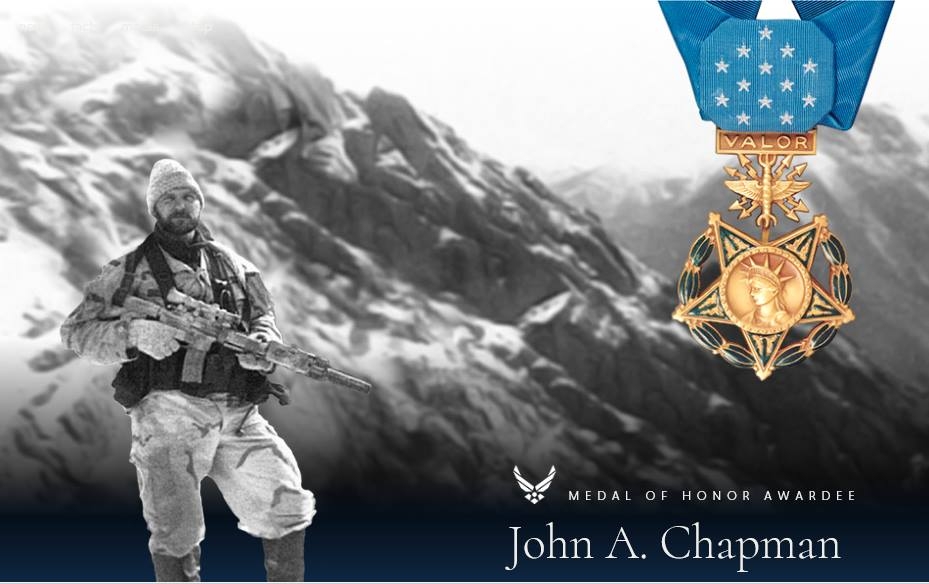
  • - AFSOC Combat Controller TSgt.John Chapman's family receives his Medal of Honor posthumously today -

    This is the FIRST Medal of Honor for a Special Tactics Airman -- & the 1st Airman since the Vietnam War.

    SUMMARY OF ACTION: BATTLE AT TAKUR GHAR

    Sergeant Chapman enlisted in the Air Force on Sept. 27, 1985, as an information systems operator, but felt called to be part of Air Force special operations. In 1989, he cross-trained to become an Air Force combat controller.

    According to friends and family, Sergeant Chapman had a tendency to make the difficult look effortless, and consistently sought new challenges. Dating back to his high school days, he made the varsity soccer squad as a freshman. Also an avid muscle-car enthusiast, he rebuilt and maintained an old Pontiac GTO.

    Combat control would prove to be another instance of “making it look easy.”

    Combat control training is more than two years long and amongst the most rigorous in the U.S. military. Only about one in ten Airmen who start the program graduate.

    From months of rigorous physical fitness training to multiple joint schools – including military SCUBA, Army static-line and freefall, air traffic control, and combat control schools – Sergeant Chapman is remembered as someone who could do anything put in front of him.

    “One remembers two types of students – the sharp ones and the really dull ones – and Chapman was in the sharp category,” said Ron Childress, a former Combat Control School instructor. Combat Control School is one of the most difficult points of a combat controller’s training program, from completing arduous tasks without sleeping for days, to running miles with weighted rucksacks and a gas mask.

    “During one of his first days at Combat Control School, I noticed a slight smirk on his face like [the training] was too simple for him…and it was,” said Childress.

    Following Combat Control School, Sergeant Chapman served with the 1721st Combat Control Squadron at Pope Air Force Base, North Carolina, where he met his wife, Valerie, in 1992. They had two daughters, who were the center of Sergeant Chapman’s world even when he was away from home – which was common in the combat control career field.

    “He would come home from a long trip and immediately have on his father hat – feeding, bathing, reading and getting his girls ready for bed,” said Chief Master Sgt. Michael West, who served with Sergeant Chapman through Combat Control School, a three-year tour in Okinawa, Japan, and at Pope Air Force Base. “They were his life and he was proud of them…to the Air Force he was a great hero…what I saw was a great father.”

    The Battle of Takur Ghar

    In conjunction with Operation Anaconda in March 2002, small reconnaissance teams were tasked to establish observation posts in strategic locations in Afghanistan, and when able, direct U.S. air power to destroy enemy targets. The mountain of Takur Ghar was an ideal spot for such an observation post, with excellent visibility to key locations. For Sergeant Chapman and his joint special operations teammates, the mission on the night of March 3 was to establish a reconnaissance position on Takur Ghar and report al Qaeda movement in the Sahi-Kowt area.

    “This was very high profile, no-fail job, and we picked John,” said retired Air Force Col. Ken Rodriguez, Sergeant Chapman’s commander at the time. “In a very high-caliber career field, with the highest quality of men – even then – John stood out as our guy.”

    During the initial insertion onto Afghanistan’s Takur Ghar mountaintop on March 4, the MH-47 “Chinook” helicopter carrying Sergeant Chapman and the joint special operations reconnaissance team was ambushed. A rocket propelled grenade struck the helicopter and bullets ripped through the fuselage. The blast ripped through the left side of the Chinook, throwing Navy Petty Officer 1st Class Neil Roberts off the ramp of the helicopter onto the enemy-infested mountaintop below.

    The severely damaged aircraft was unable to return for Petty Officer Roberts, and performed a controlled crash landing a few miles from the mountaintop. Thus began the chain of events that led to unparalleled acts of valor by numerous joint special operations forces, the deaths of seven U.S. servicemen and now, 16 years later, posthumous award of the Medal of Honor to Sergeant Chapman.

    Alone, against the elements and separated from his team with enemy personnel closing in, Petty Officer Roberts was in desperate need of support. The remaining joint special operations team members, fully aware of his precarious situation, immediately began planning a daring rescue attempt that included returning to the top of Takur Ghar where they had just taken heavy enemy fire.

    As the team returned to Petty Officer Roberts’ last-known position, now on a second MH-47, the entrenched enemy forces immediately engaged the approaching helicopter with heavy fire. Miraculously, the helicopter, although heavily damaged, was able to successfully offload the remaining special operations team members and return to base. Sergeant Chapman, upon exiting the helicopter, immediately charged uphill through the snow toward enemy positions while under heavy fire from three directions.

    Once on the ground, the team assessed the situation and moved quickly to the high ground. The most prominent cover and concealment on the hilltop were a large rock and tree. As they approached the tree, Sergeant Chapman received fire from two enemy personnel in a fortified position. He returned fire, charged the enemy position and took out the enemy combatants within.

    Almost immediately, the team began taking machine gun fire from another fortified enemy position only 12 meters away. Sergeant Chapman deliberately moved into the open to engage the new enemy position. As he heroically engaged the enemy, he was struck by a burst of gunfire and became critically injured.

    Sergeant Chapman regained his faculties and continued to fight relentlessly despite his severe wounds. He sustained a violent engagement with multiple enemy fighters, for over an hour through the arrival of the quick reaction force, before paying the ultimate sacrifice. In performance of these remarkably heroic actions, Sergeant Chapman is credited with saving the lives of his teammates.

    The upgrade to MOH

    “John was always selfless – it didn’t just emerge on Takur Ghar – he had always been selfless and highly competent, and thank God for all those qualities,” said Col. Rodriguez. “He could have hunkered down in the bunker and waited for the (Quick Reaction Force) and (Combat Search and Rescue) team to come in, but he assessed the situation and selflessly gave his life for them.”

    Sergeant Chapman was originally awarded the Air Force Cross for his actions; however, following a review of Air Force Cross and Silver Star recipients directed by then-Secretary of Defense Ash Carter, the Secretary of the Air Force recommended Sergeant Chapman’s Air Force Cross be upgraded to the Medal of Honor.

    In accordance with Air Force policy whereby Medal of Honor recipients are automatically promoted one grade on the first day of the month following the award, Sergeant Chapman will be posthumously promoted to the rank of master sergeant on Sept. 1, 2018.

    Although Sergeant Chapman will be awarded the Medal of Honor, family and friends have expressed his humility and how he would react today, if he were here.

    “If John were to find out he received the Medal of Honor, he would be very humbled and honored,” said Chief Master Sergeant West. “He was just doing his job, and that’s what he would say at this moment.”

    His widow, Valerie Nessel, has always known her husband was capable of such greatness, but asserts that John wouldn’t be anxious to be in the spotlight.

    “[John] would want to recognize the other men that lost their lives,” said Valerie. “Even though he did something he was awarded the Medal of Honor for, he would not want the other guys to be forgotten – that they were part of the team together.”

    “I think he would say that his Medal of Honor was not just for him, but for all of the guys who were lost,” she added.

    In total, seven service members lost their lives during the Battle of Takur Ghar:

    Petty Officer 1st Class Neil Roberts – U.S. Navy SEAL
    Technical Sergeant John Chapman – U.S. Air Force combat control
    Senior Airman Jason Cunningham – U.S. Air Force pararescue
    Corporal Matthew Commons – U.S. Army Ranger
    Sergeant Bradley Crose – U.S. Army Ranger
    Specialist Marc Anderson – U.S. Army Ranger
    Sergeant Philip Svitak – U.S. Army 160th Special Operations Aviation Regiment

    “John would have, so I’ll say it for him. Every American who set foot on that mountaintop acted with great courage and selflessness, and deserve all of our praise and admiration for the sacrifices they made,” said Col. Rodriguez.
    - AFSOC Combat Controller TSgt.John Chapman's family receives his Medal of Honor posthumously today - This is the FIRST Medal of Honor for a Special Tactics Airman -- & the 1st Airman since the Vietnam War. SUMMARY OF ACTION: BATTLE AT TAKUR GHAR Sergeant Chapman enlisted in the Air Force on Sept. 27, 1985, as an information systems operator, but felt called to be part of Air Force special operations. In 1989, he cross-trained to become an Air Force combat controller. According to friends and family, Sergeant Chapman had a tendency to make the difficult look effortless, and consistently sought new challenges. Dating back to his high school days, he made the varsity soccer squad as a freshman. Also an avid muscle-car enthusiast, he rebuilt and maintained an old Pontiac GTO. Combat control would prove to be another instance of “making it look easy.” Combat control training is more than two years long and amongst the most rigorous in the U.S. military. Only about one in ten Airmen who start the program graduate. From months of rigorous physical fitness training to multiple joint schools – including military SCUBA, Army static-line and freefall, air traffic control, and combat control schools – Sergeant Chapman is remembered as someone who could do anything put in front of him. “One remembers two types of students – the sharp ones and the really dull ones – and Chapman was in the sharp category,” said Ron Childress, a former Combat Control School instructor. Combat Control School is one of the most difficult points of a combat controller’s training program, from completing arduous tasks without sleeping for days, to running miles with weighted rucksacks and a gas mask. “During one of his first days at Combat Control School, I noticed a slight smirk on his face like [the training] was too simple for him…and it was,” said Childress. Following Combat Control School, Sergeant Chapman served with the 1721st Combat Control Squadron at Pope Air Force Base, North Carolina, where he met his wife, Valerie, in 1992. They had two daughters, who were the center of Sergeant Chapman’s world even when he was away from home – which was common in the combat control career field. “He would come home from a long trip and immediately have on his father hat – feeding, bathing, reading and getting his girls ready for bed,” said Chief Master Sgt. Michael West, who served with Sergeant Chapman through Combat Control School, a three-year tour in Okinawa, Japan, and at Pope Air Force Base. “They were his life and he was proud of them…to the Air Force he was a great hero…what I saw was a great father.” The Battle of Takur Ghar In conjunction with Operation Anaconda in March 2002, small reconnaissance teams were tasked to establish observation posts in strategic locations in Afghanistan, and when able, direct U.S. air power to destroy enemy targets. The mountain of Takur Ghar was an ideal spot for such an observation post, with excellent visibility to key locations. For Sergeant Chapman and his joint special operations teammates, the mission on the night of March 3 was to establish a reconnaissance position on Takur Ghar and report al Qaeda movement in the Sahi-Kowt area. “This was very high profile, no-fail job, and we picked John,” said retired Air Force Col. Ken Rodriguez, Sergeant Chapman’s commander at the time. “In a very high-caliber career field, with the highest quality of men – even then – John stood out as our guy.” During the initial insertion onto Afghanistan’s Takur Ghar mountaintop on March 4, the MH-47 “Chinook” helicopter carrying Sergeant Chapman and the joint special operations reconnaissance team was ambushed. A rocket propelled grenade struck the helicopter and bullets ripped through the fuselage. The blast ripped through the left side of the Chinook, throwing Navy Petty Officer 1st Class Neil Roberts off the ramp of the helicopter onto the enemy-infested mountaintop below. The severely damaged aircraft was unable to return for Petty Officer Roberts, and performed a controlled crash landing a few miles from the mountaintop. Thus began the chain of events that led to unparalleled acts of valor by numerous joint special operations forces, the deaths of seven U.S. servicemen and now, 16 years later, posthumous award of the Medal of Honor to Sergeant Chapman. Alone, against the elements and separated from his team with enemy personnel closing in, Petty Officer Roberts was in desperate need of support. The remaining joint special operations team members, fully aware of his precarious situation, immediately began planning a daring rescue attempt that included returning to the top of Takur Ghar where they had just taken heavy enemy fire. As the team returned to Petty Officer Roberts’ last-known position, now on a second MH-47, the entrenched enemy forces immediately engaged the approaching helicopter with heavy fire. Miraculously, the helicopter, although heavily damaged, was able to successfully offload the remaining special operations team members and return to base. Sergeant Chapman, upon exiting the helicopter, immediately charged uphill through the snow toward enemy positions while under heavy fire from three directions. Once on the ground, the team assessed the situation and moved quickly to the high ground. The most prominent cover and concealment on the hilltop were a large rock and tree. As they approached the tree, Sergeant Chapman received fire from two enemy personnel in a fortified position. He returned fire, charged the enemy position and took out the enemy combatants within. Almost immediately, the team began taking machine gun fire from another fortified enemy position only 12 meters away. Sergeant Chapman deliberately moved into the open to engage the new enemy position. As he heroically engaged the enemy, he was struck by a burst of gunfire and became critically injured. Sergeant Chapman regained his faculties and continued to fight relentlessly despite his severe wounds. He sustained a violent engagement with multiple enemy fighters, for over an hour through the arrival of the quick reaction force, before paying the ultimate sacrifice. In performance of these remarkably heroic actions, Sergeant Chapman is credited with saving the lives of his teammates. The upgrade to MOH “John was always selfless – it didn’t just emerge on Takur Ghar – he had always been selfless and highly competent, and thank God for all those qualities,” said Col. Rodriguez. “He could have hunkered down in the bunker and waited for the (Quick Reaction Force) and (Combat Search and Rescue) team to come in, but he assessed the situation and selflessly gave his life for them.” Sergeant Chapman was originally awarded the Air Force Cross for his actions; however, following a review of Air Force Cross and Silver Star recipients directed by then-Secretary of Defense Ash Carter, the Secretary of the Air Force recommended Sergeant Chapman’s Air Force Cross be upgraded to the Medal of Honor. In accordance with Air Force policy whereby Medal of Honor recipients are automatically promoted one grade on the first day of the month following the award, Sergeant Chapman will be posthumously promoted to the rank of master sergeant on Sept. 1, 2018. Although Sergeant Chapman will be awarded the Medal of Honor, family and friends have expressed his humility and how he would react today, if he were here. “If John were to find out he received the Medal of Honor, he would be very humbled and honored,” said Chief Master Sergeant West. “He was just doing his job, and that’s what he would say at this moment.” His widow, Valerie Nessel, has always known her husband was capable of such greatness, but asserts that John wouldn’t be anxious to be in the spotlight. “[John] would want to recognize the other men that lost their lives,” said Valerie. “Even though he did something he was awarded the Medal of Honor for, he would not want the other guys to be forgotten – that they were part of the team together.” “I think he would say that his Medal of Honor was not just for him, but for all of the guys who were lost,” she added. In total, seven service members lost their lives during the Battle of Takur Ghar: Petty Officer 1st Class Neil Roberts – U.S. Navy SEAL Technical Sergeant John Chapman – U.S. Air Force combat control Senior Airman Jason Cunningham – U.S. Air Force pararescue Corporal Matthew Commons – U.S. Army Ranger Sergeant Bradley Crose – U.S. Army Ranger Specialist Marc Anderson – U.S. Army Ranger Sergeant Philip Svitak – U.S. Army 160th Special Operations Aviation Regiment “John would have, so I’ll say it for him. Every American who set foot on that mountaintop acted with great courage and selflessness, and deserve all of our praise and admiration for the sacrifices they made,” said Col. Rodriguez.
    Salute
    1
    0 Comments 0 Shares 125470 Views
  • Small Town America = Perfect Bugout Location? Part 3

    Location Location Location...

    A simple rule from the battlefield for those not used to conflict,
    Space = Time = Responding vs Reacting to a situation

    Responding to a situation allows time to evaluate a situation, critical thought and strategy to be applied, a plan to be implemented.

    Reacting means dealing with the hand you are dealt relying almost solely on training and instinct which has a significantly higher probability of a less than ideal outcome.

    There is a 15-mile buffer of corn, soybeans, and wheat surrounding my small town of 16k people. While you can be more isolated by sitting in the woods somewhere there are many things you give up by doing so. If you are isolated in the woods, who will give you information about what is going on around you? Your "secret" location may not be secret and definitely won't remain a secret once you start living there. We're not even going to get into maintaining 24-hour security of a remote location in this post, if you're managing security who is working? If you're sick whos' maintaining security?

    Small Town America is the perfect balance between isolation and community support. There will always be a bad actor or two...but they are well known and easy to keep track of within a community, not so much while isolated in the woods. In your environment do you have space/time? Do you still think isolation in the woods is your best option?

    #America #veteran #commonsense
    Small Town America = Perfect Bugout Location? Part 3 Location Location Location... A simple rule from the battlefield for those not used to conflict, Space = Time = Responding vs Reacting to a situation Responding to a situation allows time to evaluate a situation, critical thought and strategy to be applied, a plan to be implemented. Reacting means dealing with the hand you are dealt relying almost solely on training and instinct which has a significantly higher probability of a less than ideal outcome. There is a 15-mile buffer of corn, soybeans, and wheat surrounding my small town of 16k people. While you can be more isolated by sitting in the woods somewhere there are many things you give up by doing so. If you are isolated in the woods, who will give you information about what is going on around you? Your "secret" location may not be secret and definitely won't remain a secret once you start living there. We're not even going to get into maintaining 24-hour security of a remote location in this post, if you're managing security who is working? If you're sick whos' maintaining security? Small Town America is the perfect balance between isolation and community support. There will always be a bad actor or two...but they are well known and easy to keep track of within a community, not so much while isolated in the woods. In your environment do you have space/time? Do you still think isolation in the woods is your best option? #America #veteran #commonsense
    0 Comments 0 Shares 46199 Views
  • The Enduring Solitude Of Combat Vets:

    Retired Army Special Forces Sgt. Maj. Alan Farrell is one of the more interesting people in this country nowadays, a decorated veteran of the Vietnam War who teaches French at VMI, reviews films and writes poetry. Just your typical sergeant major/brigadier general with a Ph.D. in French and a fistful of other degrees.

    This is a speech that he gave to Vets at the Harvard Business School last Veterans' Day. I know it is long but well worth the read:
    --------
    "Ladies and Gentlemens:

    Kurt Vonnegut -- Corporal Vonnegut -- famously told an assembly like this one that his wife had begged him to "bring light into their tunnels" that night. "Can't do that," said Vonnegut, since, according to him, the audience would at once sense his duplicity, his mendacity, his insincerity... and have yet another reason for despair. I'll not likely have much light to bring into any tunnels this night, either.

    The remarks I'm about to make to you I've made before... in essence at least. I dare to make them again because other Veterans seem to approve. I speak mostly to Veterans. I don't have much to say to them, the others, civilians, real people. These remarks, I offer you for the reaction I got from one of them, though, a prison shrink. I speak in prisons a lot. Because some of our buddies wind up in there. Because their service was a Golden Moment in a life gone sour. Because... because no one else will.

    In the event, I've just got done saying what I'm about to say to you, when the prison psychologist sidles up to me to announce quietly: "You've got it." The "it," of course, is Post Stress Traumatic Traumatic Post Stress Disorder Stress... Post. Can never seem to get the malady nor the abbreviation straight. He's worried about me... that I'm wandering around loose... that I'm talking to his cons. So worried, but so sincere, that I let him make me an appointment at the V.A. for "diagnosis." Sincerity is a rare pearl.

    So I sulk in the stuffy anteroom of the V.A. shrink's office for the requisite two hours (maybe you have), finally get admitted. He's a nice guy. Asks me about my war, scans my 201 File, and, after what I take to be clinical scrutiny, announces without preamble: "You've got it." He can snag me, he says, 30 percent disability. Reimbursement, he says, from Uncle Sam, now till the end of my days. Oh, and by the way, he says, there's a cure. I'm not so sure that I want a cure for 30 percent every month. This inspires him to explain. He takes out a piece of paper and a Magic Marker™. Now: Anybody who takes out a frickin' Magic Marker™ to explain something to you thinks you're a bonehead and by that very gesture says so to God and everybody.

    Anyhow. He draws two big circles on a sheet of paper, then twelve small circles. Apples and grapes, you might say. In fact, he does say. The "grapes," he asserts, stand for the range of emotional response open to a healthy civilian, a normal person: titillation, for instance, then amusement, then pleasure, then joy, then delight and so on across the spectrum through mild distress on through angst -- whatever that is -- to black depression. The apples? That's what you got, traumatized veteran: Ecstasy and Despair. But we can fix that for you. We can make you normal.

    So here's my question: Why on earth would anybody want to be normal?

    And here's what triggered that curious episode:

    The words of the prophet Jeremiah:

    My bowels. My bowels. I am pained at my very heart; my heart maketh a noise in me... [T]hou hast heard, O my soul, the sound of the trumpet, the alarm of war. Destruction upon destruction is cried; for the whole land is spoilt and my curtains... How long shall I see the standard and hear the sound of the trumpet?

    I dunno about Jeremiah's bowels... or his curtains, but I've seen the standard and heard the sound of the trumpet. Again. Civilians mooing about that "Thin Red Line of 'eroes" between them and the Darkness. Again. ‘Course it's not red any more. Used to be olive drab. Then treetop camouflage. Then woodland. Then chocolate chip. Now pixelated, random computer-generated. Multi-cam next, is it? Progress. The kids are in the soup. Again. Me? I can't see the front sights of me piece any more. And if I can still lug my rucksack five miles, I need these days to be defibrillated when I get there. Nope. I got something like six Honorable Discharges from Pharaoh's Army. Your Mom's gonna be wearing Kevlar before I do. Nope. This one's on the kids, I'm afraid, the next generation.

    I can't help them. Not those who make the sacrifice in the desert nor those in the cesspool cities of a land that if two troopers from the One Oh One or two Lance Corporals could find on a map a few years ago, I'll be surprised. Nobody can help... except by trying to build a society Back Here that deserves such a sacrifice.

    We gonna win the war? I dunno. They tell me I lost mine. I know I didn't start it. Soldiers don't start wars. Civilians do. And civilians say when they're over. I'm just satisfied right now that these kids, for better or worse, did their duty as God gave them the light to see it. But I want them back. And I worry not about the fight, but about the after: after the war, after the victory, after... God forbid... the defeat, if it come to that. It's after that things get tricky. After that a Soldier needs the real grit and wit. And after that a Soldier needs to believe. Anybody can believe before. During? A Soldier has company in the fight, in Kandahar or Kabul, Basra or Baghdad. It's enough to believe in the others during. But after... and I can tell you this having come home from a war: After ...a Soldier is alone. A batch of them, maybe... but still alone.

    Years ago, maybe... when I was still in the Army, my A Team got the mission to support an Air Force escape and evasion exercise. Throw a bunch of downed pilots into the wilderness, let local guerrillas (us) feed them into a clandestine escape net and spirit them out by train just like in The Great Escape to... Baltimore, of all places. So we set up an elaborate underground network: farmhouses, caves, barns, pickup trucks, loads of hay where a guy can hide, fifty-five gallon drums to smuggle the evadees through checkpoints in. We've even cozened the Norfolk and Western Railroad out of a boxcar.

    Sooooo... come midnight, with our escapees safely stowed in that car, we wait for a special train to make a detour, back onto the siding, hook it up, and freight the pilots off to Maree-land. Pretty realistic, seems to us.

    Now, for safety's sake the Railroad requires a Line Administrator on site to supervise any special stop. Sure enough, just before midnight two suit-and-ties show up toting a red lantern. Civilians. We sniff at them disdainfully. One of them wigwags to the train. With a clank she couples the boxcar and chugs out into the night. The other guy -- frumpy Babbit from the front office -- shuffles off down the track and out onto a trestle bridge over the gorge. He stands there with his hands behind his back, peering up at the cloud-strewn summertime sky, a thousand bucks worth of Burberry overcoat riffling in the night breeze. I edge over respectfully behind him. Wait. He notices me after a while, looks back. "You know," he says, "Was on a night like this 40 years ago that I jumped into Normandy."

    Who'da thought?

    Who'da thought? Then I thought... back to right after my return from Vietnam. I'm working nights at a convenience store just down the road from this very spot. Lousy job. Whores, bums, burnouts, lowlifes. That's your clientele after midnight in a convenience store. One particular guy I remember drifts in every morning about 0400. Night work. Janitor, maybe. Not much to distinguish him from the rest of the early morning crowd of shadows shuffling around the place. Fingers and teeth yellowed from cigarette smoke. A weathered, leathered face that just dissolves into the colorless crowd of nobodies.

    Never says a word. Buys his margarine and macaroni and Miller's. Plunks down his cash. Hooks a grubby hand around his bag and threads his way out of the place and down the street. Lost in another world. Like the rest of the derelicts. One night, he's fumbling for his keys, drops them on the floor, sets his wallet on the counter -- brown leather, I still remember -- and the wallet flops open. Pinned to the inside of it, worn shiny and smooth, with its gold star gleaming out of the center: combat jump badge from that great World War II... Normandy maybe, just like the suit-and-tie.

    Who'da thought?

    Two guys scarred Out There. Not sure just where or how even. You can lose your life without dying. But the guy who made it to the top and the guy shambling along the bottom are what James Joyce calls in another context "secret messengers." Citizens among the rest, who look like the rest, talk like the rest, act like the rest... but who know prodigious secrets, wherever they wash up and whatever use they make of them. Who know somber despair but inexplicable laughter, the ache of duty but distrust of inaction. Who know risk and exaltation... and that awful drop though empty air we call failure... and solitude! They know solitude.

    Because solitude is what waits for the one who shall have borne the battle. Out There in it together... back here alone.

    Alone to make way in a scrappy, greedy, civilian world "filching lucre and gulping warm beer," as Conrad had it. Alone to learn the skills a self-absorbed, hustling, modern society values. Alone to unlearn the deadly skills of the former -- and bloody -- business. Alone to find a companion -- maybe -- and alone -- maybe -- even with that companion over a lifetime... for who can make someone else who hasn't seen it understand horror, blackness, filth Incommunicado. Voiceless. Alone.

    My Railroad president wandered off by himself to face his memories; my Store 24 regular was clearly a man alone with his.

    For my two guys, it was the after the battle that they endured, and far longer than the moment of terror in the battle. Did my Railroad exec learn in the dark of war to elbow other men aside, to view all other men as the enemy, to "fight" his way up the corporate ladder just as he fought his way out of the bocages of Normandy? Did he find he could never get close to a wife or children again and turn his energy, perhaps his anger toward some other and solitary goal Did the Store/24 guy never get out of his parachute harness and shiver in an endless night patrolled by demons he couldn't get shut of? Did he haul out that tattered wallet and shove his jump badge under the nose of those he'd done wrong to, disappointed, embarrassed? Did he find fewer and fewer citizens Back Here who even knew what it was? Did he keep it because he knew what it was? From what I've seen -- from a distance, of course -- of success, I'd say it's not necessarily sweeter than failure -- which I have seen close up.

    Well, that's what I said that woke up the prison shrink.
    And I say again to you that silence is the reward we reserve for you and your buddies, for my Cadets. Silence is the sound of Honor, which speaks no word and lays no tread. And Nothing is the glory of the one who's done Right. And Alone is the society of those who do it the Hard Way, alone even when they have comrades like themselves in the fight. I've gotta hope as a teacher that my Cadets, as a citizen that you and your buddies will have the inner resources, the stuff of inner life, the values in short, to abide the brute loneliness of after, to find the courage to continue the march, to do Right, to live with what they've done, you've done in our name, to endure that dark hour of frustration, humiliation, failure maybe... or victory, for one or the other is surely waiting Back Here. Unless you opt for those grapes...

    My two guys started at the same place and wound up at the far ends of the spectrum. As we measure their distance from that starting point, they seem to return to it: the one guy in the darkness drawn back to a Golden Moment in his life from a lofty vantage point; t'other guy lugging through God knows what gauntlet of shame and frustration that symbol of his Golden Moment. Today we celebrate your Golden Moment. While a whole generation went ganging after its own indulgence, vanity, appetite, you clung to a foolish commitment, to foolish old traditions; as Soldiers, Sailors, Pilots, Marines you honored pointless ritual, suffered the endless, sluggish monotony of duty, raised that flag not just once, or again, or -- as has become fashionable now -- in time of peril, but every single morning. You stuck it out. You may have had -- as we like to say -- the camaraderie of brothers or sisters to buck each other up or the dubious support (as we like to say... and say more than do, by the way) of the folks back home, us... but in the end you persevered alone. Just as alone you made that long walk from Out There with a duffle bag fulla pixelated, random computer-generated dirty laundry -- along with your bruised dreams, your ecstasy and your despair -- Back Here at tour's end.

    And you will be alone, for all the good intentions and solicitude of them, the other, the civilians. Alone. But...together. Your generation, whom us dumbo civilians couldn't keep out of war, will bear the burden of a soldier's return... alone. And a fresh duty: to complete the lives of your buddies who didn't make it back, to confect for them a living monument to their memory.

    Your comfort, such as it is, will come from the knowledge that others of that tiny fraction of the population that fought for us are alone but grappling with the same dilemmas -- often small and immediate, often undignified or humiliating, now and then immense and overwhelming -- by your persistence courting the risk, by your obstinacy clinging to that Hard Way. Some of you will be stronger than others, but even the strong ones will have their darker moments. Where we can join each other if not relieve each other, we secret messengers, is right here in places like this and on occasions like this -- one lousy day of the year, your day, my day, our day, -- in the company of each other and of the flag we served. Not much cheer in that kerugma. But there's the by-God glory.

    "I know..." says the prophet Isaiah:

    ... I know that thou art obstinate, and thy neck is an iron sinew, and thy brow brass...I have shewed thee new things, even hidden things. Behold, I have refined thee, but not with silver; I have [refined] thee...in the furnace of affliction...

    Well, all right, then. Why on earth would anybody want to be normal? Thanks for Listening and Lord love the lot of youse."
    The Enduring Solitude Of Combat Vets: Retired Army Special Forces Sgt. Maj. Alan Farrell is one of the more interesting people in this country nowadays, a decorated veteran of the Vietnam War who teaches French at VMI, reviews films and writes poetry. Just your typical sergeant major/brigadier general with a Ph.D. in French and a fistful of other degrees. This is a speech that he gave to Vets at the Harvard Business School last Veterans' Day. I know it is long but well worth the read: -------- "Ladies and Gentlemens: Kurt Vonnegut -- Corporal Vonnegut -- famously told an assembly like this one that his wife had begged him to "bring light into their tunnels" that night. "Can't do that," said Vonnegut, since, according to him, the audience would at once sense his duplicity, his mendacity, his insincerity... and have yet another reason for despair. I'll not likely have much light to bring into any tunnels this night, either. The remarks I'm about to make to you I've made before... in essence at least. I dare to make them again because other Veterans seem to approve. I speak mostly to Veterans. I don't have much to say to them, the others, civilians, real people. These remarks, I offer you for the reaction I got from one of them, though, a prison shrink. I speak in prisons a lot. Because some of our buddies wind up in there. Because their service was a Golden Moment in a life gone sour. Because... because no one else will. In the event, I've just got done saying what I'm about to say to you, when the prison psychologist sidles up to me to announce quietly: "You've got it." The "it," of course, is Post Stress Traumatic Traumatic Post Stress Disorder Stress... Post. Can never seem to get the malady nor the abbreviation straight. He's worried about me... that I'm wandering around loose... that I'm talking to his cons. So worried, but so sincere, that I let him make me an appointment at the V.A. for "diagnosis." Sincerity is a rare pearl. So I sulk in the stuffy anteroom of the V.A. shrink's office for the requisite two hours (maybe you have), finally get admitted. He's a nice guy. Asks me about my war, scans my 201 File, and, after what I take to be clinical scrutiny, announces without preamble: "You've got it." He can snag me, he says, 30 percent disability. Reimbursement, he says, from Uncle Sam, now till the end of my days. Oh, and by the way, he says, there's a cure. I'm not so sure that I want a cure for 30 percent every month. This inspires him to explain. He takes out a piece of paper and a Magic Marker™. Now: Anybody who takes out a frickin' Magic Marker™ to explain something to you thinks you're a bonehead and by that very gesture says so to God and everybody. Anyhow. He draws two big circles on a sheet of paper, then twelve small circles. Apples and grapes, you might say. In fact, he does say. The "grapes," he asserts, stand for the range of emotional response open to a healthy civilian, a normal person: titillation, for instance, then amusement, then pleasure, then joy, then delight and so on across the spectrum through mild distress on through angst -- whatever that is -- to black depression. The apples? That's what you got, traumatized veteran: Ecstasy and Despair. But we can fix that for you. We can make you normal. So here's my question: Why on earth would anybody want to be normal? And here's what triggered that curious episode: The words of the prophet Jeremiah: My bowels. My bowels. I am pained at my very heart; my heart maketh a noise in me... [T]hou hast heard, O my soul, the sound of the trumpet, the alarm of war. Destruction upon destruction is cried; for the whole land is spoilt and my curtains... How long shall I see the standard and hear the sound of the trumpet? I dunno about Jeremiah's bowels... or his curtains, but I've seen the standard and heard the sound of the trumpet. Again. Civilians mooing about that "Thin Red Line of 'eroes" between them and the Darkness. Again. ‘Course it's not red any more. Used to be olive drab. Then treetop camouflage. Then woodland. Then chocolate chip. Now pixelated, random computer-generated. Multi-cam next, is it? Progress. The kids are in the soup. Again. Me? I can't see the front sights of me piece any more. And if I can still lug my rucksack five miles, I need these days to be defibrillated when I get there. Nope. I got something like six Honorable Discharges from Pharaoh's Army. Your Mom's gonna be wearing Kevlar before I do. Nope. This one's on the kids, I'm afraid, the next generation. I can't help them. Not those who make the sacrifice in the desert nor those in the cesspool cities of a land that if two troopers from the One Oh One or two Lance Corporals could find on a map a few years ago, I'll be surprised. Nobody can help... except by trying to build a society Back Here that deserves such a sacrifice. We gonna win the war? I dunno. They tell me I lost mine. I know I didn't start it. Soldiers don't start wars. Civilians do. And civilians say when they're over. I'm just satisfied right now that these kids, for better or worse, did their duty as God gave them the light to see it. But I want them back. And I worry not about the fight, but about the after: after the war, after the victory, after... God forbid... the defeat, if it come to that. It's after that things get tricky. After that a Soldier needs the real grit and wit. And after that a Soldier needs to believe. Anybody can believe before. During? A Soldier has company in the fight, in Kandahar or Kabul, Basra or Baghdad. It's enough to believe in the others during. But after... and I can tell you this having come home from a war: After ...a Soldier is alone. A batch of them, maybe... but still alone. Years ago, maybe... when I was still in the Army, my A Team got the mission to support an Air Force escape and evasion exercise. Throw a bunch of downed pilots into the wilderness, let local guerrillas (us) feed them into a clandestine escape net and spirit them out by train just like in The Great Escape to... Baltimore, of all places. So we set up an elaborate underground network: farmhouses, caves, barns, pickup trucks, loads of hay where a guy can hide, fifty-five gallon drums to smuggle the evadees through checkpoints in. We've even cozened the Norfolk and Western Railroad out of a boxcar. Sooooo... come midnight, with our escapees safely stowed in that car, we wait for a special train to make a detour, back onto the siding, hook it up, and freight the pilots off to Maree-land. Pretty realistic, seems to us. Now, for safety's sake the Railroad requires a Line Administrator on site to supervise any special stop. Sure enough, just before midnight two suit-and-ties show up toting a red lantern. Civilians. We sniff at them disdainfully. One of them wigwags to the train. With a clank she couples the boxcar and chugs out into the night. The other guy -- frumpy Babbit from the front office -- shuffles off down the track and out onto a trestle bridge over the gorge. He stands there with his hands behind his back, peering up at the cloud-strewn summertime sky, a thousand bucks worth of Burberry overcoat riffling in the night breeze. I edge over respectfully behind him. Wait. He notices me after a while, looks back. "You know," he says, "Was on a night like this 40 years ago that I jumped into Normandy." Who'da thought? Who'da thought? Then I thought... back to right after my return from Vietnam. I'm working nights at a convenience store just down the road from this very spot. Lousy job. Whores, bums, burnouts, lowlifes. That's your clientele after midnight in a convenience store. One particular guy I remember drifts in every morning about 0400. Night work. Janitor, maybe. Not much to distinguish him from the rest of the early morning crowd of shadows shuffling around the place. Fingers and teeth yellowed from cigarette smoke. A weathered, leathered face that just dissolves into the colorless crowd of nobodies. Never says a word. Buys his margarine and macaroni and Miller's. Plunks down his cash. Hooks a grubby hand around his bag and threads his way out of the place and down the street. Lost in another world. Like the rest of the derelicts. One night, he's fumbling for his keys, drops them on the floor, sets his wallet on the counter -- brown leather, I still remember -- and the wallet flops open. Pinned to the inside of it, worn shiny and smooth, with its gold star gleaming out of the center: combat jump badge from that great World War II... Normandy maybe, just like the suit-and-tie. Who'da thought? Two guys scarred Out There. Not sure just where or how even. You can lose your life without dying. But the guy who made it to the top and the guy shambling along the bottom are what James Joyce calls in another context "secret messengers." Citizens among the rest, who look like the rest, talk like the rest, act like the rest... but who know prodigious secrets, wherever they wash up and whatever use they make of them. Who know somber despair but inexplicable laughter, the ache of duty but distrust of inaction. Who know risk and exaltation... and that awful drop though empty air we call failure... and solitude! They know solitude. Because solitude is what waits for the one who shall have borne the battle. Out There in it together... back here alone. Alone to make way in a scrappy, greedy, civilian world "filching lucre and gulping warm beer," as Conrad had it. Alone to learn the skills a self-absorbed, hustling, modern society values. Alone to unlearn the deadly skills of the former -- and bloody -- business. Alone to find a companion -- maybe -- and alone -- maybe -- even with that companion over a lifetime... for who can make someone else who hasn't seen it understand horror, blackness, filth Incommunicado. Voiceless. Alone. My Railroad president wandered off by himself to face his memories; my Store 24 regular was clearly a man alone with his. For my two guys, it was the after the battle that they endured, and far longer than the moment of terror in the battle. Did my Railroad exec learn in the dark of war to elbow other men aside, to view all other men as the enemy, to "fight" his way up the corporate ladder just as he fought his way out of the bocages of Normandy? Did he find he could never get close to a wife or children again and turn his energy, perhaps his anger toward some other and solitary goal Did the Store/24 guy never get out of his parachute harness and shiver in an endless night patrolled by demons he couldn't get shut of? Did he haul out that tattered wallet and shove his jump badge under the nose of those he'd done wrong to, disappointed, embarrassed? Did he find fewer and fewer citizens Back Here who even knew what it was? Did he keep it because he knew what it was? From what I've seen -- from a distance, of course -- of success, I'd say it's not necessarily sweeter than failure -- which I have seen close up. Well, that's what I said that woke up the prison shrink. And I say again to you that silence is the reward we reserve for you and your buddies, for my Cadets. Silence is the sound of Honor, which speaks no word and lays no tread. And Nothing is the glory of the one who's done Right. And Alone is the society of those who do it the Hard Way, alone even when they have comrades like themselves in the fight. I've gotta hope as a teacher that my Cadets, as a citizen that you and your buddies will have the inner resources, the stuff of inner life, the values in short, to abide the brute loneliness of after, to find the courage to continue the march, to do Right, to live with what they've done, you've done in our name, to endure that dark hour of frustration, humiliation, failure maybe... or victory, for one or the other is surely waiting Back Here. Unless you opt for those grapes... My two guys started at the same place and wound up at the far ends of the spectrum. As we measure their distance from that starting point, they seem to return to it: the one guy in the darkness drawn back to a Golden Moment in his life from a lofty vantage point; t'other guy lugging through God knows what gauntlet of shame and frustration that symbol of his Golden Moment. Today we celebrate your Golden Moment. While a whole generation went ganging after its own indulgence, vanity, appetite, you clung to a foolish commitment, to foolish old traditions; as Soldiers, Sailors, Pilots, Marines you honored pointless ritual, suffered the endless, sluggish monotony of duty, raised that flag not just once, or again, or -- as has become fashionable now -- in time of peril, but every single morning. You stuck it out. You may have had -- as we like to say -- the camaraderie of brothers or sisters to buck each other up or the dubious support (as we like to say... and say more than do, by the way) of the folks back home, us... but in the end you persevered alone. Just as alone you made that long walk from Out There with a duffle bag fulla pixelated, random computer-generated dirty laundry -- along with your bruised dreams, your ecstasy and your despair -- Back Here at tour's end. And you will be alone, for all the good intentions and solicitude of them, the other, the civilians. Alone. But...together. Your generation, whom us dumbo civilians couldn't keep out of war, will bear the burden of a soldier's return... alone. And a fresh duty: to complete the lives of your buddies who didn't make it back, to confect for them a living monument to their memory. Your comfort, such as it is, will come from the knowledge that others of that tiny fraction of the population that fought for us are alone but grappling with the same dilemmas -- often small and immediate, often undignified or humiliating, now and then immense and overwhelming -- by your persistence courting the risk, by your obstinacy clinging to that Hard Way. Some of you will be stronger than others, but even the strong ones will have their darker moments. Where we can join each other if not relieve each other, we secret messengers, is right here in places like this and on occasions like this -- one lousy day of the year, your day, my day, our day, -- in the company of each other and of the flag we served. Not much cheer in that kerugma. But there's the by-God glory. "I know..." says the prophet Isaiah: ... I know that thou art obstinate, and thy neck is an iron sinew, and thy brow brass...I have shewed thee new things, even hidden things. Behold, I have refined thee, but not with silver; I have [refined] thee...in the furnace of affliction... Well, all right, then. Why on earth would anybody want to be normal? Thanks for Listening and Lord love the lot of youse."
    Like
    Salute
    2
    1 Comments 0 Shares 84482 Views
  • The Enduring Solitude Of Combat Vets:

    Retired Army Special Forces Sgt. Maj. Alan Farrell is one of the more interesting people in this country nowadays, a decorated veteran of the Vietnam War who teaches French at VMI, reviews films and writes poetry. Just your typical sergeant major/brigadier general with a Ph.D. in French and a fistful of other degrees.
    This is a speech that he gave to Vets at the Harvard Business School last Veterans' Day. I know it is long but well worth the read:
    --------
    "Ladies and Gentlemens:
    Kurt Vonnegut -- Corporal Vonnegut -- famously told an assembly like this one that his wife had begged him to "bring light into their tunnels" that night. "Can't do that," said Vonnegut, since, according to him, the audience would at once sense his duplicity, his mendacity, his insincerity... and have yet another reason for despair. I'll not likely have much light to bring into any tunnels this night, either.

    The remarks I'm about to make to you I've made before... in essence at least. I dare to make them again because other Veterans seem to approve. I speak mostly to Veterans. I don't have much to say to them, the others, civilians, real people. These remarks, I offer you for the reaction I got from one of them, though, a prison shrink. I speak in prisons a lot. Because some of our buddies wind up in there. Because their service was a Golden Moment in a life gone sour. Because... because no one else will.

    In the event, I've just got done saying what I'm about to say to you, when the prison psychologist sidles up to me to announce quietly: "You've got it." The "it," of course, is Post Stress Traumatic Traumatic Post Stress Disorder Stress... Post. Can never seem to get the malady nor the abbreviation straight. He's worried about me... that I'm wandering around loose... that I'm talking to his cons. So worried, but so sincere, that I let him make me an appointment at the V.A. for "diagnosis." Sincerity is a rare pearl.

    So I sulk in the stuffy anteroom of the V.A. shrink's office for the requisite two hours (maybe you have), finally get admitted. He's a nice guy. Asks me about my war, scans my 201 File, and, after what I take to be clinical scrutiny, announces without preamble: "You've got it." He can snag me, he says, 30 percent disability. Reimbursement, he says, from Uncle Sam, now till the end of my days. Oh, and by the way, he says, there's a cure. I'm not so sure that I want a cure for 30 percent every month. This inspires him to explain. He takes out a piece of paper and a Magic Marker™. Now: Anybody who takes out a frickin' Magic Marker™ to explain something to you thinks you're a bonehead and by that very gesture says so to God and everybody.

    Anyhow. He draws two big circles on a sheet of paper, then twelve small circles. Apples and grapes, you might say. In fact, he does say. The "grapes," he asserts, stand for the range of emotional response open to a healthy civilian, a normal person: titillation, for instance, then amusement, then pleasure, then joy, then delight and so on across the spectrum through mild distress on through angst -- whatever that is -- to black depression. The apples? That's what you got, traumatized veteran: Ecstasy and Despair. But we can fix that for you. We can make you normal.

    So here's my question: Why on earth would anybody want to be normal?

    And here's what triggered that curious episode:
    The words of the prophet Jeremiah:

    "My bowels. My bowels. I am pained at my very heart; my heart maketh a noise in me... [T]hou hast heard, O my soul, the sound of the trumpet, the alarm of war. Destruction upon destruction is cried; for the whole land is spoilt and my curtains... How long shall I see the standard and hear the sound of the trumpet?"

    I dunno about Jeremiah's bowels... or his curtains, but I've seen the standard and heard the sound of the trumpet.

    Again. Civilians mooing about that "Thin Red Line of 'eroes" between them and the Darkness.

    Again. ‘Course it's not red any more. Used to be olive drab. Then treetop camouflage. Then woodland. Then chocolate chip. Now pixelated, random computer-generated. Multi-cam next, is it? Progress. The kids are in the soup.

    Again. Me? I can't see the front sights of me piece any more. And if I can still lug my rucksack five miles, I need these days to be defibrillated when I get there. Nope. I got something like six Honorable Discharges from Pharaoh's Army. Your Mom's gonna be wearing Kevlar before I do. Nope. This one's on the kids, I'm afraid, the next generation.

    I can't help them. Not those who make the sacrifice in the desert nor those in the cesspool cities of a land that if two troopers from the One Oh One or two Lance Corporals could find on a map a few years ago, I'll be surprised. Nobody can help... except by trying to build a society Back Here that deserves such a sacrifice.

    We gonna win the war? I dunno. They tell me I lost mine. I know I didn't start it. Soldiers don't start wars. Civilians do. And civilians say when they're over. I'm just satisfied right now that these kids, for better or worse, did their duty as God gave them the light to see it. But I want them back. And I worry not about the fight, but about the after: after the war, after the victory, after... God forbid... the defeat, if it come to that. It's after that things get tricky. After that a Soldier needs the real grit and wit. And after that a Soldier needs to believe.

    Anybody can believe before. During? A Soldier has company in the fight, in Kandahar or Kabul, Basra or Baghdad. It's enough to believe in the others during. But after... and I can tell you this having come home from a war: After ...a Soldier is alone. A batch of them, maybe... but still alone.

    Years ago, maybe... when I was still in the Army, my A Team got the mission to support an Air Force escape and evasion exercise. Throw a bunch of downed pilots into the wilderness, let local guerrillas (us) feed them into a clandestine escape net and spirit them out by train just like in The Great Escape to... Baltimore, of all places. So we set up an elaborate underground network: farmhouses, caves, barns, pickup trucks, loads of hay where a guy can hide, fifty-five gallon drums to smuggle the evadees through checkpoints in. We've even cozened the Norfolk and Western Railroad out of a boxcar.

    Sooooo... come midnight, with our escapees safely stowed in that car, we wait for a special train to make a detour, back onto the siding, hook it up, and freight the pilots off to Maree-land. Pretty realistic, seems to us.

    Now, for safety's sake the Railroad requires a Line Administrator on site to supervise any special stop. Sure enough, just before midnight two suit-and-ties show up toting a red lantern. Civilians. We sniff at them disdainfully. One of them wigwags to the train. With a clank she couples the boxcar and chugs out into the night. The other guy -- frumpy Babbit from the front office -- shuffles off down the track and out onto a trestle bridge over the gorge. He stands there with his hands behind his back, peering up at the cloud-strewn summertime sky, a thousand bucks worth of Burberry overcoat riffling in the night breeze. I edge over respectfully behind him. Wait. He notices me after a while, looks back. "You know," he says, "Was on a night like this 40 years ago that I jumped into Normandy."

    Who'da thought?

    Who'da thought? Then I thought... back to right after my return from Vietnam. I'm working nights at a convenience store just down the road from this very spot. Lousy job. Whores, bums, burnouts, lowlifes. That's your clientele after midnight in a convenience store. One particular guy I remember drifts in every morning about 0400. Night work. Janitor, maybe. Not much to distinguish him from the rest of the early morning crowd of shadows shuffling around the place. Fingers and teeth yellowed from cigarette smoke. A weathered, leathered face that just dissolves into the colorless crowd of nobodies.

    Never says a word. Buys his margarine and macaroni and Miller's. Plunks down his cash. Hooks a grubby hand around his bag and threads his way out of the place and down the street. Lost in another world. Like the rest of the derelicts. One night, he's fumbling for his keys, drops them on the floor, sets his wallet on the counter -- brown leather, I still remember -- and the wallet flops open. Pinned to the inside of it, worn shiny and smooth, with its gold star gleaming out of the center: combat jump badge from that great World War II... Normandy maybe, just like the suit-and-tie.

    Who'da thought?

    Two guys scarred Out There. Not sure just where or how even. You can lose your life without dying. But the guy who made it to the top and the guy shambling along the bottom are what James Joyce calls in another context "secret messengers." Citizens among the rest, who look like the rest, talk like the rest, act like the rest... but who know prodigious secrets, wherever they wash up and whatever use they make of them. Who know somber despair but inexplicable laughter, the ache of duty but distrust of inaction. Who know risk and exaltation... and that awful drop though empty air we call failure... and solitude!

    They know solitude.
    Because solitude is what waits for the one who shall have borne the battle. Out There in it together... back here alone.

    Alone to make way in a scrappy, greedy, civilian world "filching lucre and gulping warm beer," as Conrad had it. Alone to learn the skills a self-absorbed, hustling, modern society values. Alone to unlearn the deadly skills of the former -- and bloody -- business. Alone to find a companion -- maybe -- and alone -- maybe -- even with that companion over a lifetime... for who can make someone else who hasn't seen it understand horror, blackness, filth Incommunicado. Voiceless. Alone.

    My Railroad president wandered off by himself to face his memories; my Store 24 regular was clearly a man alone with his.

    For my two guys, it was the after the battle that they endured, and far longer than the moment of terror in the battle. Did my Railroad exec learn in the dark of war to elbow other men aside, to view all other men as the enemy, to "fight" his way up the corporate ladder just as he fought his way out of the bocages of Normandy?

    Did he find he could never get close to a wife or children again and turn his energy, perhaps his anger toward some other and solitary goal Did the Store/24 guy never get out of his parachute harness and shiver in an endless night patrolled by demons he couldn't get shut of? Did he haul out that tattered wallet and shove his jump badge under the nose of those he'd done wrong to, disappointed, embarrassed? Did he find fewer and fewer citizens Back Here who even knew what it was? Did he keep it because he knew what it was? From what I've seen -- from a distance, of course -- of success, I'd say it's not necessarily sweeter than failure -- which I have seen close up.

    Well, that's what I said that woke up the prison shrink.

    And I say again to you that silence is the reward we reserve for you and your buddies, for my Cadets. Silence is the sound of Honor, which speaks no word and lays no tread. And Nothing is the glory of the one who's done Right. And Alone is the society of those who do it the Hard Way, alone even when they have comrades like themselves in the fight. I've gotta hope as a teacher that my Cadets, as a citizen that you and your buddies will have the inner resources, the stuff of inner life, the values in short, to abide the brute loneliness of after, to find the courage to continue the march, to do Right, to live with what they've done, you've done in our name, to endure that dark hour of frustration, humiliation, failure maybe... or victory, for one or the other is surely waiting Back Here. Unless you opt for those grapes...

    My two guys started at the same place and wound up at the far ends of the spectrum. As we measure their distance from that starting point, they seem to return to it: the one guy in the darkness drawn back to a Golden Moment in his life from a lofty vantage point; t'other guy lugging through God knows what gauntlet of shame and frustration that symbol of his Golden Moment. Today we celebrate your Golden Moment. While a whole generation went ganging after its own indulgence, vanity, appetite, you clung to a foolish commitment, to foolish old traditions; as Soldiers, Sailors, Pilots, Marines you honored pointless ritual, suffered the endless, sluggish monotony of duty, raised that flag not just once, or again, or -- as has become fashionable now -- in time of peril, but every single morning. You stuck it out. You may have had -- as we like to say -- the camaraderie of brothers or sisters to buck each other up or the dubious support (as we like to say... and say more than do, by the way) of the folks back home, us... but in the end you persevered alone. Just as alone you made that long walk from Out There with a duffle bag fulla pixelated, random computer-generated dirty laundry -- along with your bruised dreams, your ecstasy and your despair -- Back Here at tour's end.

    And you will be alone, for all the good intentions and solicitude of them, the other, the civilians. Alone. But...together. Your generation, whom us dumbo civilians couldn't keep out of war, will bear the burden of a soldier's return... alone. And a fresh duty: to complete the lives of your buddies who didn't make it back, to confect for them a living monument to their memory.

    Your comfort, such as it is, will come from the knowledge that others of that tiny fraction of the population that fought for us are alone but grappling with the same dilemmas -- often small and immediate, often undignified or humiliating, now and then immense and overwhelming -- by your persistence courting the risk, by your obstinacy clinging to that Hard Way. Some of you will be stronger than others, but even the strong ones will have their darker moments. Where we can join each other if not relieve each other, we secret messengers, is right here in places like this and on occasions like this -- one lousy day of the year, your day, my day, our day, -- in the company of each other and of the flag we served. Not much cheer in that kerugma.

    But there's the by-God glory.

    "I know..." says the prophet Isaiah:
    ... I know that thou art obstinate, and thy neck is an iron sinew, and thy brow brass...I have shewed thee new things, even hidden things. Behold, I have refined thee, but not with silver; I have [refined] thee...in the furnace of affliction...

    Well, all right, then.

    Why on earth would anybody want to be normal?

    Thanks for Listening and Lord love the lot of youse."

    The Enduring Solitude Of Combat Vets: Retired Army Special Forces Sgt. Maj. Alan Farrell is one of the more interesting people in this country nowadays, a decorated veteran of the Vietnam War who teaches French at VMI, reviews films and writes poetry. Just your typical sergeant major/brigadier general with a Ph.D. in French and a fistful of other degrees. This is a speech that he gave to Vets at the Harvard Business School last Veterans' Day. I know it is long but well worth the read: -------- "Ladies and Gentlemens: Kurt Vonnegut -- Corporal Vonnegut -- famously told an assembly like this one that his wife had begged him to "bring light into their tunnels" that night. "Can't do that," said Vonnegut, since, according to him, the audience would at once sense his duplicity, his mendacity, his insincerity... and have yet another reason for despair. I'll not likely have much light to bring into any tunnels this night, either. The remarks I'm about to make to you I've made before... in essence at least. I dare to make them again because other Veterans seem to approve. I speak mostly to Veterans. I don't have much to say to them, the others, civilians, real people. These remarks, I offer you for the reaction I got from one of them, though, a prison shrink. I speak in prisons a lot. Because some of our buddies wind up in there. Because their service was a Golden Moment in a life gone sour. Because... because no one else will. In the event, I've just got done saying what I'm about to say to you, when the prison psychologist sidles up to me to announce quietly: "You've got it." The "it," of course, is Post Stress Traumatic Traumatic Post Stress Disorder Stress... Post. Can never seem to get the malady nor the abbreviation straight. He's worried about me... that I'm wandering around loose... that I'm talking to his cons. So worried, but so sincere, that I let him make me an appointment at the V.A. for "diagnosis." Sincerity is a rare pearl. So I sulk in the stuffy anteroom of the V.A. shrink's office for the requisite two hours (maybe you have), finally get admitted. He's a nice guy. Asks me about my war, scans my 201 File, and, after what I take to be clinical scrutiny, announces without preamble: "You've got it." He can snag me, he says, 30 percent disability. Reimbursement, he says, from Uncle Sam, now till the end of my days. Oh, and by the way, he says, there's a cure. I'm not so sure that I want a cure for 30 percent every month. This inspires him to explain. He takes out a piece of paper and a Magic Marker™. Now: Anybody who takes out a frickin' Magic Marker™ to explain something to you thinks you're a bonehead and by that very gesture says so to God and everybody. Anyhow. He draws two big circles on a sheet of paper, then twelve small circles. Apples and grapes, you might say. In fact, he does say. The "grapes," he asserts, stand for the range of emotional response open to a healthy civilian, a normal person: titillation, for instance, then amusement, then pleasure, then joy, then delight and so on across the spectrum through mild distress on through angst -- whatever that is -- to black depression. The apples? That's what you got, traumatized veteran: Ecstasy and Despair. But we can fix that for you. We can make you normal. So here's my question: Why on earth would anybody want to be normal? And here's what triggered that curious episode: The words of the prophet Jeremiah: "My bowels. My bowels. I am pained at my very heart; my heart maketh a noise in me... [T]hou hast heard, O my soul, the sound of the trumpet, the alarm of war. Destruction upon destruction is cried; for the whole land is spoilt and my curtains... How long shall I see the standard and hear the sound of the trumpet?" I dunno about Jeremiah's bowels... or his curtains, but I've seen the standard and heard the sound of the trumpet. Again. Civilians mooing about that "Thin Red Line of 'eroes" between them and the Darkness. Again. ‘Course it's not red any more. Used to be olive drab. Then treetop camouflage. Then woodland. Then chocolate chip. Now pixelated, random computer-generated. Multi-cam next, is it? Progress. The kids are in the soup. Again. Me? I can't see the front sights of me piece any more. And if I can still lug my rucksack five miles, I need these days to be defibrillated when I get there. Nope. I got something like six Honorable Discharges from Pharaoh's Army. Your Mom's gonna be wearing Kevlar before I do. Nope. This one's on the kids, I'm afraid, the next generation. I can't help them. Not those who make the sacrifice in the desert nor those in the cesspool cities of a land that if two troopers from the One Oh One or two Lance Corporals could find on a map a few years ago, I'll be surprised. Nobody can help... except by trying to build a society Back Here that deserves such a sacrifice. We gonna win the war? I dunno. They tell me I lost mine. I know I didn't start it. Soldiers don't start wars. Civilians do. And civilians say when they're over. I'm just satisfied right now that these kids, for better or worse, did their duty as God gave them the light to see it. But I want them back. And I worry not about the fight, but about the after: after the war, after the victory, after... God forbid... the defeat, if it come to that. It's after that things get tricky. After that a Soldier needs the real grit and wit. And after that a Soldier needs to believe. Anybody can believe before. During? A Soldier has company in the fight, in Kandahar or Kabul, Basra or Baghdad. It's enough to believe in the others during. But after... and I can tell you this having come home from a war: After ...a Soldier is alone. A batch of them, maybe... but still alone. Years ago, maybe... when I was still in the Army, my A Team got the mission to support an Air Force escape and evasion exercise. Throw a bunch of downed pilots into the wilderness, let local guerrillas (us) feed them into a clandestine escape net and spirit them out by train just like in The Great Escape to... Baltimore, of all places. So we set up an elaborate underground network: farmhouses, caves, barns, pickup trucks, loads of hay where a guy can hide, fifty-five gallon drums to smuggle the evadees through checkpoints in. We've even cozened the Norfolk and Western Railroad out of a boxcar. Sooooo... come midnight, with our escapees safely stowed in that car, we wait for a special train to make a detour, back onto the siding, hook it up, and freight the pilots off to Maree-land. Pretty realistic, seems to us. Now, for safety's sake the Railroad requires a Line Administrator on site to supervise any special stop. Sure enough, just before midnight two suit-and-ties show up toting a red lantern. Civilians. We sniff at them disdainfully. One of them wigwags to the train. With a clank she couples the boxcar and chugs out into the night. The other guy -- frumpy Babbit from the front office -- shuffles off down the track and out onto a trestle bridge over the gorge. He stands there with his hands behind his back, peering up at the cloud-strewn summertime sky, a thousand bucks worth of Burberry overcoat riffling in the night breeze. I edge over respectfully behind him. Wait. He notices me after a while, looks back. "You know," he says, "Was on a night like this 40 years ago that I jumped into Normandy." Who'da thought? Who'da thought? Then I thought... back to right after my return from Vietnam. I'm working nights at a convenience store just down the road from this very spot. Lousy job. Whores, bums, burnouts, lowlifes. That's your clientele after midnight in a convenience store. One particular guy I remember drifts in every morning about 0400. Night work. Janitor, maybe. Not much to distinguish him from the rest of the early morning crowd of shadows shuffling around the place. Fingers and teeth yellowed from cigarette smoke. A weathered, leathered face that just dissolves into the colorless crowd of nobodies. Never says a word. Buys his margarine and macaroni and Miller's. Plunks down his cash. Hooks a grubby hand around his bag and threads his way out of the place and down the street. Lost in another world. Like the rest of the derelicts. One night, he's fumbling for his keys, drops them on the floor, sets his wallet on the counter -- brown leather, I still remember -- and the wallet flops open. Pinned to the inside of it, worn shiny and smooth, with its gold star gleaming out of the center: combat jump badge from that great World War II... Normandy maybe, just like the suit-and-tie. Who'da thought? Two guys scarred Out There. Not sure just where or how even. You can lose your life without dying. But the guy who made it to the top and the guy shambling along the bottom are what James Joyce calls in another context "secret messengers." Citizens among the rest, who look like the rest, talk like the rest, act like the rest... but who know prodigious secrets, wherever they wash up and whatever use they make of them. Who know somber despair but inexplicable laughter, the ache of duty but distrust of inaction. Who know risk and exaltation... and that awful drop though empty air we call failure... and solitude! They know solitude. Because solitude is what waits for the one who shall have borne the battle. Out There in it together... back here alone. Alone to make way in a scrappy, greedy, civilian world "filching lucre and gulping warm beer," as Conrad had it. Alone to learn the skills a self-absorbed, hustling, modern society values. Alone to unlearn the deadly skills of the former -- and bloody -- business. Alone to find a companion -- maybe -- and alone -- maybe -- even with that companion over a lifetime... for who can make someone else who hasn't seen it understand horror, blackness, filth Incommunicado. Voiceless. Alone. My Railroad president wandered off by himself to face his memories; my Store 24 regular was clearly a man alone with his. For my two guys, it was the after the battle that they endured, and far longer than the moment of terror in the battle. Did my Railroad exec learn in the dark of war to elbow other men aside, to view all other men as the enemy, to "fight" his way up the corporate ladder just as he fought his way out of the bocages of Normandy? Did he find he could never get close to a wife or children again and turn his energy, perhaps his anger toward some other and solitary goal Did the Store/24 guy never get out of his parachute harness and shiver in an endless night patrolled by demons he couldn't get shut of? Did he haul out that tattered wallet and shove his jump badge under the nose of those he'd done wrong to, disappointed, embarrassed? Did he find fewer and fewer citizens Back Here who even knew what it was? Did he keep it because he knew what it was? From what I've seen -- from a distance, of course -- of success, I'd say it's not necessarily sweeter than failure -- which I have seen close up. Well, that's what I said that woke up the prison shrink. And I say again to you that silence is the reward we reserve for you and your buddies, for my Cadets. Silence is the sound of Honor, which speaks no word and lays no tread. And Nothing is the glory of the one who's done Right. And Alone is the society of those who do it the Hard Way, alone even when they have comrades like themselves in the fight. I've gotta hope as a teacher that my Cadets, as a citizen that you and your buddies will have the inner resources, the stuff of inner life, the values in short, to abide the brute loneliness of after, to find the courage to continue the march, to do Right, to live with what they've done, you've done in our name, to endure that dark hour of frustration, humiliation, failure maybe... or victory, for one or the other is surely waiting Back Here. Unless you opt for those grapes... My two guys started at the same place and wound up at the far ends of the spectrum. As we measure their distance from that starting point, they seem to return to it: the one guy in the darkness drawn back to a Golden Moment in his life from a lofty vantage point; t'other guy lugging through God knows what gauntlet of shame and frustration that symbol of his Golden Moment. Today we celebrate your Golden Moment. While a whole generation went ganging after its own indulgence, vanity, appetite, you clung to a foolish commitment, to foolish old traditions; as Soldiers, Sailors, Pilots, Marines you honored pointless ritual, suffered the endless, sluggish monotony of duty, raised that flag not just once, or again, or -- as has become fashionable now -- in time of peril, but every single morning. You stuck it out. You may have had -- as we like to say -- the camaraderie of brothers or sisters to buck each other up or the dubious support (as we like to say... and say more than do, by the way) of the folks back home, us... but in the end you persevered alone. Just as alone you made that long walk from Out There with a duffle bag fulla pixelated, random computer-generated dirty laundry -- along with your bruised dreams, your ecstasy and your despair -- Back Here at tour's end. And you will be alone, for all the good intentions and solicitude of them, the other, the civilians. Alone. But...together. Your generation, whom us dumbo civilians couldn't keep out of war, will bear the burden of a soldier's return... alone. And a fresh duty: to complete the lives of your buddies who didn't make it back, to confect for them a living monument to their memory. Your comfort, such as it is, will come from the knowledge that others of that tiny fraction of the population that fought for us are alone but grappling with the same dilemmas -- often small and immediate, often undignified or humiliating, now and then immense and overwhelming -- by your persistence courting the risk, by your obstinacy clinging to that Hard Way. Some of you will be stronger than others, but even the strong ones will have their darker moments. Where we can join each other if not relieve each other, we secret messengers, is right here in places like this and on occasions like this -- one lousy day of the year, your day, my day, our day, -- in the company of each other and of the flag we served. Not much cheer in that kerugma. But there's the by-God glory. "I know..." says the prophet Isaiah: ... I know that thou art obstinate, and thy neck is an iron sinew, and thy brow brass...I have shewed thee new things, even hidden things. Behold, I have refined thee, but not with silver; I have [refined] thee...in the furnace of affliction... Well, all right, then. Why on earth would anybody want to be normal? Thanks for Listening and Lord love the lot of youse."
    0 Comments 0 Shares 81846 Views
  • WWII hero, 1SG Leonard A. Funk, LAUGHED his way to earning a Medal of Honor....

    One of the more darkly humorous episodes of warfare occurred on 29 January 1945, in Holzheim, Belgium. Funk and his paratroopers were assaulting the town, and he left a rearguard of 4 men, while he scouted ahead to link up with other units. Those 4 men had to guard about 80 German prisoners. Another German patrol of 10 happened by and overwhelmed the 4 Americans, freeing the prisoners and arming them. When Funk returned around the corner of a building, he was met by a German officer with an MP-40 in his stomach.

    The German shouted something at him, and Funk looked around. There were now about 90 Germans, about half of them armed, and 5 Americans, disarmed except for Funk. The German shouted the same thing at him again, and Funk started laughing. He claimed later that he tried to stop laughing, but the fact that the German was shouting in German touched a nerve. Funk didn’t speak German. Neither did any of the other Americans.

    Why would the German officer expect him to understand? His laughter and non-compliance caused some of the Germans to start laughing. Funk shrugged at them and started laughing so hard he had to bend over. He called to his men, “I don’t understand what he’s saying!” All the while, the German officer was shouting more and more angrily. Then, quick as lightning, Funk swung his Thompson submachine gun up and emptied the entire clip into the German, 30 rounds of .45 ACP. Before the other Germans could react, he had yanked the clip out and slammed another in and opened fire on all of them, screaming to his men to pick up weapons.

    They did so, and proceeded to gun down 20 men. The rest dropped their weapons and put their hands up.
    Then Funk started laughing again and said to his men, “That was the stupidest F*#!?#* thing I’ve ever seen!”

    WWII hero, 1SG Leonard A. Funk, LAUGHED his way to earning a Medal of Honor.... One of the more darkly humorous episodes of warfare occurred on 29 January 1945, in Holzheim, Belgium. Funk and his paratroopers were assaulting the town, and he left a rearguard of 4 men, while he scouted ahead to link up with other units. Those 4 men had to guard about 80 German prisoners. Another German patrol of 10 happened by and overwhelmed the 4 Americans, freeing the prisoners and arming them. When Funk returned around the corner of a building, he was met by a German officer with an MP-40 in his stomach. The German shouted something at him, and Funk looked around. There were now about 90 Germans, about half of them armed, and 5 Americans, disarmed except for Funk. The German shouted the same thing at him again, and Funk started laughing. He claimed later that he tried to stop laughing, but the fact that the German was shouting in German touched a nerve. Funk didn’t speak German. Neither did any of the other Americans. Why would the German officer expect him to understand? His laughter and non-compliance caused some of the Germans to start laughing. Funk shrugged at them and started laughing so hard he had to bend over. He called to his men, “I don’t understand what he’s saying!” All the while, the German officer was shouting more and more angrily. Then, quick as lightning, Funk swung his Thompson submachine gun up and emptied the entire clip into the German, 30 rounds of .45 ACP. Before the other Germans could react, he had yanked the clip out and slammed another in and opened fire on all of them, screaming to his men to pick up weapons. They did so, and proceeded to gun down 20 men. The rest dropped their weapons and put their hands up. Then Funk started laughing again and said to his men, “That was the stupidest F*#!?#* thing I’ve ever seen!”
    Salute
    1
    0 Comments 0 Shares 34519 Views
G-D3M06PHS7Z